
TRADE DESK NOTE
Shantou Toy Color-Variant Approval Log: How to Decide
Use a per-variant worksheet to approve, conditionally approve, or reject Shantou toy colors against samples, packaging, quantities, and document scope.
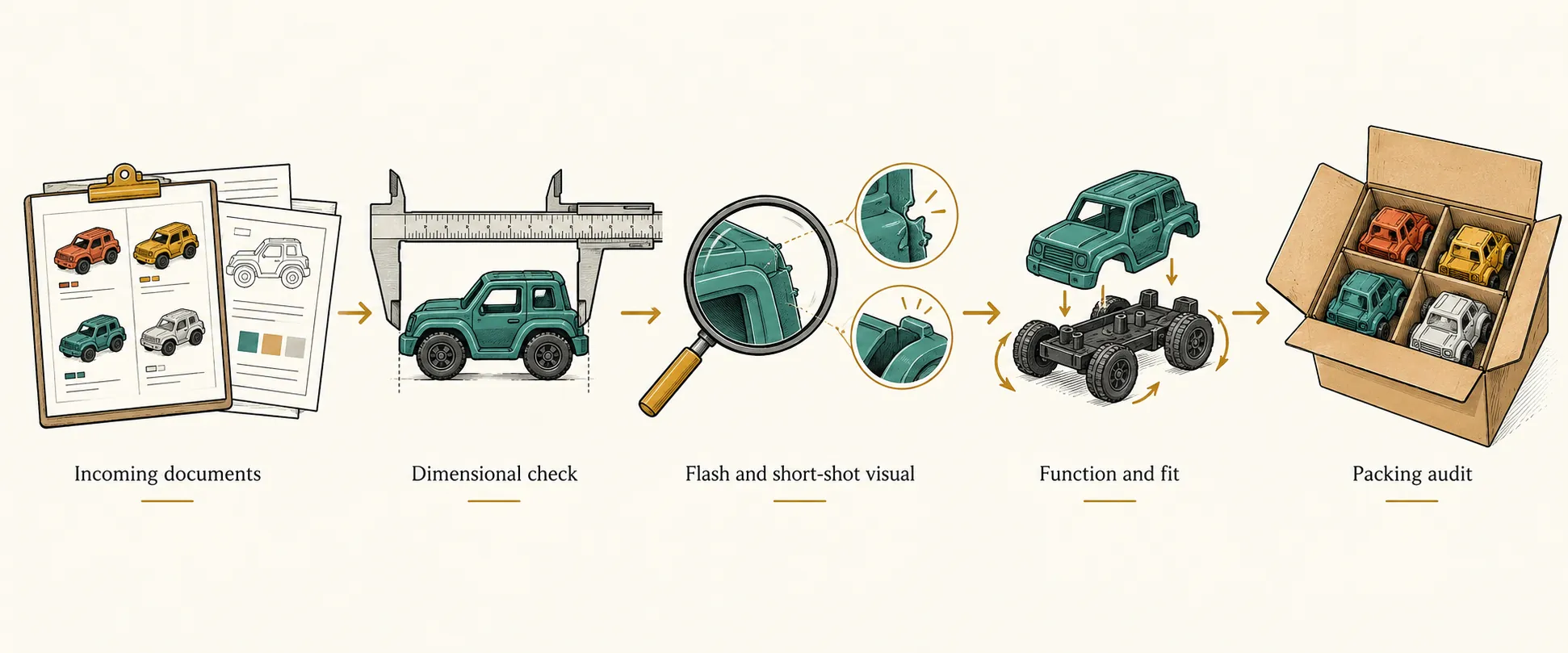
Approve each toy color variant against an identified sample and written color specification—not a catalog photograph alone. For a counting and color-matching game, check both appearance and whether the intended matching pieces still correspond. Use one approval-log row per SKU and color variant when buying from a Shantou toy manufacturer, then record approved, approved with conditions, or rejected. Tie that decision to packaging, agreed quantities, destination-document review, a named approver, and dated closure of any conditions.
Keep sample acceptance separate from authorization to proceed with the order. An attractive color sample does not settle the intended age grade, current commercial terms, or the document coverage for the proposed construction.
Which color changes need separate approval?
Create a separate approval entry whenever a color change alters the agreed appearance, component-to-color mapping, matching function, or assortment mix.
For a color-matching activity, specify which pieces must match which targets. A palette can look consistent while the wrong pieces share a color. Review that relationship during the intended matching task, not just with the contents arranged for a photograph.
Set the target before reviewing the sample: identify a retained physical color reference or agreed color code, the affected components, and the expected finish. Compare samples under consistent lighting and record visible differences. Photographs help identify pieces and revisions; use the agreed physical reference to settle a disputed shade.
Also specify the mix. Different colors within one game, different outer colorways of the same game, and different colorways packed together in a carton are three separate instructions. Record the relevant component quantities, order quantities, and packing allocation rather than writing only “assorted colors.”
Color-Matching Counting and Letter Game
| Product and item identifier | Counting, color-matching, and letter activity game; catalog item CPS281858. |
|---|---|
| Recorded packaging | Color box. |
| Reference MOQ | 24 units. Confirm whether the current minimum applies across the item or separately to each requested color variant. |
| Reference price | USD 3.79. Obtain a current quote tied to the selected variant, quantity, and packaging. |
| Recorded weight | 0.71 kg. Confirm the weighing basis before using this value for packing or freight planning. |
What should one color-variant approval row contain?
| Record identity | Assortment/order reference: ____; supplier: ____; product name: ____; SKU/item identifier: ____; color-variant identifier: ____; destination market: ____; log revision: ____. |
|---|---|
| Reference baseline | Catalog/reference date: ____; reference packing: ____; reference MOQ: ____; reference price and currency: ____; recorded weight and confirmed weighing basis: ____. |
| Specified color and play target | Specification revision: ____; physical master or color reference ID: ____; component-to-color map: ____; finish: ____; matching relationships: ____; intended component counts and assortment mix: ____. |
| Sample identity and path | Sample ID/revision: ____; sample type or stage: ____; request date: ____; received date: ____; reviewer: ____; retained-sample location: ____; linked photographs: ____. |
| Observed sample findings | Observed colors and finish versus target: ____; observed matching function versus target: ____; component counts versus target: ____; discrepancies and affected pieces: ____. |
| Construction and intended use | Agreed material/component specification: ____; sample construction observations: ____; proposed age grade and intended use: ____; supporting review reference and outcome: ____. |
| Packaging target and observation | Agreed pack type: ____; artwork revision: ____; target variant name/image and contents description: ____; observed packaging/artwork: ____; correction required: ____; approved pack reference: ____. |
| Current commercial agreement | Quote ID/date: ____; agreed price/currency: ____; requested quantity by variant: ____; confirmed MOQ and whether item-level or per color: ____; units per carton: ____; agreed carton color mix: ____; inventory confirmation/date, if relevant: ____. |
| Timing target and confirmation | Revised-sample due date: ____; approval deadline: ____; requested delivery window and delivery milestone: ____; supplier-confirmed window: ____. |
| Destination-document review | Document set requested for the destination and product: ____; document/report IDs and revisions: ____; construction and color-variant coverage reviewed: ____; reviewer/date: ____; accepted items: ____; outstanding requirements or actions: ____. |
| Decision and authority | Status—approved / approved with conditions / rejected: ____; decision scope and reason: ____; named approver and role: ____; decision date: ____; order/production release authorization and date: ____. |
| Condition closure | Condition ID and required correction: ____; responsible person: ____; due date: ____; closure evidence and revision: ____; accepted by: ____; acceptance date: ____; final status: ____; superseding record, if any: ____. |
How do sample findings change the approval decision?
| Illustrative variant A: agreed color relationships and packaging match | Target: the approved component-to-color map, finish, contents, and packaging revision. Observation: the reviewed sample matches those targets, and the buyer has accepted the agreed commercial and destination-document checks. Decision: approve the identified revision. Complete the approver, date, sample reference, and release fields; do not extend this approval to other colorways. |
|---|---|
| Illustrative variant B: sample accepted, box shows a different colorway | Target: the box must identify the selected variant accurately. Observation: the toy meets the agreed sample specification, but the artwork depicts another colorway. Decision: approve with conditions, explicitly limited to sample acceptance. Require corrected artwork and an agreed pack proof; name the owner and due date. Keep order/production release on hold until the approver accepts the correction and dates the closure. |
| Illustrative variant C: attractive palette, incorrect matching relationships | Target: the specified pieces must correspond to their intended color targets during play. Observation: the submitted arrangement breaks that relationship. Decision: reject the submitted revision because it fails the agreed activity requirement. Record the affected pieces and reason. Review any corrected sample under a new revision linked to the rejected entry. |
Who closes conditions and authorizes release?
The named buyer approver closes each condition by accepting identified evidence and dating the decision; the supplier’s promise to correct it is not closure.
Review the physical sample against the color map and intended play task, then reconcile packaging and the proposed order mix. Request the destination-specific document set early enough to review it before release. Record which construction and variants the documents cover; a shared product name or similar appearance is not a substitute for that review. The log is a purchasing control, not a safety test or a certification.
Make each condition executable. Replace “fix color” with the affected component, the required reference, the revised-sample requirement, the responsible person, and the due date. For a packaging-only correction, identify the artwork revision and the proof the approver must accept. A missing document can block full approval without proving that the product is defective.
Before placing the bulk order, carry the approved variant IDs, quantities, specification revision, packaging revision, and retained-sample references into the order specification. Reopen review for a proposed change to color, material, component mapping, or packaging, and assess its effect on the accepted document coverage.
Keep rejected and superseded entries in the log. This preserves the decision history and gives later inspection a defined reference, but the record alone cannot prevent or reveal an undisclosed production change.
Next step