
TRADE DESK NOTE
Blanket Certification Claims on Toy Product Pages: How to Match Papers to the SKU
A carton barcode is not a certificate. Framework for matching CPC, UKCA and test files to a specific toy SKU and lot before you publish product-page claims.
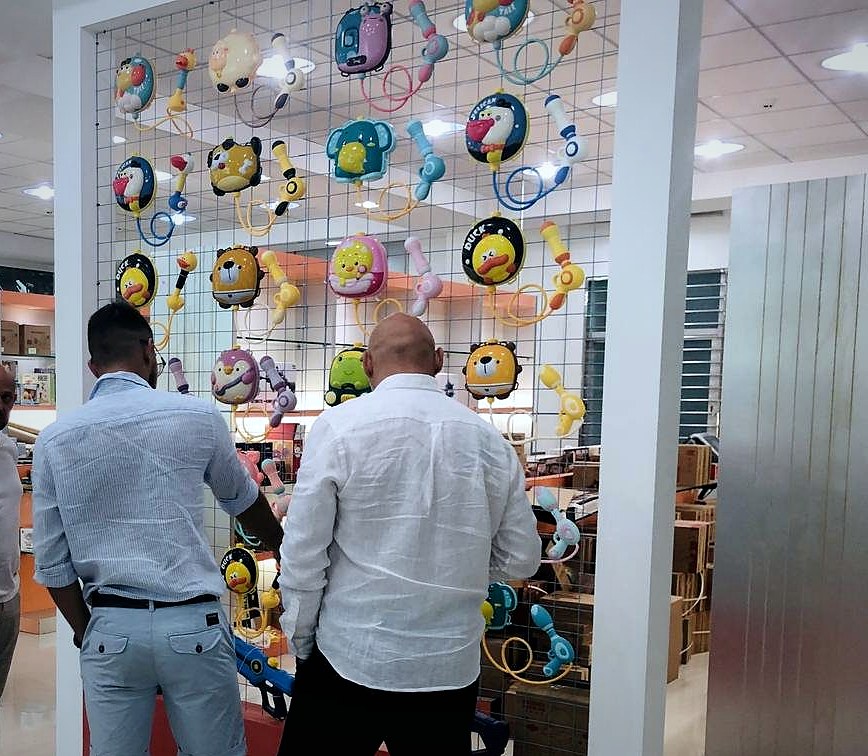
A blanket certification claim is any line that says a product is "CE certified," "CPC approved" or "tested" without naming the file, the SKU and the lot it covers. Treat every such line as unverified. The fix is mechanical: build one row per SKU, list the destination market, list the exact document that covers that market, and delete any claim that cannot name a file that matches the lot. UKCA plus a VOC file on an electric bubble machine are different papers; a buyer once tried to use one certificate for both.
What Buyers Should Decide Before Publishing Any Certification Line
- Match document to market, then to lot. A UKCA file and a VOC report answer different questions, and neither covers a lot it does not name.
- A CPC belongs to the SKU, not to the factory door. If the certificate lists a model family rather than your ordered item, it does not cover your product.
- Tracking-label content is a legal element on US children's goods, not decoration. Manufacturer, date and lot must appear on the product or pack as required.
- Component-part test evidence only supports a children's-product certification when the component and the applicable CPSC conditions are correctly matched.
- Every claim you publish should be traceable to a file number, a date and a lot. If you cannot trace it, cut the line.
Why Do Product Pages End Up With Blanket Claims?
Because the certificate arrives before the SKU does. A supplier sends a PDF titled with a generic model name, the listing team copies the logo, and the page inherits a claim nobody re-checked against the actual order. The electric bubble machine case is typical: a buyer treated UKCA and a VOC file as interchangeable, and the page would have stated a compliance position that no single document supported.
Model families cause the same failure. One report may cover a range of variants, and the page silently promotes that to "all our toys are certified." Once a claim is generalized past the tested configuration, it stops being a claim and becomes a risk. According to the CPSC's toy safety business guidance and SGS's toy safety and certification pages, the relevant frame is the specific product and its applicable requirements, not a brand-level badge.
The SKU-Level Check: Five Fields Per Product Row
Run this as a spreadsheet, one row per SKU, not per supplier. Column one is destination market. Column two is the exact document name and number that applies to that market. Column three is the lot or production window the document covers. Column four is the physical marking on the product or pack. Column five is the reviewer and the date the row was checked. A row with an empty column three is not finished.
A US children's lot illustrates the column-four failure: the carton carried a barcode and no tracking-label content. Manufacturer, date and lot were added to the product or pack as required, and the CPC was kept matched to the SKU rather than to the factory door. That is the standard to hold: the marking on the box, the certificate on file and the item in the listing should name the same thing.
Which Document Answers Which Question
| US children's product certificate (CPC) | Covers a specific children's product SKU against the applicable CPSC requirements; component-part test evidence supports it only when the component and conditions are correctly matched |
|---|---|
| UKCA marking file | A UK market conformity route; must name the product and the standards applied, not a factory-level record |
| VOC / test report | Reports results for the sample and test scope named in the report; a report on one article does not certify another |
| Tracking label | Physical marking on product or pack carrying manufacturer, date and lot as required for US children's goods |
| EU Radio Equipment Directive file | Applies where the toy includes radio equipment or radio modules; establishes the framework for placing that radio equipment on the market |
| Digital product passport record | Must correspond to a specific toy model, not an unrelated factory or brand-level record |
| Drop test record | Checks whether a packaged or unpackaged toy withstands the defined impact without unsafe broken parts or loss of function |
How Do You Audit a Chinese Toy Supplier's Certificate File?
Ask for the file that names your SKU, then read the scope line first. A certificate that describes a product family, a factory address or a brand rather than the ordered item is a starting point, not evidence. Next, check the date against your production window and confirm the lot reference exists. If the file predates a material or component change, it does not cover the current build.
Then look at the measurement side. Measurement equipment used for release decisions should have a current calibration or verification status. A report produced with out-of-calibration instruments is not a controlled result, and that detail usually lives in the factory's own quality records rather than in a sales folder.
Finally, walk the line. Monitoring machine variables and part checks over time helps identify drift before cosmetic or dimensional defects reach a full shipment. If the supplier cannot describe how drift is caught between inspections, the certificate on the wall is doing more work than the process behind it.
What Should Your Product Page Actually Say?
Write the narrow true sentence, not the broad comfortable one. "This item is produced under a CPC that names model X and lot Y" survives an audit. "CPC certified" does not, because it invites the reader to assume coverage you cannot prove. Keep the same discipline for CE, UKCA, EN71 and ASTM references: name the standard only where you hold a file that names the item.
Where a toy contains radio equipment or radio modules, the EU Radio Equipment Directive framework is the relevant one, and the digital product passport record must correspond to a specific toy model rather than an unrelated factory or brand-level record. Battery-operated toys require the applicable battery, electrical and mechanical safeguards in addition to material and small-parts checks, so a single material test line on the page is incomplete by construction.
Publish a lot reference and a document date next to each compliance line. Buyers who do this stop fielding the same "which certificate?" email, and they stop having to retract a claim after a marketplace review.
Where Claims Break Down Before the Certificate Stage
Some failures never reach the certificate file. LCD tablets and other corner-sensitive goods die in LCL when the booking instruction is vague. The fix is to write double-wall, corner boards, ECT and pallet height into the booking file. A damaged unit is a compliance problem too, because a cracked housing can expose parts that the drop test was meant to keep contained.
The same logic applies to packaging claims. If the page promises a retail-ready box, the specification behind it should state material grade and stacking height. Claims are won on the booking file, and a vague instruction is where they are lost.
FAQ
Can I use one certificate for both UKCA and a VOC requirement on the same toy?
No. UKCA and a VOC file are different papers answering different questions, and a buyer once tried to use one for both. Map the market, the lot and which file covers which test before any claim goes live.
Does a CPC from my supplier cover every toy they make for me?
No. A CPC matches a SKU, not a factory door or a brand. Keep the certificate matched to the specific item and re-check it whenever the model, material or component changes.
What has to be on a tracking label for US children's goods?
Manufacturer, date and lot as required, on the product or pack. A carton barcode alone is not tracking-label content, and that gap is what one US children's lot shipped with before it was corrected.
Can component test reports support my children's product certification?
Only when the component and the applicable CPSC conditions are correctly matched. A component report for a different part or a different condition does not carry the finished product.
How do I verify the factory's own test process, not just the PDF?
Ask for the calibration or verification status of the measurement equipment used for release decisions, and ask how machine variables and part checks are monitored over time. If drift detection cannot be described, the paperwork is ahead of the process.
What should I check before booking LCL for corner-sensitive toys?
The booking file should specify double-wall, corner boards, ECT and pallet height. A vague instruction is where corner-sensitive goods fail, regardless of how good the certificate file looks.
Sources
Request a Quote or a Factory Audit
Send the SKU, the destination market and the document you already hold. We will tell you which file covers which test and which claim should come off the page before it ships. If you want the process checked rather than the PDF, ask for a factory audit and we will walk the line, the calibration records and the booking file with you.
Next step