
TRADE DESK NOTE
Choosing a Toy Category Mix for a New E-Commerce Store
How a new toy e-commerce store should pick a category mix and verify supplier documents before the purchase order — what each file proves and what it doesn't.
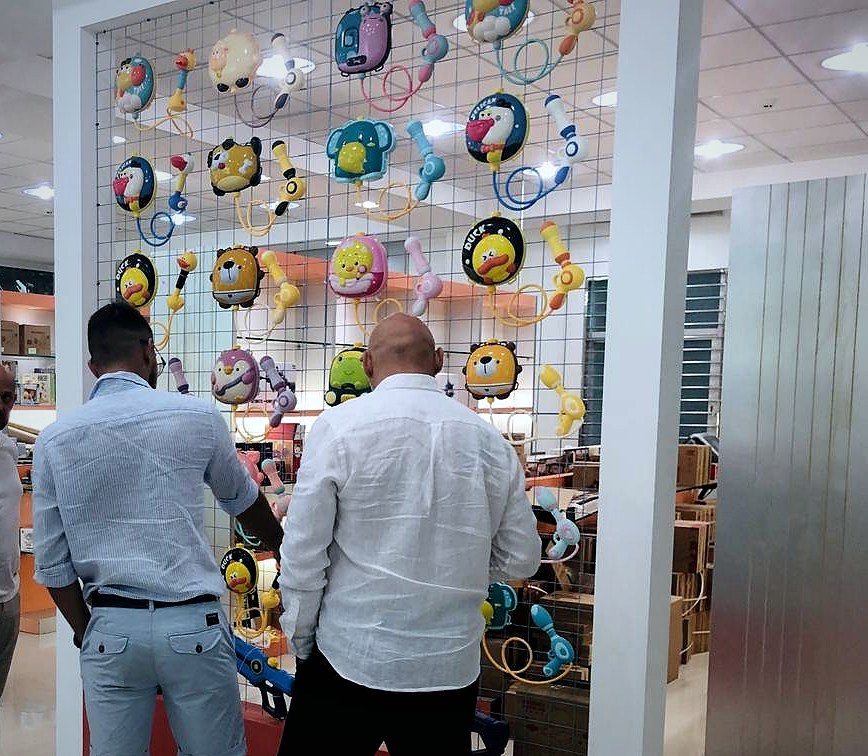
Pick the buyer scenario first, then the SKUs, then the paperwork — in that order. A new toy e-commerce store should not open with a broad catalog; it should open with one or two price tiers inside a single category where you can actually control compliance, and it should refuse to send a deposit until the supplier produces a proforma invoice, a commercial invoice, a packing list, and product-specific conformity records that name the exact model you are buying. This page covers the files that must exist before a purchase order, what each one proves, what each one fails to prove, and which single document is usually the last to arrive — plus the receiving checks that decide whether your first order made or lost money.
Files before the purchase order
| Proforma invoice — Proves | Seller's registered company name, exact product description with model numbers, HS code, unit price, quantity, agreed Incoterm (EXW/FOB/CIF), production lead time, payment schedule, validity period, bank details. It converts a chat quote into a defined commercial commitment and is the base document every later file must reconcile against. |
|---|---|
| Proforma invoice — Does not prove | That the goods exist, that the model matches your sample, or that any safety testing has been done. It also does not prove the bank account belongs to the invoicing company — a name mismatch there is a stop-payment signal, not a rounding error. |
| Proforma invoice — Ask if missing | Ask for the registered company name and the exact HS code in writing. If the unit price only ever existed in a chat message, you have no order, only a conversation. |
| Commercial invoice — Proves | What you are being charged, at what value, under which trade terms, and what customs will read. It is the value document for the shipment and the reference for any dispute over price or quantity. |
| Commercial invoice — Does not prove | That the physical cartons match the line items. Value and contents are two different claims made by the same party. |
| Commercial invoice — Ask if missing | Ask for it to be issued against the same model numbers used on the proforma. If the wording drifts between the two documents, expect the drift to continue at the customs broker. |
| Packing list — Proves | The physical inventory of the shipment: items by package, counts, carton identifiers, weights and dimensions where the carrier needs them. It is the document your warehouse team counts against. |
| Packing list — Does not prove | That the listed items are physically inside the cartons. A packing list is what the supplier says the shipment contains; the physical count is still yours to do. |
| Packing list — Ask if missing | Ask for per-carton counts and package identifiers before the container is sealed, not after it lands. Line it up against the commercial invoice on product names and quantities — when those two tell the same story, inspections move faster. |
| CPC / EU declaration of conformity and technical file — Proves | For US-bound children's products, a Children's Product Certificate is issued by the domestic manufacturer or importer as certifier and must describe the covered product well enough to match it to that product, with the test-record holder, manufacture details, testing, and accepted laboratory identified. On the EU side, conformity assessment, the technical file, the EU declaration of conformity and CE marking sit with the manufacturer, while importers and distributors carry their own compliance duties. |
| CPC / EU declaration of conformity and technical file — Does not prove | That every SKU in a catalog is covered. A generic category name does not establish coverage of each model, and printing the letters CPC in a listing is not the same as producing the records. Laboratory acceptance is specific to the relevant safety rules and configuration — one lab may not cover every test you need. |
| CPC / EU declaration of conformity and technical file — Ask if missing | Ask for the actual file, the model or SKU description it names, the applicable rule references, the accepting laboratory, the test-record holder, and the dates. Then read it against the model you are buying. |
| Inspection and Acceptance Plan — Proves | How conformance will be verified at receiving: which properties get re-checked on arrival, how often, who inspects, and what documentation triggers acceptance or rejection. Written into the RFQ, it gives both sides the same expectations before anything ships. |
| Inspection and Acceptance Plan — Does not prove | That the supplier will pass it. It proves only that you agreed on the test before the argument started. |
| Inspection and Acceptance Plan — Ask if missing | Ask for a one-page plan attached to the RFQ. If the supplier cannot describe how you will verify the goods, you are the only party managing your risk. |
The file that usually arrives late
The model-level conformity record is the slow one. Quotations come back in a day. A proforma invoice appears within hours of a price agreement. The packing list shows up when the container is loaded. The document that names your exact model, the rule it was tested against, the laboratory that accepted it, and the party responsible for the certificate tends to surface last — often after you have already paid a deposit and started planning a launch date.
There is a structural reason, and it is not pure stalling. For a children's product, the certificate is issued by the domestic manufacturer or importer as certifier, and laboratory acceptance is tied to the relevant safety rules and to the actual toy configuration. A factory that makes a dozen variants under one family name may hold records that cover the family, not the variant you ordered. So when you ask for "the CPC" and get a PDF, check three things before you accept it: does the product description match the model or SKU you are buying, are the applicable rule references listed, and is the accepting laboratory's scope a fit for the configuration in front of you? If the answer to any of those is vague, you have a sales document, not a compliance document.
The EU side catches first-time importers the same way. Conformity assessment, the technical file, the EU declaration of conformity and affixing the CE mark are the manufacturer's responsibilities — but importers and distributors carry compliance duties of their own. A catalog symbol is not evidence that the review happened. Ask for the product-specific file and read it against the SKU. If a supplier treats that request as an insult rather than a Tuesday, that tells you something useful about the next three orders.
The category mix decision and the document decision are the same decision. A two-tier plan inside one category — one lower-cost unit to test price sensitivity, one higher-spec unit to carry the average order value — is only manageable if both SKUs can be documented on the same schedule. A wide catalog multiplies the number of files you must chase, and every unverified model is a launch date you cannot commit to. Narrow the mix until the paperwork is boring. Boring paperwork is a business.
Hazard patterns are part of the screen, not an afterthought. The recall record for toys repeatedly turns on small parts that detach and edges that are sharp enough to cut — a mirror that separates from a busy board, magnets that escape a housing when a cube breaks or opens. Those are historical external cases with no established connection to any particular supplier or catalog, and they are useful precisely because they are generic: whatever category you pick, ask which small parts are user-removable, which components are glued versus mechanically fixed, and which tests cover those failure modes. That question costs nothing at the RFQ stage and a great deal later.
FAQ
What should I get from a supplier before I pay a deposit?
A proforma invoice with the seller's registered company name, exact model numbers, HS code, unit price, quantity, Incoterm, lead time, payment schedule and bank details — then a commercial invoice and packing list that reconcile against it. Experienced buyers judge a sourcing partner by the paper trail, not by reply speed, because documents are the part of an overseas purchase that survives a dispute or a customs query.
Does a CPC or CE mark in a catalog listing mean the product is covered?
No. A CPC must describe the covered product well enough to match it to that product, and a generic category name does not establish coverage of every SKU. On the EU side, the technical file, conformity assessment, EU declaration of conformity and CE marking are the manufacturer's responsibility, and a catalog symbol alone is not evidence the full review was performed. Request the product-specific file and match it to your model.
Why would one lab report not be enough for my order?
Laboratory acceptance is specific to the relevant safety rules and to the actual toy configuration, and a single laboratory may not cover every required test. If your order spans a kids' SKU and a higher-spec SKU with different features, the applicable rules may differ too. Check the accepting lab's scope against the configuration you are actually buying, not against the category name.
What is the cheapest place to catch a short shipment?
At the back door, before the driver leaves. Count cartons against the bill of lading, inspect packaging for crushing or open seals, and note problems on the delivery receipt — 'two cartons damaged', 'one carton short' — while you still have leverage. Once the truck is gone, your ability to dispute obvious problems drops sharply, and the three-way match between purchase order, received goods and supplier invoice is what stops overcharges and duplicate bills from sliding through.
How narrow should a first category mix be?
Narrow enough that every SKU can be documented on the same schedule. A curated mix built around a defined buyer scenario and use case tends to outperform a catalog diluted across thousands of SKUs, and a focused mix can become a top average-ticket item within a couple of reorder cycles once the store learns which tier sells. Two price points in one category is usually a better first order than ten categories at one price point.
What should the RFQ say about verification, not just specification?
It should define how conformance will be verified at receiving. A complete evidence pack includes a one-page Inspection and Acceptance Plan stating when and how material is checked at receipt, which properties are re-tested, the testing frequency, who inspects, and the documentation required for acceptance or rejection. When the plan is agreed before shipping, both sides work from the same expectations instead of arguing after the fact.
Sources
- Build a ‘Passport’ for Your Material: What to Include in a Kraft Paper RFQ Evidence Pack
- Inventory Receiving: Purchase Orders, Packing Slips, and Catching Short Shipments - Bonsai
- Packing List Template — What to Include and How to Create One Online
- What Documents Should a China Procurement Agent Provide You?
Ready to test your first toy category mix?
If you are building a first order and want the document checklist applied to a specific SKU before you commit, reach out with the model you are considering and the destination market — US, EU, or both. We will tell you which files to ask for and which answers should stop a deposit.
Next step