
TRADE DESK NOTE
Color Box vs Display Box: Which Toy Pack to Spec
Compare color box vs display box for wholesale toy merchandising: channel fit, protection, MOQ gates, and the three questions to ask the factory before ordering.
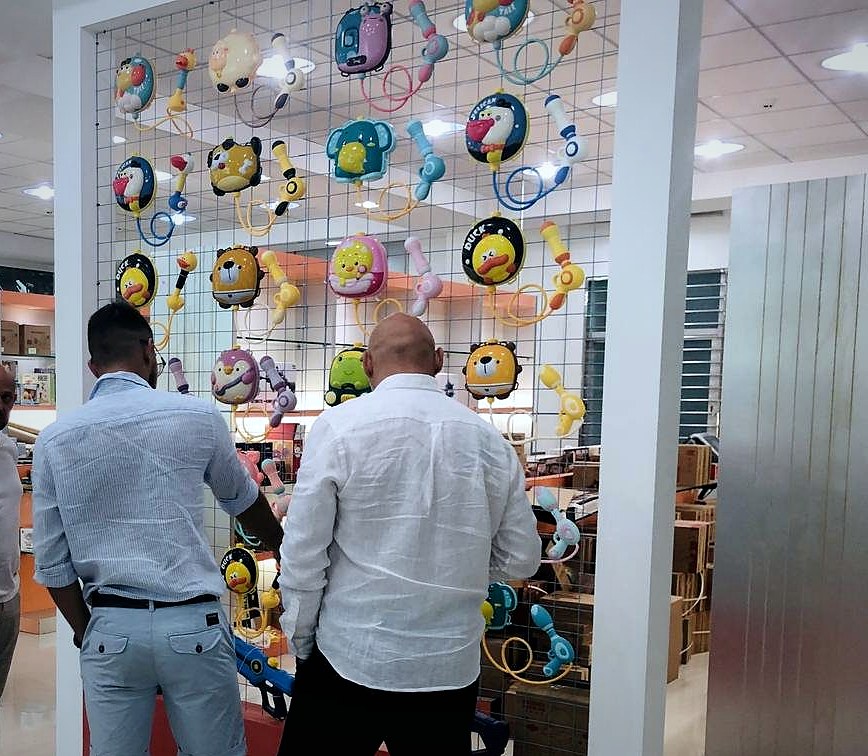
Choose a color box when the shopper picks one unit off a peg or shelf and the retailer refuses to build anything; choose a display box when the retailer wants a self-selling counter or floor unit the shopper takes product from directly. That single rule settles most SKUs before price enters the conversation.
A color box is the unit-level retail carton that has to carry the barcode, the tracking label content, and the SKU-specific artwork. A display box is the multi-unit presentation format. According to postpress machine's breakdown of how display boxes differ from other packaging types, display boxes are engineered for retail presentation with open fronts, windows, cut-outs, and header cards, while other packaging prioritizes protection in shipping and storage.
This page gives you the decision path — scenario, then format, then the reason — plus the three questions you ask the factory before you commit a PO. It does not hand you a spec sheet, because the spec sheet is exactly what you have to extract from your supplier per SKU.
Key Takeaways
- Pick the format by retail channel first, not by unit cost: color box for individual peg or shelf sale, display box for counter or floor units the retailer sells from without unpacking.
- Custom packaging is MOQ-gated. OEM/ODM color box and display box work is offered according to the SKU's MOQ, so a low toy MOQ does not mean a low packaging MOQ — get the packaging MOQ per format in writing.
- A display box is not automatically the better merchandiser. It adds an assembled unit, a possible outer master carton, and a decision about whether it ships pre-filled or flat, all of which move carton count and freight.
- Compliance paperwork follows the SKU and the lot, not the box type. A US children's lot needed manufacturer, date, and lot on the product or pack, with the CPC matched to the SKU rather than to the factory door — so ask which certificate file names your SKU and format.
- Board grade, caliper, assembled dimensions, and load limit belong on a packaging spec sheet. If the supplier sends a TDS with Shore A or tear strength, that document describes the toy material, not the box.
Color Box vs Display Box: Side-by-Side
| Primary job | Color box: single-unit retail carton the shopper carries to the till | Display box: multi-unit presentation unit the shopper takes product from |
|---|---|
| Best retail channel | Color box: peg, shelf, and any retailer that will not build a display | Display box: counter, checkout, and floor placement (CDU, FSDU, POP) |
| Shopper access | Color box: closed carton, opened after purchase | Display box: open front, window, or cut-out for direct access |
| Branding surface | Color box: full front and back panel for artwork, barcode, and mandatory text | Display box: header card, side panels, and tray graphics |
| Transit protection role | Color box: primary unit protection, still needs a shipper | Display box: presentation first; load limit and outer carton must be specified |
| MOQ gate | ask TDS — packaging MOQ is not stated per format in the supplied records |
| Artwork and dieline cost | ask TDS — whether artwork, dieline, and plate charges are inside the quoted unit price |
| Tracking label fields | ask TDS — whether manufacturer, date, and lot print on the box or only on the shipper |
| Shipped state | Color box: flat, erected by the retailer or co-packer | Display box: ask TDS — pre-filled or flat changes carton count and freight |
| Typical SKU fit | Color box: higher-value single-item SKUs | Display box: low unit price, multi-piece, or impulse SKUs |
| Material and board grade | varies by spec — request the packaging spec sheet, not a material TDS |
| Lead time | varies by spec — one supplied SKU states 25-35 days; the rest are unknown |
What is the difference between a color box and a display box?
A color box is the printed retail carton around one unit; a display box is a presentation unit that holds and shows multiple units on a counter or shelf. The distinction is function, not material — both are typically paperboard or corrugated, and both can carry the same print finishes.
Trade packaging content splits the categories further. Shelf-ready packaging groups products so a store can place them on shelf without unpacking each one, display boxes are built for point-of-purchase impact, and retail-ready packaging is the umbrella term covering the whole chain. According to a packaging guide on shelf-ready versus display versus retail-ready formats, shelf-ready packaging is judged by the '5 Easies' — easy to identify, open, shop, replenish, and dispose of — while display boxes are optimized for marketing impact at the point of purchase.
That framing matters commercially. If your buyer is a large chain, the packaging decision is often already made for you by their restocking labor model, and you are choosing between a shelf-ready tray and a display unit, not between a pretty box and a plainer one.
Which format fits your retail channel?
Match the box to how the product leaves the shelf. Peg and shelf retail with single-unit pick means a color box. Counter, checkout, or floor placement with self-service means a display box, usually in one of the standard formats — counter display unit, floor standing display unit, or a flat tuck display box that closes with tuck-in flaps and no glue.
The localization work sits on top of that choice. One supplier's US-market localization pass took roughly three months and involved enlarging packaging by about 30%, shifting to high-contrast colors, upgrading product function, and redesigning the pack into blister card and display box. That is a format decision driven by channel and market, not by aesthetics.
Where the channel is mixed — some accounts want pegs, some want a counter unit — one SKU usually cannot serve both formats without a second dieline and a second packaging MOQ. Price that before you promise a retailer both.
How much protection does each format actually provide?
Neither format is a shipping container, and treating one as if it were is where claims get lost. Corner-sensitive goods die in LCL when the booking instruction is a thank-you note; the packing file has to state double-wall, corner boards, ECT, and pallet height. That applies whether the inner unit is a color box or a display box.
For a color box, the protection question is board grade and caliper plus how the units sit in the shipper. For a display box, add the assembled load: an open tray holding multiple units behaves differently from a closed carton, and the retailer will keep loading it after your shipment arrives.
The supplied records contain no Shore hardness, tensile, or tear values for the ABS, plastic, wooden, or wood-plus-metal-plus-plastic SKUs, and none for packaging board either. If a supplier sends a TDS with Shore A values for a box, that document is for the toy material. Ask for the packaging specification sheet separately, and if it does not exist, treat the format as unverified.
What MOQ should I expect for a custom color box or display box?
Expect the packaging MOQ to be quoted separately from the toy MOQ. OEM/ODM work covering color, logo, retail packaging, blister, and color box is offered according to the SKU's MOQ, which means the packaging run has its own gate.
The supplied SKUs carry toy MOQs of 120, 120, 36, 24, 2, and 96 units at unit prices of 3.2, 1.5, 4.7, 3.79, 6.03, and 1.26 USD. None of those figures is stated as the custom-packaging MOQ for either format, so do not read the toy MOQ as the packaging MOQ. A magnetic maze at MOQ 2 is a market test, not a custom display box order.
Two questions close this: what is the packaging MOQ per format for this exact SKU, and does the quoted unit price include artwork, dieline, and plate or tooling charges? If the answer to either is vague, the custom format is unquoted.
Where does compliance and traceability enter the packaging decision?
Compliance is SKU- and lot-specific, not box-type-specific, and it is the one area where a cheap format choice can cost you a shipment. A UKCA mark and a VOC file on an electric bubble machine are different documents; a buyer once tried to use one certificate for both. Paperwork that does not match the lot is not paperwork.
For US children's goods, tracking label content is not decoration. One lot shipped with a clean barcode and no tracking label content at all; the fix was adding manufacturer, date, and lot on the product or pack as required, and keeping the CPC matched to the SKU rather than to the factory door.
Practical check before you approve either format: does the artwork proof show the tracking label fields, and does the certificate on file name this SKU, this material, and this color? A test report is only useful when the report identity matches the actual SKU, model, material, color, age grade, and sample construction.
Sample to mass: what to lock before the packaging run
A packaging sample proves artwork and fold. It does not prove the mass run. The sample is hand-made; the production run is die-cut and glued at speed, and the dieline, board lot, and print registration can drift between the two. In-process checks catch that drift in dimensions, color, weight, flash, short shots, and assembly before the whole lot is complete — but only if someone specified what the check is against.
Lock four items on the approved sample: the signed dieline, the artwork proof with barcode and tracking label fields visible, the board grade and caliper written on the spec, and the packed-out carton configuration. The packed-out configuration is where display box orders go wrong. A flat-shipped display box pushes assembly onto the retailer and changes your carton count; a pre-filled display box changes unit count per shipper and total weight. The supplied records do not state which applies to any SKU.
A sealed golden sample with the approved material, color, decoration, dimensions, and photos is a practical production reference, but it does not replace required market testing. Keep the two roles separate in your own file.
The three questions to ask the factory before you order
Ask these in writing, per SKU. First: what is the packaging MOQ for a custom color box and for a custom display box on this specific SKU, and does the quoted unit price include artwork, dieline, and plate or tooling charges?
Second: what is the signed sample, and what does the packaging spec sheet state for board grade, caliper, assembled dimensions, and load limit? If the supplier's only document is a material TDS, you have not received a packaging spec.
Third: how does the format ship — color boxes flat inside the shipper, display box pre-filled or flat — and what is the packed-out carton configuration, including whether the display box needs an outer master carton? Those three answers decide your freight, your retailer's labor, and whether the format is even quotable.
FAQ
Can I use one packaging format across my whole toy range?
No, if your accounts differ by channel. Peg-and-shelf retailers need a unit-level color box; counter and floor accounts need a display unit. One SKU serving both usually means two dielines and two packaging MOQs, so price that before promising a retailer both formats.
Is the packaging MOQ the same as the toy MOQ?
No. The supplied records do not state a packaging MOQ for either format. Toy MOQs on the supplied SKUs run 2, 24, 36, 96, and 120 units, but OEM/ODM color box and display box work is offered according to the SKU's MOQ, so confirm the packaging MOQ per format in writing.
Does a display box remove the need for an outer master carton?
Not automatically. Ask whether the display box ships pre-filled or flat and whether it counts as one shipper carton or needs an outer master carton. That answer changes carton count, weight, and freight, and it is not stated for any supplied SKU.
What paperwork should be matched to the packaging format?
The certificate or test file that names your SKU, material, color, and lot — not the format in general. A US children's lot needed manufacturer, date, and lot on the product or pack, with the CPC matched to the SKU rather than the factory door, and a UKCA mark and a VOC file are separate documents that cannot substitute for each other.
Will a packaging TDS tell me the board strength?
Only if it is a packaging spec sheet. Shore hardness and tear strength values describe toy materials, not boxes, and no such values are supplied for the ABS, plastic, wooden, or wood-plus-metal-plus-plastic SKUs here. Ask for board grade, caliper, assembled dimensions, and load limit instead.
How long does packaging localization add to a toy order?
Plan for months, not weeks, if you are changing format and market. One supplier's localization pass took roughly three months and included a 30% packaging size increase and a redesign into blister card and display box. Only one supplied SKU states a lead time at all — 25-35 days — so treat other timelines as unconfirmed.
Sources
Related Products & Categories
Next Step
Before you approve a color box or display box, get the packaging MOQ, the signed sample spec, and the packed-out carton configuration in writing for the exact SKU. If your supplier cannot produce those three answers, the format is not ready to quote.
For reference on how the two formats are built and finished, see custom toy display boxes and display toy boxes, and for the shelf-ready versus display versus retail-ready distinction, the packaging guide on shelf-ready packaging formats is worth reading before your next retailer conversation.
Next step