
TRADE DESK NOTE
From Shortlist to Sample: A Practical Toy Sourcing Workflow
A step-by-step toy sourcing workflow: qualify suppliers, map compliance files, seal a golden sample, lock packaging, and set inspection before the PO.
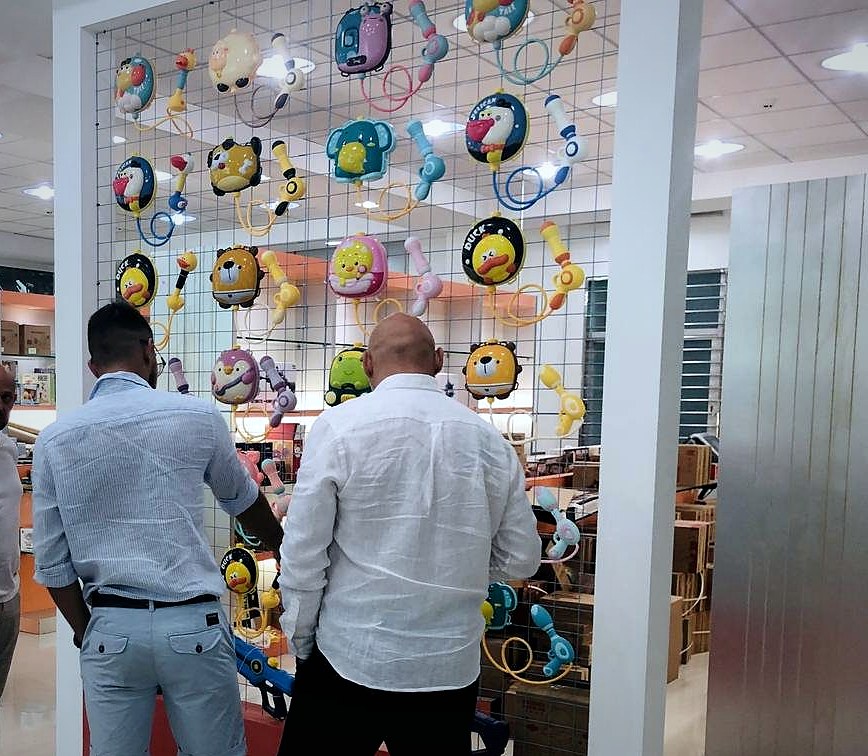
A working toy sourcing workflow has three gates you can enforce on paper: a shortlist built on retailer and export evidence, a sealed physical golden sample that bulk is measured against, and a purchase order that names the market, the lot, the inspection plan and the packaging spec. Get those three right and you can decide whether to contact a supplier and start purchasing without gambling on emails and photos. Skip any one of them and the argument happens at the container, when nobody has leverage left.
This page walks the sequence in the order the decisions actually arrive — qualify, map documents, sample, label, pack, inspect, release. Each step carries a checkpoint you can verify and one question to put to the factory. Figures, MOQs and lead times are deliberately left as "varies by spec": they belong in your RFQ response and your PO, not in a sourcing article.
What buyers should decide before contacting a supplier
- Qualify on shipped evidence, not catalogues. Ask which retailers and markets the factory currently ships to and under which export standards — a track record across mass-market and specialist channels is harder to fake than a showroom.
- Map the paperwork to the market and the lot before you sample. A UKCA mark and a VOC file on an electric bubble machine are different papers covering different questions; a certificate that does not match the lot is not a certificate.
- Approve a sealed physical golden sample, not a photo. A golden sample with approved material, colour, decoration and dimensions is a production-QC reference — but it does not replace required market testing.
- Write the inspection plan into the PO. The AQL figure and defect classes should come from the agreed inspection plan on the purchase order, never from a supplier's catalogue sentence or a blog.
- For LCL and corner-sensitive goods, the booking instruction is a packing spec, not a thank-you note. Double-wall, corner boards, ECT and pallet height belong in writing before the container is booked.
What does the shortlist step actually filter for?
The shortlist filters for evidence you can check in a call, not for the prettiest quote. Start with export track record: which markets the factory serves, which retail channels it supplies, and whether the same factory and export standards run across its own brands. A supplier that ships to both mass-market chains and toy or party specialists has already survived retailer audits you will never see.
Then test whether the factory can talk about the specific file for your specific market. Ask them to name the document that covers the relevant test for your destination and confirm it matches this lot. If the answer is a folder of PDFs rather than a mapping of market → lot → file, keep them on the list but do not let them near a PO yet.
Checkpoint: two named references in your destination market, plus one document mapping you can repeat back to them. Red flag: a supplier who answers compliance questions with an Incoterm. FOB, CIF and DDP allocate trade responsibilities; they do not certify the toy and they do not replace CE, CPC, UKCA or other market evidence.
Step-by-step checkpoints and red flags
| Step 1 — Shortlist on export evidence: what to check | Which markets and retail channels the factory currently ships to; whether the same factory and export standards apply across its brands |
|---|---|
| Step 1 — Red flag | Compliance questions answered with an Incoterm, or references that cannot be named |
| Step 2 — Map documents to market and lot: what to check | One document per market, matched to this SKU and this lot; different papers for different questions (e.g. UKCA vs a VOC file) |
| Step 2 — Red flag | One certificate reused for two different requirements, or a file that predates the current lot |
| Step 3 — Approve a sealed golden sample: what to check | Material, colour, decoration, dimensions and photos recorded; sample sealed and held as the production-QC reference |
| Step 3 — Red flag | Sample approved from a photo only, with no physical retained piece |
| Step 4 — Lock labels and traceability: what to check | Manufacturer, date and lot on product or pack as required; compliance documentation matched to the SKU, not to the factory door |
| Step 5 — Specify packaging and booking: what to check | Double-wall, corner boards, ECT and pallet height written into the booking instruction for corner-sensitive goods in LCL |
| Step 5 — Red flag | Booking instruction that states nothing about carton strength or pallet height |
| Step 6 — Agree the inspection plan on the PO: what to check | AQL values and defect classes from the agreed inspection plan; failed lots isolated, defect class recorded, release only after rework |
| Step 6 — Red flag | An AQL number quoted from a catalogue, or a defect rate promised verbally |
Which documents must match the market and the lot before sampling?
Before a sample is even discussed, force a one-line mapping per destination: market, lot, and which file covers which test. This is where experienced buyers earn their salary. A UKCA mark and a VOC file on an electric bubble machine answer different questions; treating them as interchangeable is a classic mismatch that surfaces at the port, not at the sample table.
The same discipline applies to traceability. A US children's lot that ships with a clean barcode but no tracking label content has a compliance gap, not a design choice. Manufacturer, date and lot belong on the product or the pack as required, and the compliance documentation should be matched to the SKU rather than to the factory door. Paperwork that does not match the lot is not paperwork.
Checkpoint: you can say out loud which file covers which test for each destination market. Question to the factory: for this SKU and this destination, which specific file covers which test, and does it match this lot? If they cannot answer in one sentence, treat the file as unverified.
Why does a sealed golden sample beat an approved photo?
A photo approves an intention. A sealed golden sample approves a physical reference you can put on the QC shelf. Record the approved material, colour, decoration, dimensions and photos, seal the piece, and compare bulk against it on colour, fit, flash and function. Photos cannot settle a colour dispute on the second lot — a physical piece can.
Be clear about what the golden sample is not. It is a production-QC reference, not a substitute for required market testing. A perfect sample can still sit inside a non-compliant lot if the chemical or physical testing was never done. Keep the two conversations separate: one is about consistency, the other is about compliance.
Checkpoint: a sealed sample exists, signed, with the recorded specification attached. Question to the factory: can you seal a golden sample and hold it on the QC shelf for bulk comparison, and will the bulk be measured against it?
Where do packaging and booking instructions decide a claim?
Corner-sensitive goods die in LCL when the booking instruction is vague. If you are shipping items with flat panels or presentation packaging, the booking file should state double-wall, corner boards, ECT and pallet height. That sentence is what a claim is won or lost on — not a later email about "better packing".
This is also where multi-cavity moulds deserve a thought. The same machine cycle can still produce cavity-specific differences, so cavity identification and balance checks matter for consistency across a run. If the factory cannot describe how it identifies cavities, that is a signal about process control, not a technicality.
Checkpoint: the booking instruction contains the packaging spec in writing. Question to the factory: for LCL, what double-wall, corner boards, ECT and pallet height will you write into the booking instruction?
Worked example (illustrative, not a real shipment)
| The order | One illustrative lot of roughly 6,000 units of a plastic novelty/toy item, split across two destinations with different packaging language and a different label set per market |
|---|---|
| Step 1 — Shortlist | Two candidate factories, both able to name destination-market references; one cannot map documents to the lot and stays off the PO |
| Step 2 — Documents | Per-market mapping written down; the remaining factory confirms which file covers which test for each destination and that it matches this lot |
| Step 3 — Sample | Golden sample sealed with material, colour, decoration and dimensions recorded; bulk to be compared against the physical piece |
| Step 4 — Labels | Manufacturer, date and lot placed on product or pack as required; compliance documentation matched to the SKU, not the factory door |
| Step 5 — Packaging and booking | Two destination pack specs written into the booking instruction; double-wall, corner boards, ECT and pallet height stated for the LCL leg |
| Step 6 — Where the lot gets held | If the agreed inspection plan on the PO is not met, the failed lot is isolated, the defect class recorded, and release only follows rework — this is the step that holds the shipment |
| Reminder | Illustrative scenario only. No figures here should be copied into a PO; AQL values, defect classes and packaging specs come from your own agreed inspection plan and booking file |
How should AQL and inspection be set without inventing numbers?
The honest answer for a sourcing article is that the AQL number belongs to your agreed inspection plan on the PO, not to a blog. What you can fix in advance is the structure: defect classes, which class triggers a hold, and what happens to a failed lot. On the floor, a failed lot is isolated, the defect class is recorded, and release only happens after rework.
Where the trade literature is useful is in showing how the sampling standard works, not in handing you a magic figure. Sampling plans under ISO 2859-1 and ANSI/ASQ Z1.4 both derive from the discontinued MIL-STD-105E and use identical sampling plans, so a plan built on one is valid under the other. Lot size plus inspection level produce a code letter, which with your chosen AQL produces a sample size and accept/reject numbers. That is the machinery — the values are a commercial decision you make with your QA and your retailer's expectations.
Two practical cautions. First, sampling inspection does not replace chemical, flammability or mechanical testing; a clean sample result says nothing about a lab test you never ran. Second, if you want a number, take it from the agreed inspection plan on the PO rather than from a catalogue sentence — a supplier who volunteers a defect rate without an inspection plan is telling you how they handle disputes.
What should a toy RFQ contain on the first send?
A useful toy RFQ states the destination market, age grade, materials and colours, packaging language, requested tests, sample policy, tooling terms and the requested trade term. That single paragraph removes most of the back-and-forth that eats a sourcing week.
Keep the trade term in its lane. Incoterms allocate trade responsibilities between buyer and seller; they do not certify the toy and they do not replace CE, CPC, UKCA or other market evidence. A quote at FOB and a quote at DDP are different commercial offers — neither is a compliance document.
Checkpoint: your first RFQ can be answered without a follow-up question about the basics. If the factory comes back asking what age grade or which market, the shortlist step was thin.
What to ask suppliers (RFQ checklist)
Which retailers and markets do you currently ship to, and under which export standards? Ask for named channels, not adjectives.
For this SKU and this destination market, which specific file covers which test — and does it match this lot? You want a mapping, not a folder.
Can you seal a golden sample with approved material, colour, decoration and dimensions, and hold it on the QC shelf for bulk comparison?
Will the product or pack carry manufacturer, date and lot as required, and is the compliance documentation matched to the SKU rather than the factory door?
For LCL, what double-wall, corner boards, ECT and pallet height will you write into the booking instruction?
What is the agreed inspection plan on the PO — defect classes, hold triggers — and how do you isolate a failed lot, record the defect class, and release only after rework?
What are the tooling terms and sample policy, and which trade term are you quoting?
How do you identify cavities and check balance on multi-cavity moulds?
What is your sample lead time and production lead time for this specification? (Expect "varies by spec" — pin it to your PO, not to a brochure.)
Who signs off the golden sample on your side, and where is it stored?
FAQ
Do I need a physical golden sample if I have high-resolution photos and a signed spec sheet?
Yes — approve a sealed physical golden sample. Photos and spec sheets describe intent; a sealed piece with approved material, colour, decoration and dimensions gives you a production-QC reference to compare bulk against on colour, fit, flash and function. Keep in mind it does not replace required market testing.
Can one certificate cover both my UK and EU toy shipments?
Not automatically. Different papers cover different questions — a UKCA mark and a VOC file on an electric bubble machine are separate documents. Map each destination market to the file that covers the relevant test, confirm it matches the lot, and treat any certificate that does not match the lot as unverified.
What AQL should I put in the PO for a plastic toy order?
The AQL figure belongs in your agreed inspection plan on the PO, not in a sourcing article. Fix the structure instead: define defect classes, decide which class triggers a hold, and require that a failed lot is isolated, its defect class recorded, and release only after rework. Sampling plans under ISO 2859-1 and ANSI/ASQ Z1.4 use identical sampling plans, so your chosen standard will be mutually recognized.
Does a passed inspection mean my toy is compliant for the US or EU market?
No. Sampling inspection is a statistical quality check, not a compliance certificate. Chemical, flammability and mechanical testing sit in a separate lane, and a clean sample result says nothing about a lab test that was never run. Treat market evidence and production QC as two separate files that both need to exist.
What should I specify for LCL shipments of corner-sensitive toys?
Write the packaging spec into the booking instruction: double-wall, corner boards, ECT and pallet height. Corner-sensitive goods with flat panels or presentation packaging are the ones that fail in LCL, and a vague booking instruction is where claims are lost. A later email asking for better packing is not a spec.
How do I know when to stop shortlisting and actually place the order?
Move to the PO when three gates are clear: the supplier has named destination-market references and a document mapping you can repeat back; a sealed golden sample with recorded specification exists; and the PO states the market, the lot, the inspection plan and the packaging spec. If any of those is still a promise in an email, you are not ready.
Sources
Next step
Run your current shortlist through the six checkpoints above and see which supplier can answer the document-mapping question in one sentence. That single answer tells you more about whether to start purchasing than any quote comparison. If you want the RFQ checklist as a working template for your next toy inquiry, use the list above as the send.
Next step