
TRADE DESK NOTE
How to Choose Inner Pack and Carton Pack for Retail
How importers should choose inner pack and carton pack for retail toys: what to confirm with the supplier, what the exam officer checks, and when to walk away.
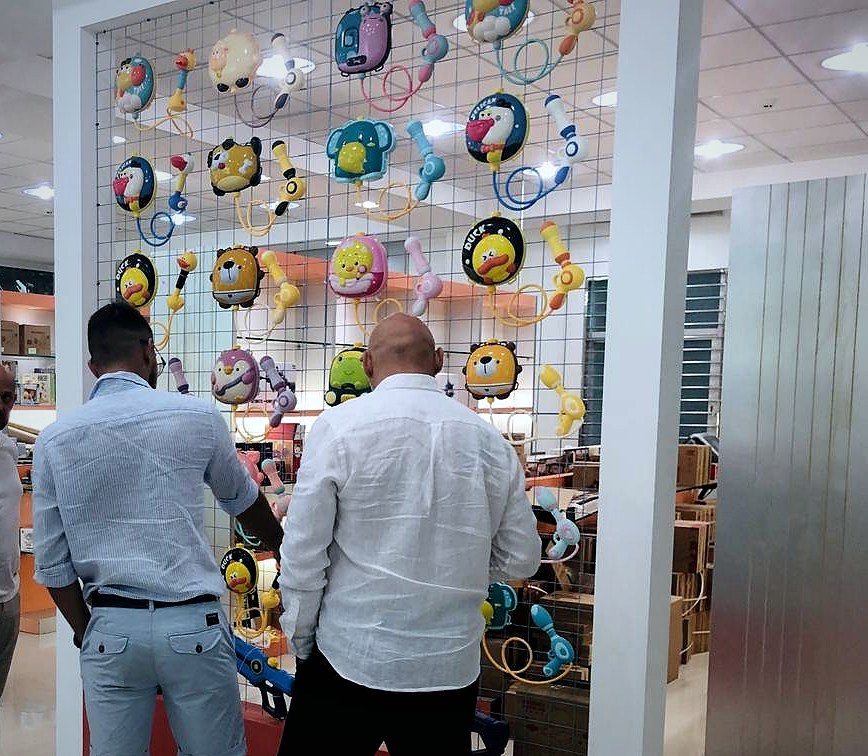
Decide the inner pack (the retail-facing unit a shopper picks up) and the carton pack (the transport unit a customs officer and a warehouse receiver open) before you send the PO, not after the goods are boxed. Lock the inner-pack type and count per carton in writing, require measured carton dimensions and gross/net weight on the packing list, and treat any mismatch between invoice and packing list as a stop-ship. The two layers are separate decisions that share one consequence: if they do not reconcile, your container sits.
Most catalog records give you the inner-pack type and a reference MOQ, and nothing about the carton. That gap is where purchase orders go wrong. This page covers which papers the exam officer asks for, which fields you must confirm with the supplier before buying, and one illustrative shipment that gets held over a single unconfirmed number.
Papers at the exam
| Commercial invoice — why the officer asks | It establishes what was sold and for how much, and it sets the duty basis. It carries seller and buyer details, invoice number and date, PO reference, product descriptions, unit prices, total value, payment terms, Incoterms, HS codes and country of origin. |
|---|---|
| Commercial invoice — where it should be | With the broker and in the entry file before arrival, with HS codes confirmed for the actual product. Incorrect HS codes can lead to duty penalties or shipment holds; declared value must be the truthful transaction value. |
| Commercial invoice — if you do not have it | Nothing clears. Without a valid invoice there is no duty assessment, and undervaluing is audited and penalised rather than tolerated. |
| Packing list — why the officer asks | It is the physical breakdown that lets customs and your warehouse verify contents without opening every carton: item quantities per box, SKU or part numbers, carton dimensions and weights, total carton count, box numbers and contents breakdown, and gross versus net weight. |
| Packing list — where it should be | Attached to the shipment file, with box numbers that match the carton marks. Carton dimensions, weights and pack quantity should come from measured production packaging, not from a preliminary artwork file. |
| Packing list — if you do not have it | A missing or incomplete packing list can trigger additional inspections, delays and increased costs, and it blocks your own receiving team from verifying what actually arrived. |
| Bill of lading or air waybill — why the officer asks | It is the contract of carriage and the receipt of goods, and it ties the container or booking to the entry. |
| Bill of lading or air waybill — where it should be | With the forwarder and broker; the master bill of lading number belongs on the packing list as a cross-reference. |
| Bill of lading or air waybill — if you do not have it | Cargo cannot be released to you. Original versus telex or express release also decides how fast you can take delivery. |
| Certificate of origin — why the officer asks | It supports origin-based duty treatment and must match the country of origin stated on the invoice. |
| Certificate of origin — where it should be | In the entry file, consistent with the invoice. Preferential certificates are product- and programme-specific, so confirm eligibility rather than assuming it. |
| Certificate of origin — if you do not have it | You pay the non-preferential rate, and any inconsistency with the invoice invites questions. |
| Pre-arrival security filing (for example US ISF, or EU ENS) — why the officer asks | It is the advance risk filing that lets the destination authority screen cargo before it arrives. |
| Pre-arrival security filing — where it should be | Filed by the responsible party on the destination timeline; for US sea cargo the ISF is due at least 24 hours before the vessel loads. |
| Pre-arrival security filing — if you do not have it | Late or missing filings expose you to penalties and hold the release, regardless of how good the cartons are. |
Worked example (illustrative, not a real shipment)
A buyer orders roughly 2,400 units of a boxed plastic toy, split across two destinations — one EU port and one US port. The supplier quotes a single-item inner pack and a color box, and the catalog record shows a reference MOQ with units per carton unstated. The buyer approves the artwork, pays the deposit, and lets production run on the assumption that cartons hold a round number.
At the exam, the officer opens three cartons. The packing list says 48 units per carton; the physical cartons hold a different count because the factory changed the inner-pack orientation mid-run to fit a smaller box. Net weight on the packing list was copied from the artwork file rather than measured, so the gross and net figures no longer reconcile with the invoice line. Nothing here is fraud — it is an unconfirmed field, and it is enough.
The EU-bound portion is held for a documentation query while the buyer's broker reconciles counts and weights; the US-bound portion clears but the receiving warehouse has to re-count and re-label pallets. The cost is not a fine, it is time and labour, and the fix is upstream: three numbers confirmed in writing before the PO — units per carton, carton dimensions, gross and net weight — plus a packing list built from measured production packaging. Carton CBM must be recalculated whenever carton size or pack quantity changes.
What to confirm with the supplier before you place the PO
Ask for the inner-pack configuration for the exact SKU — single item, color box, or something else — and get it in writing, because the same product family can ship in more than one retail format. Then ask how many units sit in one carton, what the measured carton dimensions and gross weight are, and whether the reference MOQ changes with the packing configuration. Standardise inner-pack quantity, orientation and separators so carton weight, protection and barcode handling stay repeatable across lots.
Two compliance points belong in the same email, because they decide whether the carton can ship at all. First, a CE string or image in a catalog is not EU approval: according to the European Commission, CE marking is the manufacturer's declaration and does not identify a product's origin, so verify against the exact product file and applicable requirements rather than a catalog badge. Second, laboratory acceptance is specific to the relevant safety rules and one laboratory may not cover every required test, so match the applicable requirements and laboratory scope to the actual toy configuration. Neither point is about inner pack or carton pack directly — but both are settled by the same document set you are already assembling, and both are cheaper to fix before the cartons close.
If one SKU is produced across factories or lots, the split should be visible in the order, carton code and compliance evidence. That single practice prevents the worst version of this problem, where half a shipment carries one packing spec and half carries another and the packing list describes neither accurately.
FAQ
Do I need both a commercial invoice and a packing list?
Yes. Customs authorities require both documents for international shipments. Some countries may allow combined documents, but it is safest to provide both as separate, clearly labelled items — the invoice establishes what is sold and for how much, and the packing list gives the physical breakdown.
Who prepares the commercial invoice and packing list?
The supplier or exporter typically prepares both, because they know how the goods were packed and the manufacturing details. As the importer you should still review and approve them before shipment; if the supplier cannot produce accurate HS codes and detailed descriptions, a customs broker or forwarder can assist or verify.
What happens if my packing list does not match my commercial invoice?
Discrepancies between the invoice and packing list are major red flags for customs and may lead to detention. Quantity, description and weight information must reconcile exactly, which is why units per carton, carton count and gross/net weight should be confirmed before production rather than at the port.
Does a CE mark in a supplier catalog mean the toy is EU-approved?
No. The European Commission explicitly distinguishes the manufacturer's CE declaration from approval by an EU authority, and CE marking does not identify a product's origin. Use the exact product file and applicable requirements when explaining its status.
Can one test laboratory cover all the tests my toy needs?
Not necessarily. CPSC explains that laboratory acceptance is specific to the relevant safety rules, and one laboratory may not cover every required test. Match the applicable requirements and laboratory scope to the actual toy configuration before you rely on a single report.
What single number causes the most exam delays?
Units per carton. It drives carton count, gross and net weight, CBM, and the warehouse receiving plan, so an unconfirmed or changed pack quantity is what usually puts the invoice and packing list out of step. Confirm it in writing and recalculate CBM whenever carton size or pack quantity changes.
Sources
- Commercial Invoice & Packing List Guide Forthsource
- Commercial Invoice and Packing List (2026)
- Commercial Invoice vs Packing List
- Container Customs Clearance: The Full Import Document Checklist
Request a Quote
Send the SKU, destination market, and the documents you already have.
Next step