
TRADE DESK NOTE
Compare Wholesale Toy Suppliers on Evidence, Not Claims
How to compare wholesale toy suppliers on evidence, not claims: golden samples, CPC/SKU matching, tracking labels, tooling terms and inspection plans.
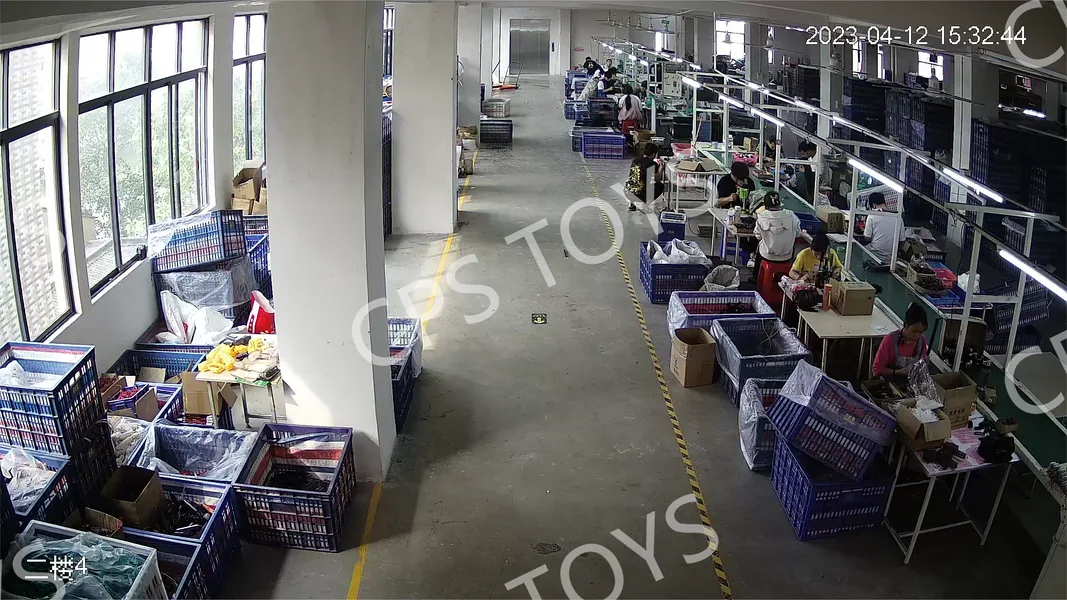
Judge a wholesale toy supplier by seven pieces of physical or documentary evidence, not by its catalogue page: a sealed golden sample, certificates mapped to your market and lot, tracking-label content, button-cell closure, an agreed inspection plan, tooling terms, and a packaging/booking spec. If a supplier cannot produce at least five of those before you send a deposit, you are buying a claim, not a supply chain.
Your supplier file has to survive seven independent checks. A catalogue page has to survive zero. That gap is where recalls, second-lot colour drift, and customs holds live. What follows are the checks, the trade-offs, and the documents to request — enough to decide whether to contact a supplier at all before you negotiate price.
What decides a supplier comparison
- A sealed golden sample on the factory's QC shelf ends colour disputes; an approved photo does not, and buyers who skip the physical sample typically pay for it on the second production lot.
- A Children's Product Certificate is product-specific, based on third-party testing at a CPSC-accepted lab, and must not be read as a blanket factory certificate.
- UKCA and a VOC file are different documents covering different scopes — one certificate cannot serve both, so map every file to market, lot and test item before you accept it.
- Tracking-label content (manufacturer, date, lot) and the CPC must be tied to the SKU, not to the factory gate.
- MOQ, AQL and inspection criteria belong on the PO as an agreed inspection plan; a catalogue sentence is not a release standard.
What evidence should a wholesale toy supplier show before you order?
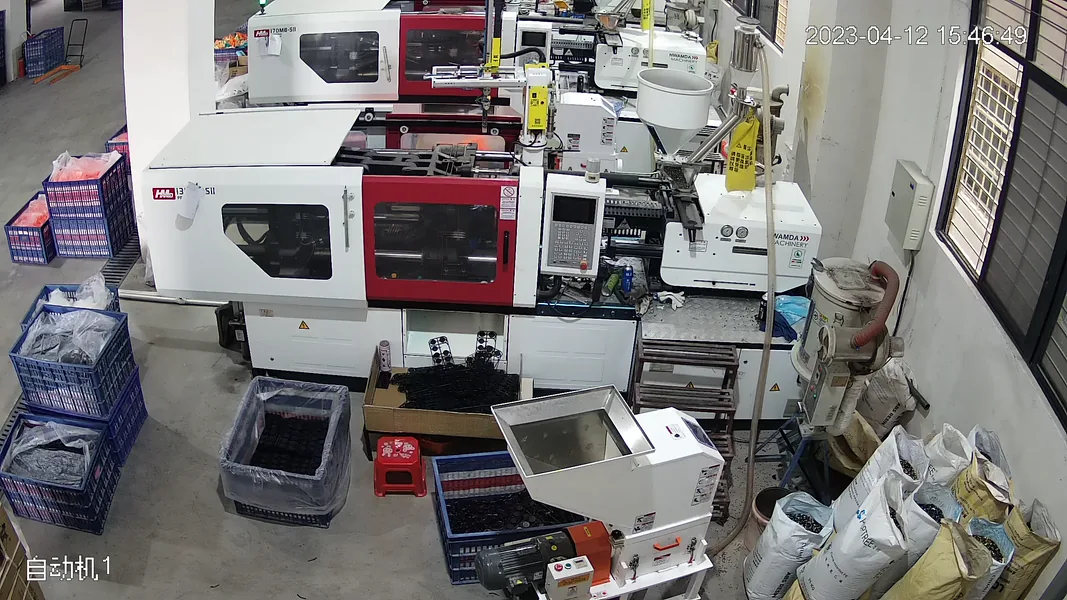
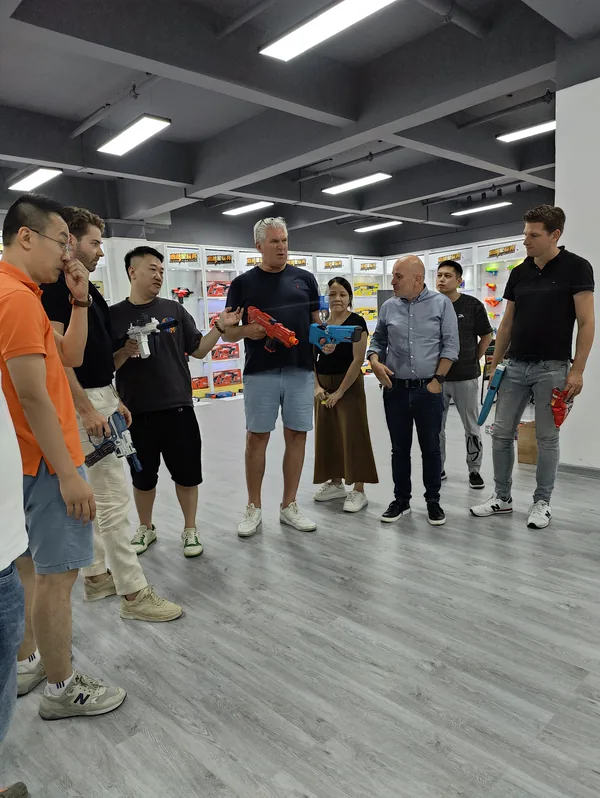
Seven document or physical items decide the comparison: sealed golden sample, market-and-lot-mapped test files, tracking-label content, button-cell compartment design, agreed inspection plan, tooling ownership terms, and a packaging/booking specification. Request all seven in the first email; the completeness and speed of the reply tells you more than the reply's tone.
The seven checks are ordered by how early they can kill an order. Sample consistency and document matching come first because they are cheap to verify and expensive to discover late. Tooling and packaging terms come later because they only bite after you have committed volume.
Evidence comparison matrix: what to ask, what to verify, what to compare
| Sealed golden sample | Ask for the sealed sample or a photo set plus bulk-vs-sample comparison record on colour, fit, flash and function. Verify against your own retained piece. Compare how each supplier records deviations. |
|---|---|
| Certificate-to-market mapping | Ask for a list mapping each file to market, lot and test item. Verify issuing entity, scope, validity and report number. Compare whether the supplier can state which file covers which test. |
| CPC and supporting test reports | Ask for the Children's Product Certificate plus supporting reports in English. Verify the product identification, cited rules, certifying firm, test-record contact, manufacture date/place, testing date/place and the CPSC-accepted laboratory. Compare CPC-to-SKU matching. |
| Tracking-label content | Ask for a label artwork sample with manufacturer, date and lot. Verify it appears on product or packaging as applicable. Compare whether the CPC is tied to the SKU or described as factory-wide. |
| Button-cell compartment | Ask for closure design notes: screw closure, tool access, warning placement. Verify a physical sample opens only with a tool. Compare against US button-cell expectations before discussing toy features. |
| Inspection plan and defect handling | Ask for the agreed inspection plan that will sit on the PO. Verify defect classes, isolation and rework release. Compare against what the catalogue claims — the number comes from the PO, not a brochure. |
| Tooling ownership terms | Ask for a written tooling policy: fee, ownership, storage period, idle-tool handling. Verify it is signed, not verbal. Compare who holds the tool and under what release conditions. |
| Packaging and booking spec | Ask for double-wall, corner board, ECT and pallet-height specification plus the booking instruction template. Verify it reaches the forwarder. Compare how each supplier handles corner-sensitive goods in LCL. |
Why do Chenghai, Shantou and Yiwu produce different supplier profiles?
Chenghai (Shantou, Guangdong) concentrates plastic and electronic toy production, so the supplier pool there skews toward injection-moulded, battery-operated and RC-type items. Yiwu is a small-commodity aggregation market, which makes it strong for fast-moving low-complexity SKUs and weak for tooling-intensive electronics. Dongguan leans toward higher-end collectibles and silicone, while Yunhe handles wooden toys and Yangzhou and Qingdao are plush hubs.
The practical consequence for a buyer: a supplier's address tells you what its sub-component supply chain can reach within a day. Ordering complex electronics from a commodity market adds sub-component freight and lead time into the unit cost. Ordering a simple plush from an electronics cluster has the same problem in reverse.
For tooling-heavy plastic toys, an injection-moulding base means mould repair, colour matching and flash control sit in the same industrial zone as the machine. That is a supply-chain advantage you can test: ask how many injection-moulding machines the factory runs and who owns the moulds. A trading company will answer colour-mixing ratios confidently and go quiet on machine counts.
How do you verify a Chinese toy supplier without flying there?
Cross-verify four dimensions remotely: public factory data, third-party certification reports, sample testing, and transaction history. Public data means factory area, employee count, stated annual capacity, equipment list and business licence scope — the registered scope should show manufacturing activity with toy codes, not trading or import/export as the primary activity.
Certification reports need four checks: issuing entity, certification scope, expiration date, and whether the certificate entity matches the platform store operator. Trace the report number through the issuing laboratory's own channel. A certificate whose subject is a different legal entity is not evidence about your supplier.
Sample testing is the cheapest remote verification you have. Send identical specs to every candidate and compare response time, sample quality, willingness to revise, and whether they flag a problem you did not ask about. The supplier who answers a question you did not ask is usually the one with a real production floor.
Transaction history (on-time rate, response rate, repeat purchase rate) is a screening signal, not proof. Values are time-sensitive, calculation methods differ between platforms, and a high repeat rate can reflect small repeat orders rather than stable capacity. Confirm current values and compare like-for-like.
Which certification applies to toys sold in the EU or the US — and what is often missed
EU toys fall under the Toy Safety Directive 2009/48/EC, which requires toys placed on the EU market to meet the applicable essential safety requirements, with CE marking and an EU Declaration of Conformity belonging to the conformity process and matched to product scope. According to the General Product Safety Regulation (EU) 2023/988, that regulation is a separate legal instrument, not a substitute for the Toy Safety Directive.
US children's products generally require testing at a CPSC-accepted laboratory and a Children's Product Certificate. According to CPSC guidance, the CPC is based on test results and identifies the applicable rules and responsible parties; it is product-specific and should not be described as a blanket factory certificate.
Two gaps show up repeatedly. First, electrical functions are addressed separately: mechanical EN 71 evidence alone is not a complete electrical assessment for a toy with electrical functions. Second, RoHS evidence follows the electrical product's component and material structure — a declaration for the empty plastic shell does not automatically cover the populated assembly.
Read the applicable edition from the current regulation before quoting a standard. A test report should identify the product configuration, age grade and standard edition. For ASTM F963, check the exact edition and its incorporated regulatory status before citing it.
What should a tracking label and CPC actually contain?
Tracking information should be permanent and support product identification where applicable. In practice, that means manufacturer, date and lot on the product or pack as required — a barcode alone is decoration, not traceability.
The CPC's seven required elements are: identification of the product; citation to each applicable CPSC children's product safety rule; identification of the domestic manufacturer or importer certifying compliance; contact information for the individual maintaining test records; date and place of manufacture; date(s) and place(s) of testing; and identification of the third-party, CPSC-accepted laboratory. Date of manufacture needs at least month and year, or a starting month and year for a continuous batch.
The CPC and supporting test reports must be in English. No specific template is required as long as the seven elements are present and accurate. Note also that from July 8, 2026, importers of most regulated consumer products must electronically file certificates of compliance with US Customs and Border Protection via a PGA Message Set — worth confirming against current CPSC and CBP guidance rather than a supplier summary.
Button-cell toys: why the compartment comes before the toy function
Button-cell toys are a compartment and warning problem first. Check screw closure, tool access and warning placement before discussing what the toy does. A cute electronic that opens with fingernails does not ship — US button-cell rules and the door design are the same conversation, not two departments.
This is also a useful test of supplier maturity. Ask for the closure design and the warning artwork in the same message as the product spec. Suppliers who separate safety structure from product features are usually the ones subcontracting the assembly.
Tooling, packaging and inspection: the three clauses buyers forget
Tooling policy is a document, not a handshake. Freeze the fee, ownership, storage period, and what happens if the tool sits idle. A buyer who pays a tooling fee without those four terms may find the ownership question unanswered later.
Packaging wins or loses claims on the booking file. Corner-sensitive goods such as LCD tablets die in LCL when the booking instruction is a thank-you note. Write double-wall, corner boards, ECT and pallet height into the specification, and make sure they reach the forwarder — not just the factory's email.
Inspection numbers belong on the PO. Any AQL figure should come from the agreed inspection plan, not from a catalogue sentence. On the floor, the working sequence is: isolate a failed lot, record the defect class, release only after rework. Ask a supplier to describe that sequence and you will learn whether they have one.
What MOQ posture should you expect from a toy factory?
MOQ should be read against machine capacity, not against how friendly the quote sounds. A moulding-based line has a floor below which the setup is not economic; a soft-goods line can flex further because cutting and sewing scale differently. Treat an unusually low MOQ on a complex moulded toy as a question, not a bargain — ask whose line will run it.
Certification is not sized to your order. Testing cost and turnaround sit per SKU or material and do not shrink because you ordered less, which is why small first orders often carry a proportionally higher compliance burden. Confirm the inspection plan, the tooling terms and the packaging spec at the same time you confirm MOQ, because those three are what make a small order actually shippable.
Three-step supplier verification sequence
Step one: request the seven evidence items in one message and timestamp the reply. Step two: map every returned document to market, lot and test item, and list what is missing rather than what is present. Step three: submit the mapped file to an independent evaluation and risk review before you contact the supplier about pricing or place a deposit.
The order matters. Most buyers negotiate price first and discover the document gaps after the deposit. Reversing that sequence costs a few days and saves the deposit.
FAQ: comparing wholesale toy suppliers on evidence
Can I compare toy suppliers using only their online catalogue and certificates?
No. A catalogue page is a claim, and a certificate is only evidence when its subject, scope, validity and lot match your order. Cross-verify public factory data, third-party reports, sample testing and transaction history, then confirm the physical sample.
What should I ask for instead of a general 'we are certified' statement?
Ask for a list mapping each certificate or report to the market, lot and test item it covers, plus issuing entity, scope and expiration date. If the certificate entity differs from the store operator or the legal entity on the business licence, it is not evidence about your supplier.
Is a Children's Product Certificate proof that a factory is compliant?
No. A CPC is product-specific, based on third-party testing at a CPSC-accepted laboratory, and identifies the applicable rules and responsible parties. It should not be described as a blanket factory certificate, and it must match the SKU you are buying.
How do I handle MOQ and testing costs on a small first order?
Read MOQ against the production method — moulding lines have a higher economic floor than soft-goods lines — and budget testing per SKU or material, since it does not scale down with order size. Confirm inspection plan, tooling terms and packaging spec alongside MOQ.
What is the fastest red flag during remote supplier verification?
A supplier who cannot state which document covers which market and lot, or who answers machine and mould-ownership questions with colour-mixing talk. Ask for the sealed sample and the tooling terms in the same message and watch which one gets answered.
Do I need to re-verify certificates for every production lot?
Certificates are a screening threshold, not a batch guarantee. Plan batch-level quality checks against the sealed sample and the agreed inspection plan, and confirm whether any material or component substitution occurred before release.
Sources
- Can't visit the factory for inspection? practical methods to evaluate the strength of plush toy factories online
- How to Find a Toy Manufacturer in China? Step by Step Guide
- How to Verify a Chenghai Toy Factory via Video: A Step-by-Step Guide for Southeast Asia Buyers
- How to find reliable wholesale toy suppliers:Detailed Guide
Request a Quote or a Factory Audit
If you are comparing suppliers for plastic or electronic toys and want the seven evidence items checked against your target market, send us your SKU spec, destination market and expected volume. We will reply with the documents we can produce for that scope, the sample route, and the tooling and inspection terms in writing.
Prefer to verify first? Ask for a factory audit slot or a live walkthrough of the moulding, assembly and QC areas, and we will keep the conversation on evidence: sealed sample, document mapping, tracking label, closure design, inspection plan, tooling terms and booking spec.
Next step