
TRADE DESK NOTE
How to Request SKU-Specific Toy Test Reports
A step-by-step buyer checklist for requesting SKU-specific toy test reports—match lot, color, age grade, and lab scope before you release the PO.
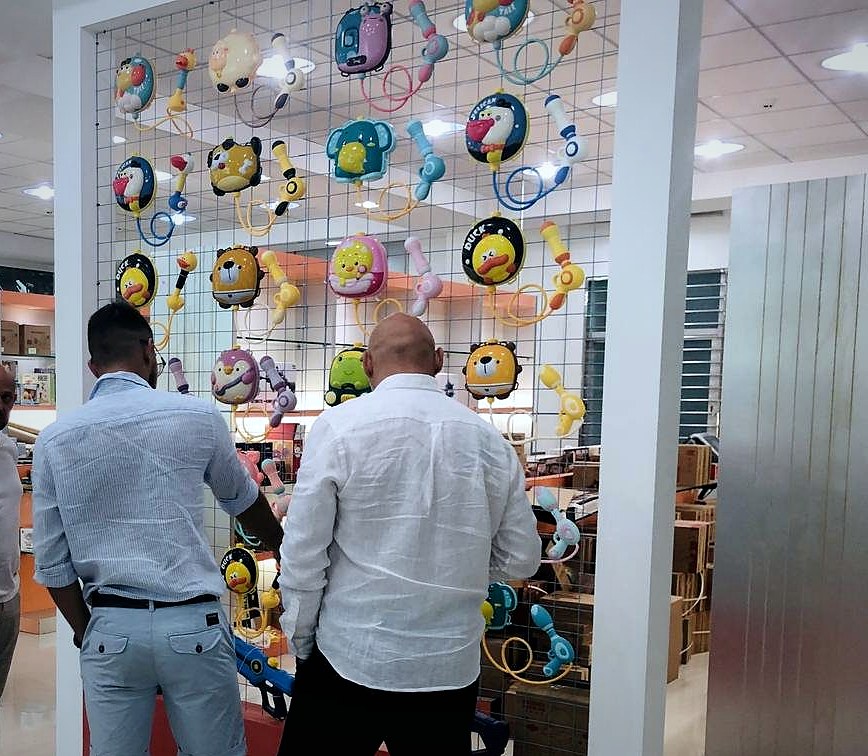
Request SKU-specific toy test reports by matching the document to the exact SKU, lot, and destination market—not to the factory or the container. A type-test or golden-sample report does not automatically cover a later production lot, so the request must tie the report to the PO's model, materials, colors, age grade, and production date/cohort. If the supplier cannot produce a lot-matched, SKU-matched file, treat that as a stop signal before you release the balance payment or book the shipment.
What Buyers Should Decide Before Requesting Reports
- A UKCA certificate and a VOC file are different papers covering different tests—do not accept one as proof of the other. Map each document to market, lot, and test scope before you ask for anything.
- Keep the CPC (or equivalent) matched to the SKU, not to the factory door. A report issued against the factory or a generic model does not cover your order.
- A test report is useful only when its identity matches the actual SKU, model, material, color, age grade, and sample construction. Mismatch on any one of these invalidates the file for your lot.
- Tracking labels are not decoration: manufacturer, date, and lot content must appear on the product or pack as required, and the report must reflect the current product design and applicable standard edition.
- Incoterms define when risk transfers between seller and buyer; they do not define product-safety compliance or ownership of test reports. Settle report ownership and delivery before the PO, not after the claim.
Step 1: Separate Document Types Before You Request Anything
Start by identifying what you are actually asking for. A market certificate (such as UKCA or CE marking documentation) and a test/technical file (such as a VOC file, EN71 report, or ASTM F963 report) are different documents that cover different tests. A buyer once tried to use one certificate for both an electric bubble machine's market access and its VOC requirement—the paperwork did not match the lot, and it was not accepted as proof.
A UKCA or CE technical file typically includes design documents, test reports, risk assessments, and other information specified by the product regulation. That is broader than a single test report. Conflate the two and you either over-request, slowing the factory down, or under-request and leave a gap that customs or a marketplace can flag.
Checkpoint: ask the supplier to state in writing which document type they are sending and which tests it actually covers. Red flag: a supplier who sends one PDF and calls it 'the certificate' without naming the standard, clause, or test scope.
Step 2: Build a Market + Lot + Test Scope Matrix
Before you send the RFQ, build a simple matrix with one row per destination market and one column per required test scope. For each SKU, record which file covers which market, which lot, and which test. Skip this and your paperwork is the thing that fails an inspection or a customs hold.
The laboratory should be selected after the market and test scope are defined, because not every lab or site can perform every toy method. Pick a lab first and define scope later, and you may pay for a report the destination market does not recognize for that product category.
Checkpoint: every file in the matrix has a market, a lot number, and a named test scope. Red flag: a report that lists a market but not a lot, or a test scope that does not match the product category you are importing.
Step-by-Step Checks for SKU-Specific Report Requests
| Step 1: Identify document type | Confirm whether the supplier is sending a market certificate or a test/technical file. | Red flag: one PDF presented as both. |
|---|---|
| Step 2: Map market + lot + test scope | Build a matrix before the RFQ; one row per market, one column per required test. | Red flag: report lists a market but no lot number. |
| Step 3: Match the report to the SKU | Verify the report identifies the exact SKU, model, material, color, and age grade. | Red flag: report names the factory or a generic model instead of your SKU. |
| Step 4: Confirm lab scope and accreditation | Select the lab after market and test scope are defined; not every lab can perform every toy method. | Red flag: lab chosen before the scope is written down. |
| Step 5: Check sample-to-production consistency | Confirm the tested sample matches mass production, including detachable parts and coatings. | Red flag: report covers a prototype or golden sample only. |
| Step 6: Verify tracking label content | Manufacturer, date, and lot must appear on the product or pack as required. | Red flag: a pretty barcode with no tracking label content. |
| Step 7: Confirm report currency and standard edition | The report must reflect the current product design and applicable standard edition. | Red flag: report issued against a superseded standard edition or an older design. |
| Step 8: Settle ownership and delivery before the PO | Agree who holds the report and when it is delivered; Incoterms do not define test-report ownership. | Red flag: report promised after shipment or after balance payment. |
Step 3: Match the Report to the Exact SKU, Not the Factory
A test report is useful only when the report identity matches the actual SKU, model, material, color, age grade, and sample construction. This is where buyer-supplier disputes usually start: the factory sends a report that is real, accredited, and recent—but it covers a different model, a different colorway, or a different material batch.
Keep the CPC (or equivalent) matched to the SKU, not to the factory door. When a report is issued against the factory or a generic product family, you have no evidence that your specific production lot was tested. Ask the supplier to point to the exact line on the report where your SKU or model number appears.
Checkpoint: the report names your SKU/model and the material and color you are buying. Red flag: the report shows a product photo that does not match your item, or a model number that differs from your PO.
Step 4: Confirm the Lab Can Actually Perform the Method
The laboratory should be selected after the market and test scope are defined, because not every lab or site can perform every toy method. A lab that is perfectly competent for one test method may not be accredited or equipped for another, especially for electrical toys, plush flammability, or specific chemical migration tests.
Ask the supplier for the lab's scope of accreditation for the specific method, not just the lab's name. If the destination market requires a lab recognized by that market's authority, confirm that recognition in writing before the lab starts work. Otherwise you pay twice for the same test.
Checkpoint: the lab's accreditation scope covers the specific test method you need. Red flag: a supplier who cannot name the method or the accreditation scope, only the lab brand.
Step 5: Verify Sample-to-Production Consistency and Tracking Labels
A type-test or golden-sample report does not automatically cover a later production lot. Importers should match report SKU, materials, colors, and production date/cohort to the PO. If the factory changed a material, a coating, or a colorant after the report was issued, the report no longer describes what you are buying.
A US children's lot once shipped with a pretty barcode and no tracking label content. The fix was to add manufacturer, date, and lot on the product or pack as required, and to keep the CPC matched to the SKU, not to the factory door. Tracking labels are not decoration—they are the physical link between the report and the goods in the container.
Checkpoint: the report's sample description matches the production lot, and the tracking label content is present on product or pack. Red flag: a report dated before a material or color change, or a carton with a barcode but no manufacturer/date/lot content.
Step 6: Handle Packaging and Booking Specs in Writing
Corner-sensitive goods die in LCL when the booking instruction is a thank-you note. LCD tablets and similar items need written packaging specs—double-wall, corner boards, ECT, and pallet height—captured in the booking file before the container is loaded. If the packaging spec is verbal, you have no evidence when the claim arrives.
This step sits alongside the test report because a compliance file does not protect a crushed shipment. The report proves the product design; the booking file proves the packaging design. Both must be in writing and both must match the lot.
Checkpoint: double-wall, corner boards, ECT, and pallet height are written in the booking file. Red flag: packaging specs communicated only by phone or chat, with no booking-file record.
Worked example (illustrative, not a real shipment)
A buyer places an order for about 1,200 units of a small plastic RC car, split across two destinations: 800 units to the US and 400 units to the EU. The supplier sends one test report covering a similar model, plus a market certificate for the EU portion. The report names the factory, not the buyer's SKU, and the EU certificate does not list the lot number.
At Step 3, the buyer flags that the report covers a different model and that the EU certificate has no lot match. At Step 5, the buyer finds the tracking label content is missing from the retail pack for the US portion. The shipment is held at the documentation stage—not because the product failed a test, but because the paperwork did not match the lot. The supplier must reissue the report against the correct SKU and lot, and reprint the US packaging with tracking label content, before the booking can proceed.
This example is illustrative only and is not a real shipment, order, or enforcement case. It shows where the process typically breaks: report identity, lot match, and tracking label content.
What to Ask Suppliers: RFQ Checklist for SKU-Specific Reports
Which specific test report covers this SKU and this lot number? Ask for the report reference and the line where your SKU or model appears.
Is this document a market certificate or a test/technical file—and which tests does it actually cover? Do not accept a one-word answer; ask for the test scope in writing.
Is the CPC (or equivalent) issued against this SKU, or against the factory? A factory-level document does not prove your lot was tested.
What manufacturer, date, and lot content appears on the product or pack? Confirm this is present before the goods leave the factory.
For corner-sensitive items: what double-wall, corner board, ECT, and pallet height will be used? Ask for the booking file showing these specs.
Can you provide the booking file showing these packaging specs before the container is loaded? Verbal specs are not evidence.
Which laboratory will perform the test, and what is its accreditation scope for this specific method? Select the lab after the market and test scope are defined.
FAQ: Requesting SKU-Specific Toy Test Reports
Can a supplier send one test report that covers all my SKUs?
No. A report is useful only when its identity matches the actual SKU, model, material, color, age grade, and sample construction. A report covering a similar model or the factory does not cover your lot. Request a separate report reference for each SKU and lot you are importing.
Does a UKCA certificate also cover the VOC requirement?
No. UKCA and a VOC file are different papers covering different tests. A buyer once tried to use one certificate for both, and it was not accepted because the paperwork did not match the lot. Map each document to market, lot, and test scope before you request it.
How do I know if a test report is still valid for my production lot?
A type-test or golden-sample report does not automatically cover a later production lot. Match the report's SKU, materials, colors, and production date/cohort to your PO. If the factory changed a material, coating, or colorant after the report was issued, request a new report for the current design.
Who owns the test report—the factory or the buyer?
Incoterms define when risk transfers between seller and buyer; they do not define product-safety compliance or ownership of test reports. Settle ownership and delivery timing in the PO or supply agreement before production starts, not after a claim arises.
What should I check on the tracking label before shipment?
Confirm that manufacturer, date, and lot content appear on the product or pack as required. A US children's lot once shipped with a barcode but no tracking label content, which creates a documentation gap even when the product itself passes testing. Keep the CPC matched to the SKU, not to the factory door.
Should I pick the lab before or after defining the test scope?
Pick the lab after the market and test scope are defined, because not every lab or site can perform every toy method. If you select the lab first, you may pay for a report that the destination market does not recognize for that product category. Confirm the lab's accreditation scope for the specific method in writing.
What packaging specs should be in the booking file for fragile toys?
For corner-sensitive goods, write double-wall, corner boards, ECT, and pallet height into the booking file before the container is loaded. Verbal packaging specs are not evidence when a damage claim arrives. The booking file is what wins the claim.
Does a product recall affect my need for a factory test report?
No. A recall is an enforcement or market action, not a substitute for a factory's own test report. You still need a report that matches your SKU and lot. A recall does not prove your specific production lot was tested or untested.
Sources
- Amazon CPC test report process for children's figurines
- Children’s Toy Compliance on Amazon: AHD, EN 71 & Third-Party Testing Explained
- Compass Plush Prototype Test: A 12-Point Buyer Method - Knowledge - XINDITAI ELECTRONIC
- Conformité des jouets Amazon : Guide complet de la validation directe CPC et TIC
Next Step: Build Your SKU Report Request
Use the eight-step table above as your RFQ checklist: identify the document type, map market and lot, match the report to the SKU, confirm lab scope, check sample-to-production consistency, verify tracking labels, confirm the standard edition, and settle ownership before the PO. If the supplier cannot produce a lot-matched, SKU-matched file, do not release the balance payment or book the shipment.
For buyers sourcing plastic and RC toy categories, the same checklist applies whether you are ordering a mini RC car or a larger battery-operated unit. The report must follow the SKU, not the factory. Send this checklist to your supplier before the next quotation round and ask for the report reference in the quote.
Next step