
TRADE DESK NOTE
How Trade Show Timing Can Change a Toy Assortment Refresh
How toy fair calendars, CPC and GPSR documentation lead times, and tariff signals should shape when you lock a toy assortment refresh in 2026.
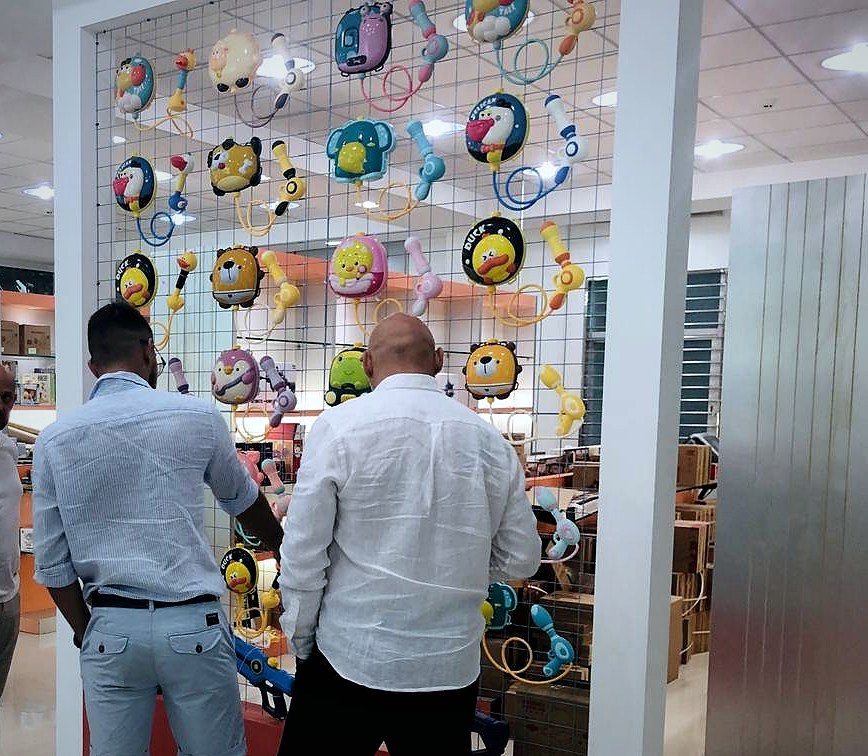
Trade show timing does not decide what sells, but it decides when you can still change your mind. A toy assortment refresh gets locked by whichever comes first: your show calendar, your certification lead time, or your production slot. If a show falls three weeks before your PO cut-off, the show is a real decision point. If it falls after the slot is booked, it is a review meeting with no leverage.
This article stays narrow on purpose. It states one dated fact you can check, spells out what that fact does not tell you, and answers the planning questions buyers actually ask when deciding whether to contact suppliers and start a refresh now.
One dated fact: China Toy Expo runs 21–23 October 2026 in Shanghai
China Toy Expo (CTE) 2026 is scheduled for 21–23 October 2026 at the Shanghai New International Expo Center, according to the event listing published on velvet-path.com. That is a three-day window inside the fourth quarter — late enough that most holiday 2026 production has already been committed, early enough that spring 2027 development is still open.
That is the whole of the dated fact. It is a calendar entry, not a forecast.
The practical read: a late-October show is a poor place to fix a Christmas problem and a good place to fix a spring one. If you are refreshing an assortment for Q1 or Q2 2027, a show in the third week of October leaves you roughly the tooling, sampling and certification runway you need. If you are still shopping for Q4 2026, you are already late and the show will mostly confirm prices you can no longer negotiate.
What not to infer from that fact
The CTE date does not tell you anything about demand. It is not evidence that a category is growing, shrinking, or that any product ranked well. Exhibition scale figures published by a show organiser are marketing numbers about floor space and exhibitor counts — they describe the event, not the market.
It also does not establish a causal link between trade show timing and assortment refresh outcomes. No source in this article's evidence set shows that buyers who attend a specific fair refresh assortments faster or more profitably. The connection is a scheduling one, and buyers should treat it that way: shows are deadlines and information events, not market data.
Finally, do not let a show date stand in for a regulatory date. They are unrelated and they frequently get confused in planning meetings.
The compliance clock that actually binds a refresh: US CPC and the 8 July 2026 eFiling change
For US-bound children's products, the binding constraint is documentation, not the show floor. According to the CPSC, children's products are consumer products designed or intended primarily for children 12 years of age or younger. Under Section 14 of the CPSA, codified in 16 CFR part 1110, domestic manufacturers and importers of such products must certify compliance in a written Children's Product Certificate (CPC), based on test results from a third-party, CPSC-accepted laboratory. The CPC and the supporting test reports must be in English.
Two details matter more than buyers expect. First, the CPC is product-specific — it is not a blanket factory certificate, so a new SKU in an existing range needs its own certificate. Second, no fixed template is required, but seven elements must be present and accurate: product identification; citation to each applicable CPSC children's product safety rule; identification of the domestic manufacturer or importer certifying compliance (name, full mailing address, telephone number); contact details for the person maintaining test records; date and place of manufacture (at least month and year, plus at least city and country); date(s) and place(s) of testing; and identification of the third-party, CPSC-accepted laboratory.
There is a real caveat. Some products may not require third-party testing because of exemptions, exceptions or CPSC determinations — but the manufacturer or importer must still issue a CPC citing all applicable regulations and stating the exception or exemption claimed. Registered small batch manufacturers not required to third-party test to certain requirements must include their CPSC registration number in that section. General-use products fall under a General Certificate of Conformity (GCC) instead, which is a different instrument.
Then there is the date that should be in your sourcing calendar now: beginning 8 July 2026, importers of most regulated consumer products are required to electronically file (eFile) certificates of compliance with US Customs and Border Protection via a Partner Government Agency Message Set. Note the wording — most regulated consumer products, not all. Treat it as a documentation pipeline change, not a product change. If your refresh lands after that date and your supplier's paperwork arrives as a PDF attachment, you have a problem that no trade show will solve.
What this means for assortment timing: build the certification step backwards from your PO date, not forwards from the show date. A new SKU in a new resin grade, pigment, plasticizer or coating can trigger chemical, mechanical, color and dimensional revalidation — and after any change that can affect safety or compliance, the retest decision should be documented even if the product name and SKU stay the same. Painted plastic figures are the obvious example: coating adhesion, lead and chemical content, abrasion and small-part checks all need to be tied to the actual configuration, including detachable accessories and packaging components, because age grading and small-part risk are assessed against the real product as sold.
Where the EU differs, and why you must not merge the dates
EU toy safety rules are set at EU level through Directive 2009/48/EC, and toys placed on the EU market must meet the applicable essential safety requirements. CE marking and the EU Declaration of Conformity belong to the conformity process and must be matched to the product scope. Separately, Regulation (EU) 2023/988 — the General Product Safety Regulation (GPSR) — was adopted on 10 May 2023 and sets a horizontal product-safety framework for consumer products, including a general safety requirement, coverage of distance and online selling, and children's safety considerations.
These are separate legal instruments. GPSR is not the Toy Safety Directive, and neither is a Digital Product Passport regime. Do not put them on one deadline. The GPSR text does not, in the material available, fix a single per-category compliance date for toys, so the honest position is that the applicable timeline for a given SKU is not confirmed from this source and should be read from the current consolidated text before you commit a range.
The same discipline applies to test reports generally. The applicable edition should be read from the current regulation before a report is quoted, and a report should identify the product configuration, age grade and standard edition — a document that names none of the three is not a document you can rely on. ASTM F963 is the relevant US reference point, and its exact edition and incorporated regulatory status should be checked before quoting it.
Responsibility is also not a single role. Manufacturers, authorised representatives, importers and distributors each verify different things, and importer, manufacturer and product-identification information should be mapped to the relevant market role before packaging goes to print. Tracking information should be permanent and support product identification where applicable, which means packaging, product markings and lot control get reviewed together — and those are controlled fields that can change with the SKU.
How to sequence a refresh around a show without guessing
The sequence that survives contact with reality looks like this. Fix the PO cut-off first. Then subtract the certification and documentation lead time for the specific SKU. Whatever is left is your real decision window, and the show either falls inside it or it does not.
If the show falls inside the window, go with a qualification brief rather than a shopping list: which categories you need alternatives in, what documentation you will accept on the spot, and what you will not. If the show falls after the window, send a small team for intelligence only and do not let it reopen committed volume.
Keep one hard rule: never let a show-floor conversation substitute for a document review. A supplier who cannot produce a CPC matching the SKU, age grade and test edition, or a conformity file matched to the product scope, is not qualified regardless of how good the samples look. Sample quality and documentation discipline are different questions, and the second one is the one that stops shipments.
FAQ
Is it better to place toy orders before or after a major trade show?
It depends on where the show falls relative to your certification and production lead time, not on the show itself. If the show sits before your PO cut-off, use it to finalise a supplier shortlist and place orders after. If it sits after, treat it as intelligence gathering and do not reopen committed volume.
Does attending China Toy Expo in October 2026 mean better pricing for holiday 2026?
No. A 21–23 October 2026 show is late for holiday 2026 production; by then most Q4 volume is committed and pricing has limited room to move. The same window is well placed for spring 2027 development, where sampling and certification runway still exist.
What documentation should I demand from a supplier at a show for US-bound toys?
For children's products, a Children's Product Certificate that is product-specific and backed by testing at a CPSC-accepted laboratory, in English, with the seven required elements — including the applicable rule citations, the certifying importer or manufacturer, and the testing laboratory. Do not accept a general factory certificate. General-use products use a General Certificate of Conformity instead.
Do I need a new CPC if I keep the same SKU but change the material?
Treat it as a certification event, not a paperwork update. A new resin grade, pigment, plasticizer or coating can require chemical, mechanical, color and dimensional revalidation, and the retest decision should be documented even when the product name and SKU are unchanged.
What is the 8 July 2026 eFiling change, and does it affect my PO timing?
From that date, importers of most regulated consumer products must electronically file certificates of compliance with US Customs and Border Protection via a Partner Government Agency Message Set. It affects your documentation pipeline rather than the product, so build the certificate and test report flow into the PO timeline instead of treating it as a customs-day task.
Do EU toy requirements and GPSR share one compliance deadline?
No. Directive 2009/48/EC governs toy safety at EU level, while Regulation (EU) 2023/988 (GPSR) is a separate horizontal framework adopted on 10 May 2023. Do not merge them, and do not assume a single applicable date — read the current consolidated text and confirm the scope for each SKU before committing a range.
Sources
Planning a refresh around your next show?
Bring the category list, the target ship date and the markets you are selling into. We will help you map which SKUs need fresh certification, which documents must arrive before the PO is released, and where the show genuinely fits into the calendar.
Send over your assortment brief and target launch window, and we will come back with a category and sourcing plan built around your real decision window — not the show programme.
Next step