
TRADE DESK NOTE
Material Questions to Ask Before Ordering Water Toys
Which material questions to ask before ordering water toys, what a test report proves and does not prove, and what to do when a report row is blank.
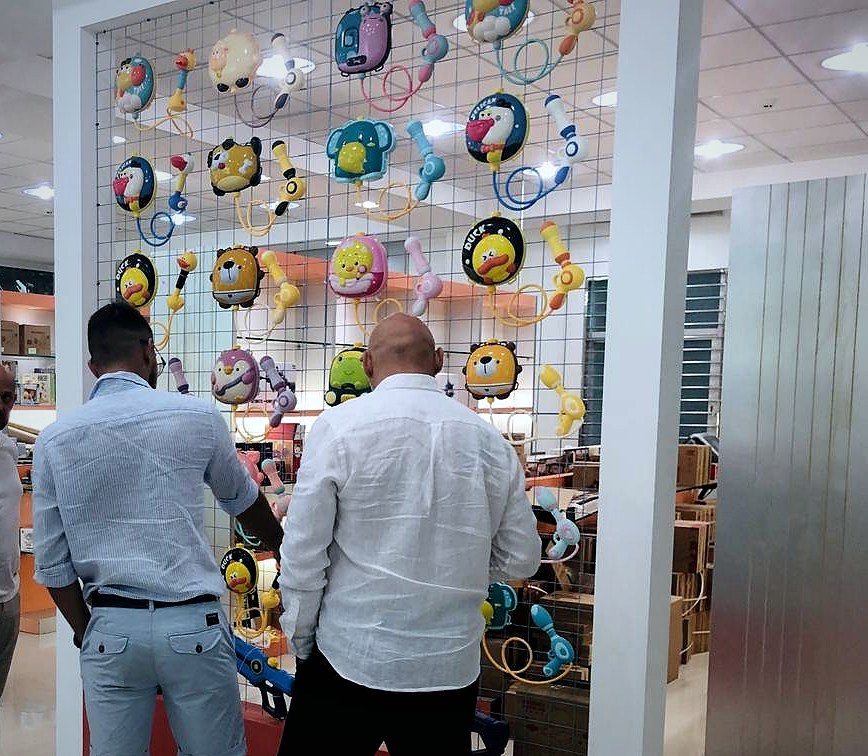
Ask for three things in writing before you ask for a price: the material specification, the age grade, and the destination market. Those three answers determine which safety rules apply and which documents mean anything; without them, any certificate a supplier sends you is a piece of paper with no product attached to it. According to the CPSC's toy safety business guidance, the product, age grading and applicable rule set must be mapped before a compliance statement is drafted — and the same discipline applies to the EU framework under Directive 2009/48 and to the horizontal General Product Safety Regulation (EU) 2023/988, which is a separate legal instrument from the Toy Safety Directive. This page walks through the material questions that actually change your sourcing decision, then breaks a test report into rows so you can see what each row proves and what it does not.
How to Read the Report
| Product identification and configuration | Proves: the report is tied to a described product. Does not prove: that the shipped units match that description after any material, colour or component change. Ask if blank: which SKU, revision and bill of materials the report was issued against. |
|---|---|
| Age grade | Proves: the product was assessed against a stated intended age group. Does not prove: suitability for a younger child, or that small-part risk was assessed for detachable pieces and packaging components. Ask if blank: the age grade on the artwork, on the product marking and in the report — and whether all three match. |
| Standard name and edition | Proves: a named standard was used, at the edition stated. Does not prove: that this edition is the one currently incorporated in the destination market's regulation. Ask if blank: the edition number and the date the current regulation was last read. |
| Test items and results | Proves: the listed tests were performed on the listed sample. Does not prove: that untested risks were assessed. Ask if blank: which risk categories were excluded and why. |
| Laboratory identity and accreditation | Proves: who issued the results. Does not prove: that the laboratory is accepted for the specific rule set in your market. Ask if blank: the laboratory's acceptance status for the applicable rule set. |
| Responsible party | Proves: who stands behind the document. Does not prove: that the factory, as opposed to the trading entity, is the responsible party. Ask if blank: the legal entity name and address that will appear on the declaration. |
| Date and place of manufacture | Proves: when and where the tested sample was made. Does not prove: that later production runs came from the same line or site. Ask if blank: how the certificate maps to the actual production lot. |
Which Row Do Buyers Misread Most Often?
The standard name and edition row. Buyers treat a standard name as a permanent status and stop reading at the edition. According to the eCFR entry covering 16 CFR Part 1250 and ASTM F963, the applicable edition should be read from the current regulation before a report is quoted, and the ASTM standard page itself states that the exact edition and incorporated regulatory status should be checked before quoting ASTM F963. A report citing a superseded edition is not fraud; it is out of date, and the fix is a re-read of the current text and a re-test against the edition now referenced. The second-most-misread row is age grade, because age grading and small-part risk are connected and must be assessed for the actual product configuration, including assemblies, detachable accessories and packaging components. A water toy with a removable valve cap, a squeaker or a packaging clip is a different risk profile from the same body without them.
What Material Questions Should I Put in the RFQ?
State destination market, age grade, materials and colours, packaging language, requested tests, sample policy, tooling terms and the requested trade term. Every item on that list changes either the compliance path or the landed cost. Materials are named by grade, not by family: "PVC" is not a specification, and neither is "silicone." Ask for the grade designation, the supplier of the resin or compound, and any food-contact or toy-contact statement the material supplier issues. Where a component needs clarity and formability — a window, a lens, a moulded transparent part — PETG grades can serve, subject to grade-specific chemical and thermal limits that the grade datasheet should state. That is a material-selection note, not a compliance conclusion; the grade still has to be assessed against the destination market's rules.
Two material questions get skipped and cause most of the rework. First, what happens to the material in water and sunlight over the product's expected life — not in a lab, but in the use the packaging implies. Second, which parts are added after the main moulding, because those are the parts that most often fall outside the tested configuration. If the answer to either question is a verbal assurance, put it in writing before you place the tooling order.
What Does Supplier Qualification Actually Require?
Evaluate capability, material control, quality records, compliance evidence, capacity claims and subcontracting — not the catalogue page. Those six dimensions predict whether your third production run looks like your first. Material control is the dimension buyers under-weight: it covers incoming resin identity, drying and storage discipline, and traceability from lot to finished unit. Moisture-sensitive resins may need controlled drying before moulding, and incorrect drying can create bubbles, splay, hydrolysis or unstable dimensions — a defect class that shows up after shipment, not at the factory gate. First-article inspection verifies that initial production parts meet drawing, material, appearance and assembly requirements before routine release, which is why the first-article report is the document you want to see alongside the test report rather than instead of it.
On the compliance side, ask for the document, not the claim. A Children's Product Certificate is product-specific and should not be described as a blanket factory certificate; it is based on testing results and identifies the applicable rules and responsible parties. If a supplier offers a "factory certificate" covering everything they make, that document does not do the job your importer obligations require. And when the product is a children's item, tracking information should be permanent and support product identification where applicable, which means packaging, product markings and lot control need to be reviewed together. One category warning worth carrying into your risk review: water-bead toys need a separate CPSC risk review because the material can expand after ingestion, and a standard plastic migration report is not a substitute for that review.
Which Rule Applies in Which Market?
The framework differs by market, and the instruments are not interchangeable. In the EU, toy products placed on the EU market must meet the applicable essential safety requirements, and CE marking and an EU Declaration of Conformity belong to the conformity process and must be matched to the product scope. The GPSR sits alongside as a horizontal framework for consumer products and is a separate legal instrument from the Toy Safety Directive — do not merge the two into a single deadline or a single document. In the US, children's toys generally require testing at a CPSC-accepted laboratory and a Children's Product Certificate. The dates matter and they are easy to get wrong: the GPSR was adopted on 10 May 2023 and published in OJ L 135, 23.5.2023; Directive 2009/48 has been in force since 2009 and has been amended repeatedly, so the consolidated text — not the original — is what you read. Where the official text does not confirm the date on which a provision actually starts applying to a product category, treat the applicability date as not confirmed from official text and do not write it into your purchase order as a fixed deadline.
What Should I Do When a Report Row Is Blank?
Treat a blank as an open item, not as a pass. Send the report back with the specific row named and ask for the missing field in writing, tied to the SKU and the production lot. If the supplier cannot supply the field, that is information about the supplier, not about the product. Three blanks justify pausing an order: missing responsible party, missing date and place of manufacture, and a standard name with no edition. The first two mean the document cannot be traced to anyone or anything; the third means you cannot tell whether the test is current. A missing laboratory identity is a softer signal but still worth a query, because the acceptance status of the laboratory depends on the rule set in your destination market.
FAQ
Does a test report prove a water toy is safe?
No. A test report proves that the listed tests were performed on the listed sample against the listed edition. It does not prove the product is safe, does not cover untested risks, and does not transfer to a different material, colour or component configuration.
Is a Children's Product Certificate a factory certificate?
No. A CPC is product-specific and is based on testing results, identifying the applicable rules and responsible parties. It should never be presented as a blanket certificate covering everything a factory produces.
Do I need both the Toy Safety Directive and the GPSR for EU sales?
They are separate legal instruments and should be read separately. The GPSR is a horizontal general product safety framework for consumer products; the Toy Safety Directive is the toy-specific framework. Do not merge them into one deadline or one document.
What if the report cites a standard edition I do not recognise?
Read the applicable edition from the current regulation before quoting the report, and check the standard body's own page for the incorporated status. If the report cites a superseded edition, ask for a re-test against the edition now referenced rather than accepting the older document.
Which material details should be in writing before tooling starts?
The grade designation rather than the material family, the resin or compound supplier, any toy-contact or food-contact statement from the material supplier, and the list of components added after main moulding. Verbal assurances about water and sunlight performance should be converted to written statements with a test reference.
Can I rely on the supplier's catalogue listing for compliance?
No. Supplier qualification should evaluate capability, material control, quality records, compliance evidence, capacity claims and subcontracting rather than relying on a catalogue page. A catalogue record establishes that a product exists in a listing; it is not certification, suitability evidence or capacity confirmation.
Sources
- Custom Equipment Water Toys: Technical Specifications, Production Process, and Applications
- Exploring Odm Water Ball Toys: Material Grades, Properties, and Uses
- Overview of Mini Toys Water: Composition, Mechanical Properties, and Applications
- Summer Water Toys Silicone Magnetic Water Bomb Ball Refill Reusable Water Balloons Quick Fill Self Sealing Soppycid
Next Step
If you are preparing an RFQ for water toys, start with the three identifiers — destination market, age grade, material grade — and ask for the report row by row. If you want a second pair of eyes on what your supplier has sent, send us the report and the intended use, and we will tell you which rows are open.
Next step