
TRADE DESK NOTE
Toy Bestseller Claims Are Demand Signals — Not Evidence You Can Audit
Bestseller and viral-sales claims are demand signals, not compliance evidence. What toy importers can verify from a supplier — CPC, GPSR, SKU-level docs — and what they cannot.
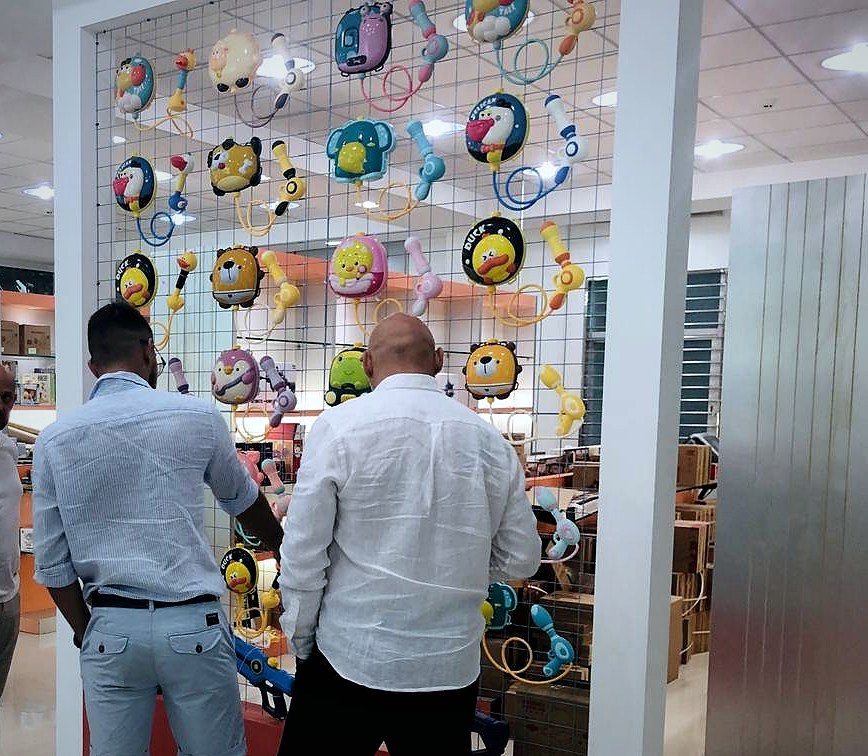
A bestseller badge or a viral unit-sales screenshot tells you one thing: attention exists somewhere. It does not tell you whether the product complies in your market, and it is not a document you can audit. The verifiable half of a supplier claim is the product file — SKU-level test report, age grade, standard edition, responsible party, tracking label. The unverifiable half is demand: ranking, search volume, reorder rate, "sold out in 48 hours." Treat the first as a condition of ordering and the second as a hypothesis you test with your own channel data.
For importers planning 2026 assortments, this page sets out one dated trade fact, what that fact does not prove, and the questions to put to a supplier before committing volume.
What did the 17 June 2026 Playmobil–WHSmith listing actually prove?
On 17 June 2026, Toy World reported that Playmobil would roll out across WHSmith stores in the UK from June, following an earlier launch at Heathrow Airport. That is a dated distribution fact from trade press — one brand entering one retail chain in one market.
It describes a listing decision, not consumer demand, not category growth, and not a forecast for construction or role-play toys. If your category is plush, RC, or bath toys, this item does not overlap your assortment at all and should be ignored entirely.
What a single retail-listing story does not tell you about demand
A single dated retail-listing story cannot tell you unit volume, revenue, sell-through, or ranking. It cannot tell you whether the SKU will reorder. It cannot be scaled into "the market is growing" — one listing is one listing.
The same limit applies to the numbers that circulate in supplier decks. Platform-reported figures such as TikTok unit counts and price points are directional signals about attention, not audited sales, and they say nothing about your landed cost, your margin, or your market's rule set. A projection quoted in a market-research style report remains that report's projection until you verify it against your own sell-through. Do not convert a heat score, a viral clip, or a supplier's "top seller" slide into a market size, a growth rate, or a supplier-wide generalization.
Compliance claims have their own version of this trap. A referenced standard, a guidance page, or an audit framework is not proof that a specific factory or SKU is certified. The document has to name the product, the age grade, the applicable edition, and the responsible party — otherwise it is background reading, not evidence.
| What you can verify | SKU-level test report matched to product configuration, age grade and standard edition; certificate type and its required elements; importer/manufacturer identification and tracking label; radio/EMC and spectrum evidence for signal-transmitting toys; pull-test and small-part results for the actual configuration |
|---|---|
| What you cannot verify from supplied material | Bestseller status, unit sales, revenue, ranking, reorder rate, market size, growth rate, or that any named factory or SKU is certified |
| Correct handling of a demand claim | Label it unverified; test it with your own POS, reorder and returns data before scaling an order |
What a toy importer can actually verify before ordering
For the US market, children's products — consumer products designed or intended primarily for children 12 or younger — require a written Children's Product Certificate based on test results from a third-party, CPSC-accepted laboratory where the product is subject to a consumer product safety rule. According to CPSC guidance, the CPC is product-specific, must be in English, and should carry seven elements: product identification, citation of each applicable CPSC children's product safety rule, the domestic manufacturer or importer with full mailing address and phone, a records contact with email and phone, date and place of manufacture to at least month/year and city/country, date and place of testing, and the identifying details of the accepted laboratory. Where an exemption or determination removes testing, a CPC is still issued and lists the exemption instead of a lab. General-use products follow the separate GCC route. From 8 July 2026, importers of most regulated consumer products must eFile certificates of compliance with US Customs and Border Protection through a PGA Message Set — a filing deadline worth checking against your shipment calendar.
For the EU, toys must meet the essential safety requirements of Toy Safety Directive 2009/48/EC, and CE marking plus the EU Declaration of Conformity belong to the conformity process and must be matched to the product scope. The General Product Safety Regulation (EU) 2023/988, adopted 10 May 2023, sits alongside it as a separate instrument: it sets a horizontal safety requirement across a product's lifespan, explicitly covers distance and online selling, and adds obligations for online marketplace providers. Map importer, manufacturer and product-identification information to your actual market role before you publish or print anything.
Configuration decides which documents you need. A plastic car toy needs wheel and axle retention, rotation, protrusion and small-part checks, because a loose wheel can become a hazard after abuse. An RC toy that transmits or receives radio signals may need radio, EMC and spectrum evidence on top of mechanical and chemical testing. A bath toy that can be opened, drained or dried is easier to control than a sealed cavity that traps water — but it still has to pass mechanical safety checks. And on the factory floor, multi-cavity molds require cavity identification and balance checks, since the same machine cycle can still produce cavity-specific differences. Ask for evidence that ties to the exact configuration you are buying, not the family it belongs to.
How should a toy importer qualify the supplier behind a bestseller claim?
Supplier qualification should evaluate capability, material control, quality records, compliance evidence, capacity claims and subcontracting — not a catalog page and not a bestseller badge. Pull testing can verify attachment strength for wheels, eyes, noses, handles, cords and inserts, which is the kind of test result you can compare across two candidate factories. If a supplier cannot name which lab produced the report, which edition it tested against, or who signs the declaration, you have a marketing claim, not a compliance file.
Shortlist on capability and material control first, then request the SKU-level documents, then reconcile them against the rule set for your destination market. Only after that does demand evidence deserve weight — and at that point your own reorder rate beats anyone's ranking slide.
FAQ
Is toy demand actually growing, or is that just supplier marketing?
The supplied material does not establish a growth rate, so treat any figure you are shown as the citing source's projection. What you can act on is your own sell-through, reorder and returns data. Ask suppliers to separate demand claims from document claims, and price the demand claim as a hypothesis.
What is the best season to place toy orders?
Nothing in the supplied evidence sets an ordering calendar, so timing depends on your channel, your market's filing deadlines and your supplier's capacity. Build backwards from your shelf date and check the 8 July 2026 US eFiling requirement against your shipment plan rather than assuming a universal cut-off.
Which documents should I request before paying a deposit?
For US-bound children's toys, request the product-specific Children's Product Certificate and its supporting test reports from a CPSC-accepted laboratory, or the exemption reference if testing does not apply. For the EU, request the documentation behind CE marking and the EU Declaration of Conformity, matched to the product scope and your market role under GPSR.
Does a bestseller badge or viral sales count prove a toy is compliant?
No. Bestseller status is a demand claim and is not compliance evidence. Compliance is shown by documents tied to a SKU, report, responsible party and current version — a ranking slide cannot substitute for any of those.
Which categories are rising, and how do I check before committing volume?
The evidence supplied here does not support naming rising categories or attaching growth rates to them. Verify a category with your own channel data and, for any SKU, confirm the certificate type, age grade and applicable rule set first — an unverifiable trend is a poor reason to place a large order.
An RC or connected toy is on the list — what extra evidence applies?
A toy that intentionally transmits or receives radio signals may need radio, EMC and spectrum evidence in addition to toy mechanical and chemical testing. Request that evidence alongside the standard toy report, and make sure the report names the actual radio configuration you are buying.
Sources
Talk to us about category and sourcing questions
If you are weighing a category for 2026 and want a second pair of eyes on which documents to request — CPC elements, CE and GPSR scope, RC spectrum evidence, or configuration-specific test coverage — send us the SKU and the destination market. We will tell you which questions to put to any factory, including ours.
Next step