
TRADE DESK NOTE
What a Buyer Should Prepare for a Factory or Supplier Call
What to prepare before a factory call: SKU-level cost breakdowns, MOQ trade-offs, CPC and tracking-label checks, and how to verify Chenghai or Yiwu suppliers.
Prepare three things before the call, or the call is a sales meeting: a costed SKU sheet, a MOQ-versus-mold-amortization position, and a document checklist you will score after the call. The decision this call serves is not 'do I like this factory' but 'does this supplier's evidence survive a separate evaluation and risk review, and can I open a purchase process against a named SKU, lot and destination market'. A CPC that names the SKU, a tracking label with manufacturer, date and lot, a packaging spec written for your shipping mode, and a priced MOQ band are evidence. A verbal 'we do OEM' is not.
The trap on the buyer side is treating a catalog page or a verbal 'we do OEM' as qualification. Supplier qualification should evaluate capability, material control, quality records, compliance evidence, capacity claims and subcontracting — not marketing copy. And MOQ is not an industry constant: molded-toy MOQ is a factory- and SKU-specific commercial term driven by resin, mold, decoration, packaging and run quantity, so any number a supplier gives you must be tied to that SKU before it means anything.
What the call should produce
- Bring a costed SKU sheet, not a wish list: unit price, tooling or mold fee, decoration, packaging, inspection and testing, and whether each line is included or separate. An itemized quote is the only version you can compare across two factories.
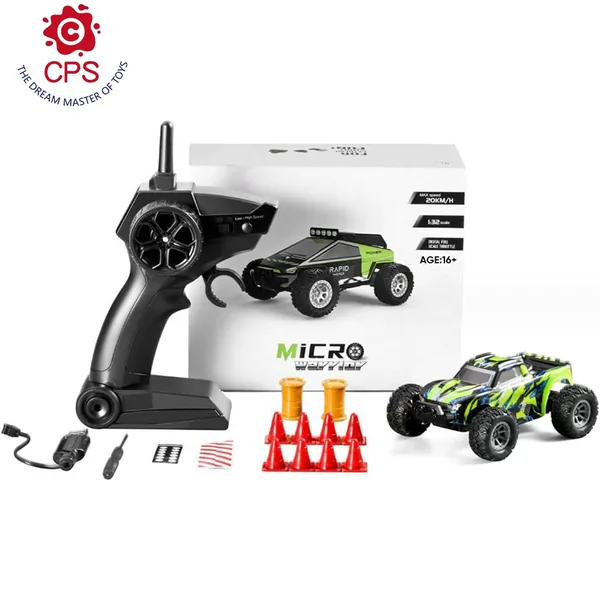
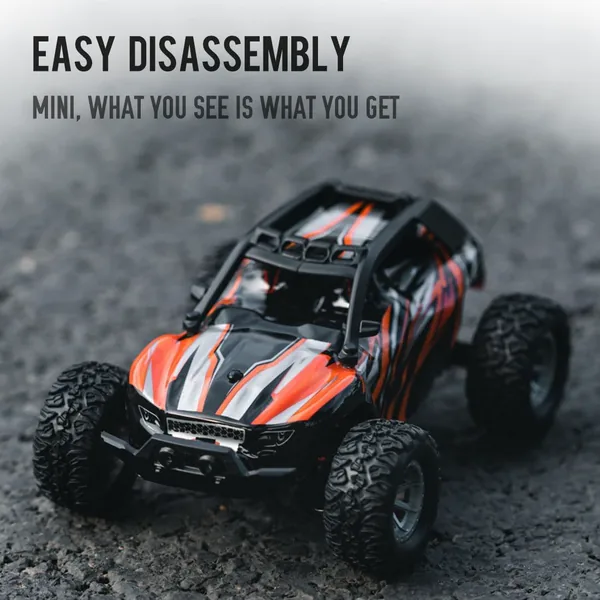
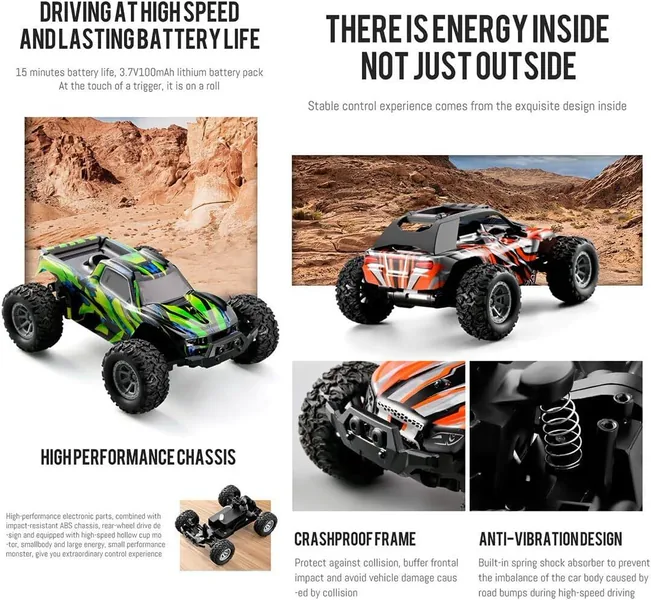
- Decide your MOQ position before the call. In one published toy catalog, two plastic RC cars sit at different MOQs (108 and 288 units) — same material class, different SKU economics. Expect the same spread across any Chenghai or Shantou factory, and ask what drives it: mold, resin, or decoration.
- Treat certificates as SKU-level documents. A Children's Product Certificate is product-specific and should not be described as a blanket factory certificate; a barcode is not a tracking label.
- Write the packaging spec into the booking file before production, especially for LCL. Corner-sensitive goods fail in transit when the booking instruction is vague — specify double-wall, corner boards, ECT and pallet height.
- Score the call in writing within 24 hours: what was documented, what was promised verbally, and which items need a sample, a test report, or an audit before you commit.
What to verify by supplier type
| OEM/ODM manufacturer (Chenghai, Shantou) — Specialty: plastic, RC, electric, molded toys | Ask for: SKU-level test report and CPC scope, tracking-label sample, mold ownership terms, packaging spec, subcontracting disclosure. MOQ: varies by SKU — ask per SKU; confirm in writing. Certifications: ask for the report, not the claim. |
|---|---|
| Plush/soft toy maker (Chenghai, Shantou) — Specialty: stuffed, PVC/PU ball, sports toy | Ask for: filling material spec, age-grading rationale, small-parts assessment for detachable parts, fiber and flammability test scope. MOQ: varies by spec. Certifications: ask which file covers which market and test. |
| Trading company / aggregator (Chenghai, Yiwu) — Specialty: mixed-category consolidation | Ask for: which factory actually produces the SKU, whether they hold the mold, and who signs the compliance documents. MOQ: often lower, because they consolidate. Certifications: verify the document names the real production site. |
| Yiwu small-commodity supplier — Specialty: low-unit-price, non-electronic, novelty | Ask for: whether the item is a children's toy by age grading (this changes the rule set), and whether any testing exists. MOQ: varies by spec. Certifications: often absent — budget for your own testing before you list it. |
| Any supplier claiming EN71, ASTM F963, CE, UKCA, RoHS, REACH, ISO 9001 | Ask for: the report ID, the product configuration, the age grade, the standard edition, the issuing lab, and the date. A standard or audit framework is not proof that a specific factory or SKU is certified. |
What should be on your cost sheet before the call?
Unit price is the least useful number on a factory call. Build the sheet in layers: base unit price, mold or tooling fee and who owns the mold, decoration and printing, retail packaging, master carton and pallet configuration, inspection and testing, certification cost, and freight terms. Ask explicitly which of these are inside the quoted price and which are separate line items.
The MOQ conversation only makes sense on top of that sheet. A low unit price at a high MOQ can be worse than a higher unit price at a run size you can actually sell through, because the mold fee and setup spread across units you may not move. Ask the supplier to quote the same SKU at two or three quantity bands and show where the mold amortization stops dominating the price. That single question separates a factory that understands cost structure from one reading a price list.
One more line most buyers forget: peak-season surcharge and capacity. Ask when the factory's lines are busiest and what your order does to your slot if a larger customer books after you.
Which MOQ should you accept for a custom molded toy?
There is no universal molded-toy MOQ, and any supplier who gives you one number for every SKU is guessing. MOQ is factory- and SKU-specific and moves with resin type, mold complexity, decoration steps, packaging and production quantity. The honest answer on a call is a band tied to a named SKU, plus the reason it sits there.
Use a published catalog as a calibration example, not a benchmark: a 1/32-scale 2.4GHz off-road RC drift car lists at a 108-unit MOQ at 6.47 USD, while a smaller 1:64 alloy off-road RC car lists at 288 units at 4.81 USD. Same factory, same plastic material, opposite MOQ logic — the lower-priced item needs more units to be worth the run. Ask your supplier to explain their own spread in those terms.
If your target quantity sits below their band, the realistic options are: pay a higher per-unit price for a short run, accept their stock color and packaging to skip decoration setup, or split the order across two SKUs to reach the line minimum. Get whichever you choose written into the quotation.
Which certification applies to your destination market?
For the EU, toys placed on the market must meet the Toy Safety Directive 2009/48/EC essential safety requirements, with CE marking and an EU Declaration of Conformity matched to the product scope. The General Product Safety Regulation (EU) 2023/988 is a separate legal instrument, not a substitute for the Toy Safety Directive. For the US, children's toys generally require testing at a CPSC-accepted laboratory and a Children's Product Certificate, and the applicable edition of ASTM F963 is read from the current regulation (16 CFR Part 1250) rather than from a supplier's datasheet.
The call question that exposes weak compliance is: 'which file covers which test for which market, for this SKU?' UKCA and a VOC file are different papers, and they cannot be used interchangeably on the same product. Good suppliers map market, lot and file-to-test without being pushed. Weak ones send a folder.
Two more items to force onto the agenda. Tracking labels: they should be permanent and support product identification, and a supplier who treats a barcode as a tracking label has not understood the requirement. Age grading and small parts: these must be assessed for the actual product configuration, including detachable accessories and packaging components.
Chenghai, Shantou or Yiwu: which origin fits your order?
Chenghai, in Shantou, Guangdong, is the dense toy-manufacturing cluster — mold making, injection, painting, assembly and electronics under one district, which is why it dominates plastic, RC and electric toys. Its advantage is depth of process: you can get a mold cut, a sample painted and a carton packed without leaving the area, and second-source a similar SKU quickly. The trade-off is that the district also hosts many trading intermediaries, so 'we are a Chenghai factory' needs verifying against the actual production address.
Yiwu is a small-commodity and novelty market rather than a toy-manufacturing base. It wins on breadth and low unit price, and loses on process control and documentation — many items are sourced, not made, and compliance files are often thin. Choose Yiwu when the item is a non-electronic novelty where you control testing yourself; choose Chenghai or Shantou when the item has a mold, electronics, or a regulated children's-toy claim.
The practical sourcing decision is concentration versus spread. Concentrating orders with one capable Chenghai factory buys you better MOQ leverage, faster sampling and one compliance file to manage, but ties your season to one line. Spreading across two or three factories reduces that risk and increases your audit, sample and documentation workload. For a first order in a regulated category, concentration with a verified factory usually beats a cheap spread.
How do you verify a Chinese supplier after the call?
Verify in this order: legal entity and production address, then documents, then the physical line. Match the business license name to the bank account name and to the name on the quotation. Ask for the factory address and confirm it is a production site, not an office or a trading desk. Subcontracting is the question most buyers skip — ask directly whether any process (injection, painting, electronics, packing) is outsourced, and to whom.
On documents, request the actual test report and certificate, not a summary. Check that the report identifies the product configuration, age grade, material and standard edition, and that the certificate is product-specific rather than a blanket factory document. If a supplier refuses a factory visit or a third-party audit, treat that as a serious warning sign before you place a regulated order.
Then run the sample. A pre-production sample signed and dated by both sides, plus a packaging sample that states double-wall, corner boards, ECT and pallet height, is what you compare the bulk shipment against. Before you commit, search the CPSC recall database by product, brand and hazard — and remember that finding nothing there is not a safety certification. The working rule: the CPC stays matched to the SKU, not to the factory door.
FAQ
What is a realistic MOQ for a custom plastic toy from a Chenghai factory?
There is no single realistic number — molded-toy MOQ is factory- and SKU-specific and depends on resin, mold, decoration, packaging and run quantity. In one published catalog, two plastic RC cars sit at 108 and 288 units. Ask for the MOQ of your exact SKU and the reason behind it.
Should I accept a supplier's certificate as proof my product is compliant?
No. A Children's Product Certificate is product-specific and should not be treated as a blanket factory certificate, and the same logic applies to EU conformity documents. Ask which file covers which test for which market and SKU, and check the report identifies the product configuration, age grade and standard edition.
How do I compare two factory quotes when the MOQs are different?
Normalize both to the same quantity band and the same scope. Ask each supplier to itemize unit price, mold fee, decoration, packaging, testing and freight, then quote your target quantity. Compare total landed cost at your real sell-through volume, not the headline unit price.
What packaging details must be in the booking file for LCL toy shipments?
Specify double-wall cartons, corner boards, ECT rating and pallet height in writing. Corner-sensitive goods fail in LCL when the booking instruction is vague, and packaging claims are won or lost on the booking file rather than in conversation.
What documents should I request right after the first supplier call?
Request the business license matching the bank account, the production address, the test report and certificate for the specific SKU, a tracking-label sample showing manufacturer, date and lot, a signed pre-production sample, and the packaging specification. Anything promised verbally should be confirmed in writing.
Is Chenghai or Yiwu better for a first toy order?
Choose Chenghai or Shantou when the product involves a mold, electronics, or a regulated children's-toy claim, because the district has the full process chain and denser documentation. Choose Yiwu for low-unit-price non-electronic novelties where you are prepared to run and pay for your own testing.
Sources
- 7 questions to ask when selecting the right supplier
- essential questions to ask a new supplier before you start
- supplier evaluation questions
- 汕头市澄海区29玩具商行
Request a Quote or a Factory Audit
Send the SKU, target quantity, destination market and packaging requirements, and the quotation will come back itemized, with the MOQ band and the reason behind it. If you are still at the evaluation stage, ask for a factory audit and a document pack instead — business license, SKU-level test report scope, tracking-label sample and packaging spec — so your decision rests on evidence rather than a call.
Next step