
TRADE DESK NOTE
What Happens Between Toy Sample Approval and Bulk Production
What actually happens between approving a toy sample and bulk production: revision control, sealed golden samples, tooling ownership, certificates and booking files.
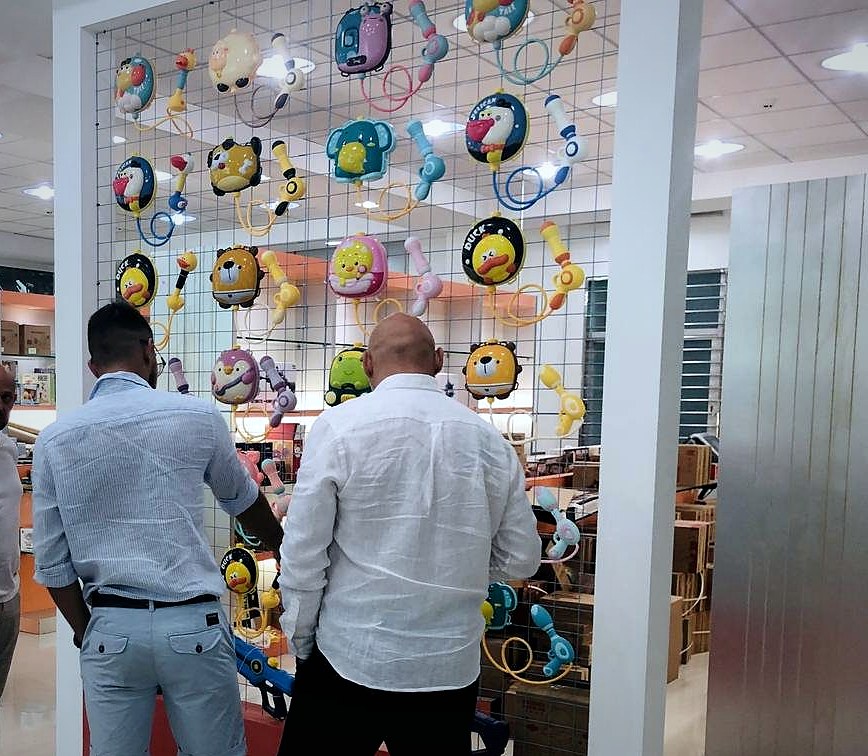
Sample approval is not the start of bulk production — it is the start of a documentation transfer, and every undocumented assumption in that gap becomes a bulk defect or a dispute. The single most useful control point is physical: the sealed golden sample on the QC shelf, not the photo in the email thread. The argument that ends a colour fight is comparing bulk against that sealed piece on colour, fit, flash and function. Buyers who approve only a photo pay for it on the second lot.
The practical sequence between sign-off and the first shipping carton runs through revision and sample identification, tooling and design freeze, certificate-to-lot matching, tracking-label content, and packaging specs written into the booking file. Each item is a place where an approval can silently drift. Treat the approved sample as a contractual reference, then verify that the factory has converted it into instructions production can actually follow.
Key Takeaways
- A booth sample at a trade fair is often a hero unit; label tool number and revision on the table and refuse to accept a Fair photo as the production standard, because event lighting hides colour and surface defects.
- Approval types are not interchangeable — concept, appearance, engineering, golden and production samples serve different purposes and must be labelled, or an old file can quietly return to use.
- Production-part approval should compare the first released parts against the signed drawing, the golden sample and the applicable safety test sample, all three, before the run continues.
- Certificates and tracking labels are lot- and SKU-specific: a UKCA file and a VOC report on the same electric bubble machine are different papers, and a CPC matched to the factory door rather than the SKU will not protect the shipment.
- Corner-sensitive goods such as LCD tablets fail in LCL when the booking instruction is conversational; double-wall, corner boards, ECT and pallet height belong in the booking file, not in a thank-you note.
What has to be frozen before the tool is cut?
A design freeze before production-tool release reduces unapproved changes to geometry, material, markings and test evidence. That sentence is the cheapest insurance in the whole project. Once a tool is cut, a geometry change is no longer an edit; it is a tool modification with its own cost and schedule.
So the handoff should freeze four things in writing: the approved geometry, the approved material, the markings and logo placement, and the test evidence that supports the SKU. Anything still marked open is not frozen, and open points must be explicitly listed as pending rather than left silent. Silence in an approval thread reads as consent, and that is how a colour or a logo position changes without anyone deciding it.
Tool choice also follows from order reality, not from the drawing alone. Expected volume, product structure, material selection and the likelihood of repeat orders all influence tooling decisions, and those decisions affect appearance, cycle time, part consistency and maintenance. Discuss them before the tool exists, not after the first short shot.
Who owns the tool after the buyer pays the fee?
Ownership is a contract question, and it is the one buyers most often leave open. Paying a tooling fee does not by itself settle who owns the tool, how long the factory must store it, or under what conditions it is released. Those terms have to be written down.
The rule that closes the gap is simple: write the fee, the ownership, the storage period and what happens if the tool sits idle into the contract. Tooling policy is a document, not a handshake. Buyers should also confirm the release conditions — what triggers the factory to hand over or ship the tool, and who pays for storage in the meantime.
This is not a China-specific trap; it is an unspecified-terms trap. It surfaces in Chenghai, Shantou and Yiwu alike, and it surfaces years later when a buyer wants to move a product to a second source.
Which certificate covers which market and which lot?
Certificates are not a general-purpose permission slip. On an electric bubble machine, UKCA and a VOC file are different papers covering different questions, and a single certificate cannot serve both. The working method is to map the market, the lot, and which file covers which test.
The same discipline applies to US children's product paperwork. A barcode alone is not tracking label content; the required fields — manufacturer, date and lot on the product or pack as required — must be present, and the CPC should be matched to the SKU rather than to the factory door. Tracking labels are not decoration; they are the link between a physical unit and the file that covers it.
Paperwork that does not match the lot is not paperwork. A buyer verifying a supplier should ask for the certificate-to-SKU mapping, not just a folder of PDFs.
What belongs in the booking file before LCL?
Packaging specs win or lose the claim. Corner-sensitive goods such as LCD tablets die in LCL when the booking instruction is effectively a thank-you note. The fix is unglamorous: write double-wall, corner boards, ECT and pallet height into the booking file. Claims are won on the booking file, because that is the document the carrier and the insurer actually read.
For the buyer, the handoff question is whether the approved sample's packaging configuration was transferred into shipping instructions. Retail carton quantity, inner protection and pallet height are part of the approved SKU, not an afterthought at booking. If they only exist in an email thread, expect them to be re-decided by whoever loads the container.
How should a buyer sequence the approval-to-bulk handoff?
Run the gap as a short, dated sequence rather than a single approval event. First, identify the sample by type and revision and label it. Second, record the approval date and attach a short specification sheet with photos. Third, confirm function and basic play result, colour and visible finish, accessories and instructions, retail packaging and carton data, and any market-specific test or document request, in one pass. Fourth, freeze design, tooling and material. Fifth, confirm the certificate-to-lot mapping. Sixth, write packaging and handling specs into the booking file.
Lead time should be broken the same way. Toy lead time should distinguish tooling, first sample, testing, production, packaging and shipping, because one total number hides different dependencies. When a buyer asks for a single ship date, the factory absorbs the uncertainty silently; when the schedule is split, the buyer can see which stage is actually at risk.
Keep the traceability record alive through the run. A useful record links the SKU, mold cavity, resin lot, component lots, production date, operator or process, and the carton or pallet identifier. That chain is what makes a claim arguable and a repeat order repeatable.
Approval-to-Bulk Control Points
| Sample identity and revision | Label tool number and revision; never accept a trade-fair photo as the production standard |
|---|---|
| Sample type | Concept, appearance, engineering, golden and production samples serve different purposes and must be labelled |
| Design and tooling freeze | Freeze geometry, material, markings and test evidence before production-tool release |
| Production-part approval | Compare first released parts with signed drawing, golden sample and applicable safety test sample |
| Revision control | Link drawing or 3D-model revision to tooling, FAI, test sample and production order |
| Certificate mapping | Map market, lot and which file covers which test; e.g. UKCA and VOC are different papers |
| Tracking label content | Add manufacturer, date and lot on product or pack as required; keep CPC matched to the SKU |
| Booking file | Write double-wall, corner boards, ECT and pallet height for corner-sensitive goods |
| Lead-time breakdown | Separate tooling, first sample, testing, production, packaging and shipping |
| Traceability record | Link SKU, mold cavity, resin lot, component lots, production date, operator/process, carton or pallet ID |
FAQ
Can I approve a toy sample from a photo?
No — a photo cannot serve as the production standard. Seal a physical golden sample and keep it on the QC shelf, then compare bulk against that piece on colour, fit, flash and function. Buyers who approve only a photo pay for it on the second lot.
Who owns the injection tool after I pay the tooling fee?
That depends entirely on what the contract says, so freeze it before payment: fee, ownership, storage period and what happens if the tool sits idle. Tooling policy is a document, not a handshake. If storage years and release conditions are not written, the ownership question stays open no matter who paid.
What should be checked at production-part approval?
Compare the first released parts against three references together: the signed drawing, the golden sample and the applicable safety test sample. If those references disagree, the first parts are a new revision awaiting a decision, not an approved run.
Can one certificate cover both UKCA and a VOC file?
No. On an electric bubble machine, UKCA and a VOC file are different papers covering different questions. Map the market, the lot and which file covers which test, and treat paperwork that does not match the lot as no paperwork at all.
What must be on a US children's product tracking label?
Manufacturer, date and lot on the product or pack as required, with the CPC matched to the SKU rather than to the factory door. A barcode alone is not tracking label content. Confirm the exact required fields against the destination market before the lot ships.
Why do LCD tablets and similar goods get damaged in LCL?
Because the packing spec never left the email thread. Corner-sensitive goods need double-wall, corner boards, ECT and pallet height written into the booking file. Claims are won on the booking file, so treat it as a specification document, not a booking message.
How should I break down toy lead time after sample approval?
Split it into tooling, first sample, testing, production, packaging and shipping. One total number hides which stage is actually at risk. Ask for the schedule against real capacity, tooling availability and material readiness rather than against a requested ship date.
Sources
Request a Quote or a Factory Audit
If you want the approval-to-bulk gap handled as a documented handoff rather than an email thread, send the SKU, target market and expected volume. You will get a quote and, if useful, a factory audit covering revision control, golden-sample retention, certificate-to-lot mapping and booking-file specs. Tell us which control point in the table above is currently undocumented in your project — that is usually where the first conversation should start.
Next step