
TRADE DESK NOTE
EN 71 vs ASTM F963: The Comparison That Actually Matters Is Not "Which Is Stricter"
How importers should compare EN 71 and ASTM F963 by destination market: SKU-level checks, CPC vs EU DoC, report-to-PO matching, and verification steps.
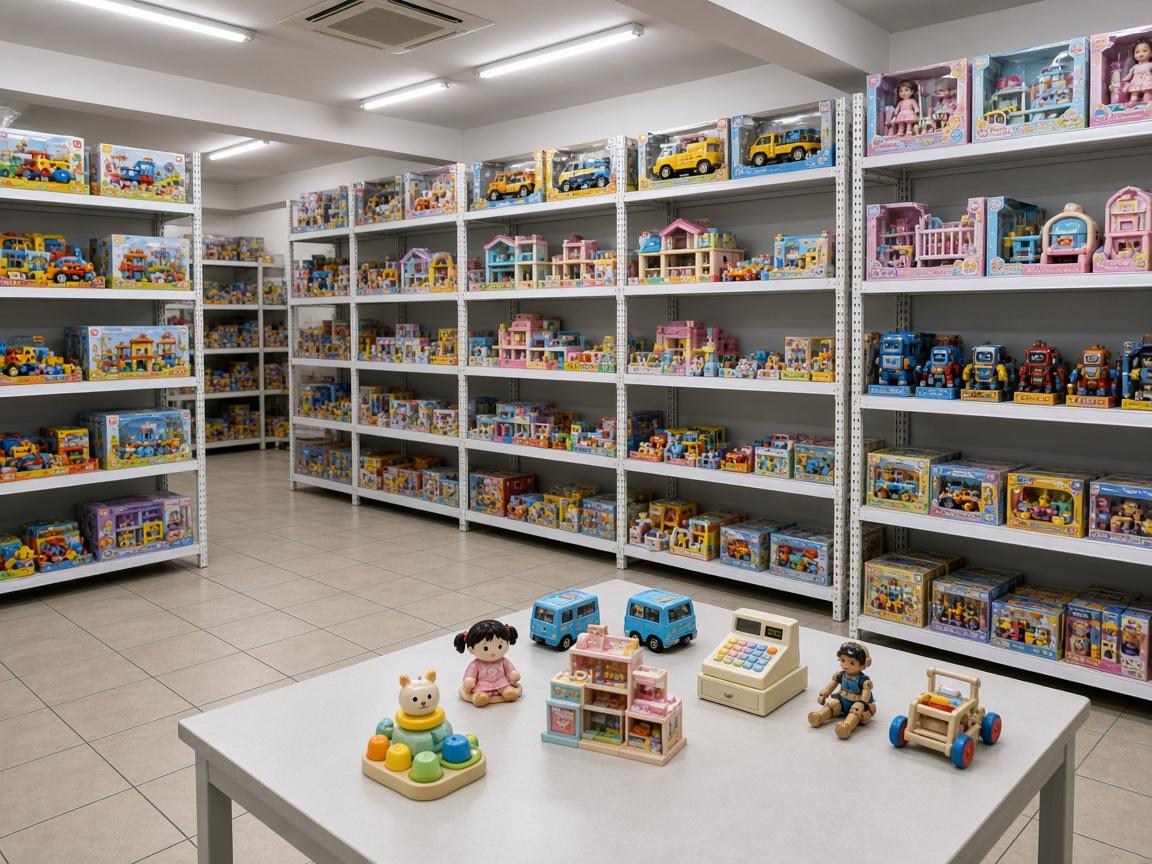
The practical answer for importers is this: EN 71 and ASTM F963 are not competing versions of the same rule, and comparing them by severity produces a false decision. EN 71 sits under the EU Toy Safety Directive 2009/48/EC route, where toys placed on the EU market must meet applicable essential safety requirements and CE marking plus an EU Declaration of Conformity belong to the conformity process and must be matched to product scope. ASTM F963 sits under the US route, where children's toys generally require testing at a CPSC-accepted laboratory and a Children's Product Certificate. Choose by destination market, then verify at SKU level: age grade, applicable sections, report-to-PO match, and responsible party. A single report quoted for both markets is the warning sign, not the shortcut.
Key Takeaways for Toy Importers
- Specify to the market, not to the standard name. EU-bound toys follow the Toy Safety Directive conformity route (essential safety requirements, CE marking, EU Declaration of Conformity); US-bound children's toys follow CPSC requirements including testing at a CPSC-accepted laboratory and a Children's Product Certificate. ASTM F963 is not the EU compliance route.
- A CPC is product-specific and should not be treated as a blanket factory certificate. It is based on testing results and identifies the applicable rules and responsible parties — match it to the exact product, not the supplier.
- Not every ASTM F963 section applies to every toy. According to CPSC business guidance and the ASTM standard page, the responsible firm must identify the sections applicable to the specific product, and the exact edition and its incorporated regulatory status should be checked before quoting.
- A type-test or golden-sample report does not automatically cover a later production lot. Match report SKU, materials, colors, and production date/cohort to the PO before you release a repeat order.
- Extra checkpoints sit outside the headline standard: plush stuffing cleanliness and secure seams that prevent filling leakage, plus small-part risk tied to age grading, plus radio-equipment traceability if the SKU transmits.
What Is the Actual Difference Between EN 71 and ASTM F963?
EN 71 is the European standards family that supports the EU Toy Safety Directive 2009/48/EC, while ASTM F963 is a US consumer safety specification for toy safety that is incorporated into the US regulatory framework. The structural difference matters more than any clause-by-clause comparison: the EU route is a directive with essential safety requirements, supported by harmonised standards whose references are published in the Official Journal, plus CE marking and an EU Declaration of Conformity. The US route runs through CPSC-enforced rules, third-party testing at a CPSC-accepted laboratory, and a written Children's Product Certificate.
That is why a supplier email saying "we are EN 71 and ASTM F963 certified" tells you almost nothing. According to the Toy Safety Directive text, importers must verify that conformity assessment was carried out and that marking and documentation are available, and importers must indicate their name and address on the toy except where size or nature makes it impractical. On the US side, the CPC must cite each applicable children's product safety rule and identify the responsible party and testing laboratory. Both systems attach obligations to a product and a role — not to a factory's marketing line.
The General Product Safety Regulation (EU) 2023/988 is a separate legal instrument from the Toy Safety Directive. It acts as a horizontal safety backstop where toy-specific harmonisation legislation does not cover a given risk. It does not replace EN 71, and it does not contain EN 71 or ASTM F963 test methods or limits. If someone hands you a GPSR reference as proof of EN 71 compliance, that is a category error.
EU vs US Toy Compliance: What to Compare, Market by Market
| Primary route (EU) | Toy Safety Directive 2009/48/EC essential safety requirements, supported by harmonised standards (EN 71 family) referenced in the Official Journal |
|---|---|
| Primary route (US) | CPSC-enforced children's product safety rules; ASTM F963 incorporated via CPSIA Section 106 (15 U.S.C. § 2056b) and 16 CFR Part 1250 |
| Evidence document (EU) | EU Declaration of Conformity plus CE marking, matched to product scope and current consolidated text |
| Evidence document (US) | Children's Product Certificate (CPC) based on third-party testing at a CPSC-accepted laboratory; CPC and test reports must be in English |
| Who carries the duty | EU: manufacturers, importers and distributors each hold distinct obligations; an operator placing a toy under its own name or trademark, or modifying it in a compliance-relevant way, is treated as the manufacturer. US: domestic manufacturers and importers certify compliance |
| Traceability / marking | EU: importer name and address on the toy unless size or nature makes it impractical. US: tracking information should be permanent and support product identification where applicable |
| Horizontal backstop | EU: GPSR (EU) 2023/988 applies as a separate instrument where sector legislation does not cover a risk. US: varies by spec |
| Radio / connected SKUs | RED framework strengthened traceability obligations for manufacturers, importers and distributors of radio equipment — confirm whether your SKU is in scope. US: varies by spec |
| Edition to quote | Read the applicable edition from the current regulation and current consolidated text before quoting any report; the exact ASTM F963 edition and its incorporated regulatory status should be checked — do not quote from a secondary article title |
How Should Importers Map a SKU to the Right Rule Set?
Start with four fields on the PO, not with the standard: destination market, age grade, materials/configuration, and whether the product transmits or is worn against skin or put in the mouth. According to CPSC business guidance, the product, age grading and applicable rule set must be mapped before drafting a compliance statement. The same discipline applies on the EU side, where the Directive's essential requirements cover physical and mechanical properties, flammability, chemical properties, electrical properties, hygiene and radioactivity, and where toy-specific chemical limit values may apply to toys intended for children under 36 months or designed to be put in the mouth.
Then narrow the standard. Not every ASTM F963 section applies to every toy — the responsible firm must identify the sections applicable to the specific product. A plush SKU and a ride-on SKU will not share the same section list, and a wooden puzzle with small parts raises an age-grading question that a soft toy does not. Age grading and small-part risk are connected and must be assessed for the actual product configuration, including assemblies, detachable accessories and packaging components.
Finally, name the responsible party on both sides. On the EU side, importers must ensure toys from third countries comply with applicable requirements and that conformity assessment procedures were carried out by manufacturers; the importer name and address must appear on the toy unless size or nature prevents it. On the US side, the CPC identifies the domestic manufacturer or importer certifying compliance and the individual maintaining records of test results. If your own brand goes on the box, check whether you have just become the manufacturer in the EU sense.
Why a Lab Report Is Not the Same as a Shipment Certificate
A type-test or golden-sample report does not automatically cover a later production lot. A clean report from a sample approved in one season gets filed away and quoted for eighteen months of shipments. Importers should match report SKU, materials, colors, and production date/cohort to the PO before releasing each order.
The document-to-goods reconciliation is a four-point check. Pull the report and confirm: the product configuration described matches the PO, the age grade matches the artwork, the materials and colors match the bill of materials, and the standard edition quoted is the one currently applicable. On the US side, the CPC must also carry the date and place of manufacture (at least month and year, and at least city/region and country for assembly) and the date and place of testing — so a CPC whose manufacture date predates your PO is a flag, not a formality.
Traceability is the enforcement layer behind all of this. Tracking information should be permanent and support product identification where applicable, and packaging, product markings and lot control should be reviewed together. If a recall or a customs question arrives, the difference between a two-day answer and a two-month answer is whether lot control was designed into the artwork.
Which Extra Checkpoints Sit Outside EN 71-1 and ASTM F963 Mechanical Tests?
Plush stuffing cleanliness and hygiene, and secure seams that prevent filling leakage, are common importer checkpoints in addition to EN 71-1 / ASTM F963 mechanical tests. These are the failure modes that generate consumer complaints, returns and, in the worst case, a recall that costs more than the container. Add a stuffing and seam inspection line to the QC plan for any soft toy, and photograph the seam stress points at pre-production.
If the SKU transmits, a second regime applies. The RED framework strengthened traceability obligations for manufacturers, importers and distributors of radio equipment, so a radio-controlled or Bluetooth-connected toy needs its own traceability file — do not assume the toy safety file covers it. Whether a given SKU falls in scope is a product-specific determination and should be confirmed against the current official text rather than inferred from the category.
Chemical scope is the third layer. The Toy Safety Directive sets limits for arsenic, cadmium, chromium VI, lead, mercury and organic tin, aligns with REACH, and restricts CMR substances and fragrances; specific limit values apply in defined cases. Do not let a supplier summarize this as "we pass heavy metals." Ask for the test scope by element and by material, not by headline.
SKU-Level Verification Checklist Before You Release a PO
| Destination market and route | EU: Directive 2009/48/EC route with CE marking and EU DoC. US: CPSC route with CPC from a CPSC-accepted laboratory. Confirm from current official text, not from a supplier summary. |
|---|---|
| Age grade | Match the declared age grade to the actual product configuration, including detachable accessories and packaging components; age grading and small-part risk are connected |
| Applicable sections | For ASTM F963, the responsible firm must identify the sections applicable to the specific product — not every section applies to every toy |
| Report-to-PO match | Match report SKU, materials, colors, and production date/cohort to the PO; a type-test or golden-sample report does not automatically cover a later production lot |
| Edition quoted | Read the applicable edition from the current regulation; check the exact ASTM F963 edition and its incorporated regulatory status before quoting |
| Responsible party | EU: importer name and address on the toy unless size or nature makes it impractical. US: CPC identifies the certifying manufacturer/importer and the records contact |
| Soft-toy extras | Stuffing cleanliness and hygiene, plus secure seams that prevent filling leakage, verified in addition to EN 71-1 / ASTM F963 mechanical tests |
| Transmitting SKUs | RED framework strengthened traceability obligations for manufacturers, importers and distributors of radio equipment — confirm in-scope status against official text |
| Marking and lot control | Tracking information should be permanent and support product identification where applicable; review packaging, product markings and lot control together |
| Document language | US: CPC and supporting test reports must be in English. EU: varies by spec |
| Electronic filing | US: from July 8, 2026, importers of most regulated consumer products must electronically file certificates of compliance with CBP via a PGA Message Set — confirm applicability to your entries |
How to Choose: Decision Criteria by Market
Choose the EU route if the SKU lands in the EU and is a toy within Directive 2009/48/EC scope. Your decision criteria are: an EU Declaration of Conformity matched to product scope, CE marking on the product, importer name and address on the toy (unless size or nature prevents it), harmonised standard references confirmed as current, and a chemical test scope that matches the materials actually used. If the SKU is a connected toy, add the radio-equipment traceability file as a separate item. If it is a plush, add stuffing and seam checks. If you are placing the toy under your own brand or modifying it in a compliance-relevant way, treat yourself as the manufacturer and re-paper the file.
Choose the US route if the SKU is a children's product for the US market. Your criteria are: a product-specific CPC — never a blanket factory certificate — citing each applicable children's product safety rule, based on testing at a CPSC-accepted laboratory, in English, with manufacture and testing dates that postdate the current configuration. Confirm which ASTM F963 sections apply to your specific product rather than assuming the whole standard applies. Add permanent tracking information where applicable, and check whether your entry falls under the electronic certificate filing requirement.
If you sell into both markets, you hold two files, not one. Budget for two test scopes, two document sets and two responsible-party mappings. The cost of dual filing is real, but it is smaller than the cost of discovering at a port that a single "international certificate" covered neither route. When the evidence is thin — a supplier PDF with no edition, no SKU, no manufacture date — treat the file as unverified and request the underlying report before you commit volume.
FAQ: EN 71 vs ASTM F963 for Importers
Does passing ASTM F963 testing mean a toy can be sold in the EU?
No. The EU route runs through the Toy Safety Directive 2009/48/EC essential safety requirements, CE marking and an EU Declaration of Conformity matched to product scope. ASTM F963 is a US consumer safety specification and is not the EU compliance route. EU-bound SKUs need their own conformity file.
Can one lab report cover both US and EU shipments?
Only if the report explicitly covers both rule sets for that exact product configuration. Even then, a type-test or golden-sample report does not automatically cover a later production lot — match report SKU, materials, colors, and production date/cohort to the PO for each order.
Is a supplier's "EN 71 and ASTM F963 certificate" enough to start importing?
Treat it as a claim, not evidence. Ask for the underlying report and confirm the standard edition quoted, the product configuration tested, the age grade, the test scope by material, and the responsible party. A CPC is product-specific and should not be described as a blanket factory certificate.
Does every ASTM F963 section apply to my toy?
No. Not every ASTM F963 section applies to every toy; the responsible firm must identify the sections applicable to the specific product. The product, age grading and applicable rule set must be mapped before drafting a compliance statement.
What changes for plush toys beyond the mechanical standard?
Plush stuffing cleanliness and hygiene, and secure seams that prevent filling leakage, are common importer checkpoints in addition to EN 71-1 / ASTM F963 mechanical tests. Add them to your QC plan and inspect at pre-production and during production.
My toy has Bluetooth. Does the toy safety file cover it?
Not necessarily. The RED framework strengthened traceability obligations for manufacturers, importers and distributors of radio equipment, so a transmitting SKU needs its own traceability file. Confirm in-scope status against the current official text rather than assuming.
Is GPSR the same thing as the Toy Safety Directive for compliance purposes?
No. The General Product Safety Regulation (EU) 2023/988 is a separate legal instrument from the Toy Safety Directive and acts as a horizontal safety backstop where sector legislation does not cover a risk. It does not contain EN 71 or ASTM F963 test methods or limits.
Where should I read the edition and application dates rather than a supplier PDF?
Read the applicable edition from the current regulation and current consolidated text before quoting any report. The exact ASTM F963 edition and its incorporated regulatory status should be checked at source; timings described only in secondary article titles are not application dates.
Sources
Related Products & Categories
Next Step: Build the File Before You Build the Order
If you are comparing suppliers for an EU-bound or US-bound toy program, send the destination market, age grade, materials and configuration for the SKU you have in mind. You will get back the document set that route requires — and a straight answer on which items must be verified against the current official text before a PO is released. Start with the SKU list, not the standard name.
Next step