
TRADE DESK NOTE
How Market, Age Group, and Product Mechanism Change Safety Review
How EU vs US rules, age grading, and product mechanism (electric, LED, aquatic, chemical) change the safety review scope for each toy SKU you source.
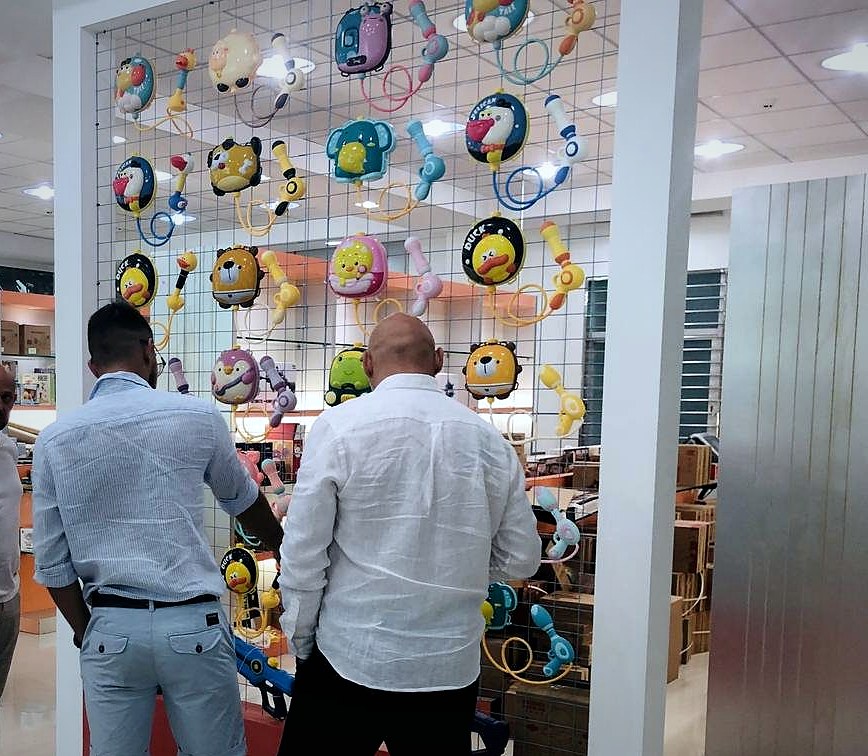
Market, age group, and product mechanism each change a different part of the safety review, and none substitutes for the others: the destination market selects the legal instrument and conformity artifact, the age grade selects the applicable rule set and small-parts exposure, and the product mechanism selects the technical test domains. For a buyer deciding whether to contact a supplier, the workable question is not "are you certified?" but "for this SKU, which market instrument, which age-grade rule set, which mechanism-specific test domains, and which report, version, and responsible party apply?" This article maps that structure using only the EU Toy Safety Directive 2009/48/EC, CPSC toy guidance, 16 CFR Part 1250 and ASTM F963, the Children's Product Certificate rules, GPSR (EU) 2023/988, tracking-label and small-parts guidance, plus four approved category facts on electric, chemical, aquatic, and LED products — and it marks where the evidence stops.
Key Takeaways
- A factory-level certificate does not answer a SKU-level question. The Children's Product Certificate is product-specific and should not be described as a blanket factory certificate, so a supplier's "we are certified" reply is not a substitute for a document naming your product.
- Market changes the artifact, not just the label. EU review anchors to Toy Safety Directive 2009/48/EC with CE marking and an EU Declaration of Conformity; US review anchors to testing at a CPSC-accepted laboratory and a Children's Product Certificate. GPSR (EU) 2023/988 is a separate legal instrument from the Toy Safety Directive.
- Age grading is an input to the review, not a sticker. The product, age grade, and applicable rule set must be mapped before a compliance statement is drafted, and age grading is connected to small-parts risk for the actual product configuration — including detachable accessories and packaging components.
- Mechanism adds test domains that a generic checklist misses. Electric toys may need insulation, dielectric, or leakage-current checks depending on power architecture; LED and light-up toys add battery, thermal, accessible-component, electrical, and optical-safety review matched to the light source and age grade; aquatic toys need market-specific warnings and supervision language, and imagery must not imply unsupervised water safety.
- Chemical review is market-specific and cannot be replaced by a material list. Chemical properties are a distinct EU toy-safety requirement, so a BOM or material declaration alone does not close the EU chemical question.
What does the evidence actually show?
The supplied sources describe requirement structure and review discipline. They do not report sales, market size, or supplier performance, and nothing here should be read as a market forecast.
Three layers, three different jobs:
Market selects the instrument and the conformity artifact. Toy products placed on the EU market must meet the applicable essential safety requirements of Directive 2009/48/EC, and CE marking and an EU Declaration of Conformity belong to that conformity process and must be matched to the product scope. On the US side, children's toys generally require testing at a CPSC-accepted laboratory and a Children's Product Certificate. GPSR (EU) 2023/988 is a separate legal instrument from the Toy Safety Directive, and importer, manufacturer, and product-identification information should be mapped to the relevant market role.
Age grading is a required review input. The product, age grade, and applicable rule set must be mapped before drafting a compliance statement, and age grading and small-part risk are connected and must be assessed for the actual product configuration. Assemblies, detachable accessories, and packaging components need the same review discipline — the small-parts question does not stop at the main body of the toy.
Mechanism selects the technical sub-checklist. Electric toys may require insulation, dielectric, leakage-current, or other electrical-safety checks depending on their power architecture. LED and light-up toys need battery, thermal, accessible-component, electrical, and optical-safety review matched to the light source and age grade. Aquatic toys are not life-saving devices and require market-specific warnings and supervision language, with product imagery that must not imply unsupervised water safety. On the chemical side, chemical properties are a distinct EU toy-safety requirement, and a material list alone does not replace a market-specific chemical assessment.
One structural requirement recurs across the sources: SKU-level traceability. A test report should identify the product configuration, age grade, and standard edition. The applicable edition should be read from the current regulation before a report is quoted, and the exact edition and incorporated regulatory status of ASTM F963 should be checked before it is quoted. Tracking information should be permanent and support product identification where applicable, and packaging, product markings, and lot control should be reviewed together.
What should an OEM or buying team do with this?
Turn the structure into a document request, not a trust question. For each SKU, ask which market instrument applies, which age-grade rule set applies, which mechanism-specific test domains apply, and which report, version, and responsible party are attached. A supplier who can answer at SKU level is easier to work with than one who answers at factory level.
Treat packaging and markings as controlled fields. The sources treat packaging wording and product markings as fields that can change with the SKU, so artwork and label text belong in the verification checklist rather than in marketing copy. If a marking changes between lots, the review should be re-run for that configuration.
Separate the exemptions question from the testing question. Some children's products may be exempt or subject to determinations, and where an exemption is claimed, the buyer should confirm which exemption or determination is cited and whether it actually applies to the SKU in question. An exemption claim is not the same as a test report.
Where the evidence runs out, mark it unknown rather than filling the gap. Cost, lead time, and supplier capability are not covered by the supplied material, and neither are non-EU or non-US markets. Those items should be confirmed directly with the supplier and, where relevant, with a testing laboratory or regulatory adviser before a purchase order is placed.
A single platform sold in several configurations — different light modules, different accessories, different age statements — is several review objects, not one. The small-parts and accessible-component questions in particular are configuration-specific, so a report covering the base version does not automatically cover the variant with the detachable accessory.
Evidence and limits
| Market selects the legal instrument and conformity artifact (EU: Directive 2009/48/EC, CE marking, EU Declaration of Conformity) | Claim | Source: Toy Safety Directive 2009/48/EC (EUR-Lex) | Limitation: check the current consolidated text, market, and product scope before publishing; the source does not certify any factory or SKU |
|---|---|
| Market selects the legal instrument and conformity artifact (US: CPSC-accepted laboratory testing and a Children's Product Certificate) | Claim | Source: CPSC Toy Safety Business Guidance; CPSC Children's Product Certificate page | Limitation: the CPC is product-specific and is not a blanket factory certificate; no publication date supplied for either page |
| GPSR (EU) 2023/988 is a separate legal instrument from the Toy Safety Directive | Claim | Source: General Product Safety Regulation (EU) 2023/988 (EUR-Lex) | Limitation: importer, manufacturer, and product-identification information must be mapped to the relevant market role; check the current consolidated text |
| Age grading and small-parts risk are connected and must be assessed for the actual product configuration | Claim | Source: CPSC small parts guidance; CPSC Toy Safety Business Guidance | Limitation: no age-grade thresholds (specific age bands) are supplied; assemblies, detachable accessories, and packaging components need the same review discipline |
| Test reports should identify product configuration, age grade, and standard edition | Claim | Source: 16 CFR Part 1250 and ASTM F963; ASTM F963 standard page | Limitation: the applicable edition must be read from the current regulation before a report is quoted; no report is verified in this article |
| Electric toys may require insulation, dielectric, leakage-current, or other electrical-safety checks depending on power architecture | Claim | Source: approved category fact on electrical safety | Limitation: scope depends on the specific power architecture; other mechanisms are outside the supplied evidence |
| LED and light-up toys need battery, thermal, accessible-component, electrical, and optical-safety review matched to the light source and age grade | Claim | Source: approved category fact on LED and light-up toys | Limitation: the review must be matched to the specific light source and age grade; no test result is asserted |
| Aquatic toys are not life-saving devices and require market-specific warnings and supervision language | Claim | Source: approved category fact on aquatic toys | Limitation: imagery must not imply unsupervised water safety; warning wording is market-specific |
| Chemical properties are a distinct EU toy-safety requirement; a material list alone does not replace a market-specific chemical assessment | Claim | Source: approved category fact on EU chemical requirements | Limitation: applies to the EU market as described; a BOM or material declaration is not a substitute |
| Tracking information should be permanent and support product identification where applicable | Claim | Source: CPSC tracking labels guidance | Limitation: packaging, product markings, and lot control should be reviewed together; no publication date supplied |
| Market size, growth rate, price, MOQ, lead time, and supplier capability | Claim: unknown | Source: not supplied | Limitation: no supplied evidence supports any figure; do not treat this article as a market-size or forecast source |
FAQ
Is a factory-level certificate enough to clear a toy SKU for the US market?
No. The Children's Product Certificate is product-specific and should not be described as a blanket factory certificate, so it must name your product and cite the applicable rules. A factory-level document does not answer the SKU-level question, and the certificate must be based on test results from a CPSC-accepted laboratory.
What changes if I sell the same toy in the EU instead of the US?
The legal instrument and the conformity artifact change. EU placement anchors to Toy Safety Directive 2009/48/EC with CE marking and an EU Declaration of Conformity matched to the product scope, while US children's toys generally require testing at a CPSC-accepted laboratory and a Children's Product Certificate. GPSR (EU) 2023/988 is a separate instrument from the Toy Safety Directive, and importer, manufacturer, and product-identification information should be mapped to the relevant market role.
Does a material list or BOM settle the chemical question for EU sales?
No. Chemical properties are a distinct EU toy-safety requirement, and a material list alone does not replace a market-specific chemical assessment. Treat the chemical review as its own line item rather than something a BOM closes.
My toy has an LED module and a detachable accessory. Does one test report cover both?
Not automatically. LED and light-up toys need battery, thermal, accessible-component, electrical, and optical-safety review matched to the light source and age grade, and age grading plus small-parts risk must be assessed for the actual product configuration — including assemblies, detachable accessories, and packaging components. A report should identify the product configuration, age grade, and standard edition, so a variant with a different accessory is a separate review object.
What should I ask a supplier before I place a first order?
Ask at SKU level: which market instrument applies, which age-grade rule set applies, which mechanism-specific test domains apply, and which report, version, and responsible party are attached. Also confirm whether any exemption or determination is being claimed instead of a laboratory test, and whether packaging and marking wording is controlled per SKU.
Can this article tell me the market size or growth rate for these categories?
No. The supplied evidence does not include market size, growth rate, CAGR, price, MOQ, or lead-time data, and none is stated here. Those figures must come from a separate, cited source; this article covers review scope and document structure only.
Sources
Request a Quote
If you are mapping a toy SKU against EU or US review requirements and want a supplier-side conversation about configuration, age grading, and the documents attached to a specific product, send us the SKU details and destination market. We will tell you what we can confirm from our side and what you should verify with your testing laboratory or regulatory adviser. Request a quote to start that review.
Next step