
TRADE DESK NOTE
How to Match Wholesale RC Vehicle Features to a Retailer's Buyer Profile
A sourcing lead's framework for matching wholesale RC vehicle features — scale, control type, material, MOQ — to mass-market, toy-specialist, or hobby retailers.
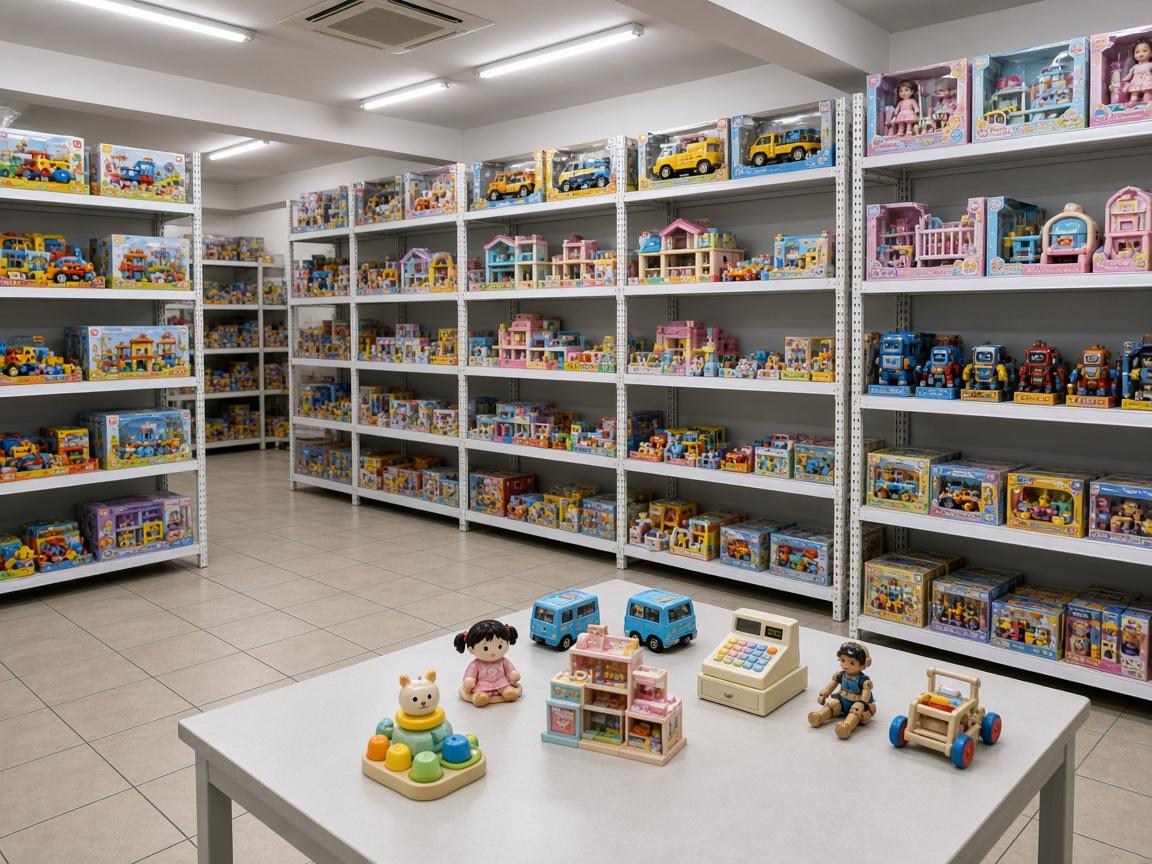
Match RC vehicle features to a retailer's buyer profile before you request a quote: define the shelf it will sit on (mass market, toy specialist, or hobby), then lock scale, control type, material, and MOQ against that shelf. The practical outcome is a spec sheet you can send to a factory that already answers the buyer's questions instead of opening a back-and-forth on scale and control type.
The RC category has fragmented on both ends. On the retail side, US rally and club scenes are organized locally rather than under a national rulebook, so class structures and terrain differ by region — a single feature set rarely fits every buyer. On the supply side, the same catalog spread shows it: mini 1/64 alloy cars at low cost per unit sit next to 1/12 gesture-sensing stunt cars, with MOQs from 24 to 288 and materials from all-plastic to metal. A sourcing decision made on "RC cars" as a category, without matching features to the buyer, is the one that ends up as markdown inventory.
What a feature-to-profile match looks like
- Mass-market and grocery buyers should be specified around low unit cost, plastic construction, and packaging that survives pallet handling — not around control-type novelty. A rechargeable 4-channel racing model at a mid-single-digit unit cost with a 36-piece MOQ sits comfortably in that profile; a 1/12 gesture-sensing stunt car at a higher cost does not.
- Toy and party specialists buy on play pattern and display appeal, so scale and included accessories matter more than raw speed. A ramp-racer set with eight mini cars or a dinosaur swallowing-car set reads as a gift or party item at a low unit cost, and both carry MOQs in the 48 range.
- Hobby and enthusiast channels are the only profile where scale, channel count, and control type justify a premium spec. Mini alloy drift cars and 1/32 off-road drift models with charger included are the SKUs to quote here, and MOQs climb — one 1/32 model sits at 108 pieces, one 1/64 alloy model at 288.
- Whatever the profile, the RC category adds battery-related checks that a plush or wooden toy order never triggers. Confirm polarity, charging, thermal, access, retention, and abuse checks against the actual battery type and charger configuration at RFQ stage, not after the sample arrives.
Which features actually differ between retailer buyer profiles?
Four features separate one buyer profile from another in the RC category: scale, control type, material, and MOQ. Price follows from those four, not the other way around.
Scale sets the shelf impression and the shipping cube. A 1/64 mini car is an impulse or pocket-money item; a 1/24 construction truck is a boxed gift; a 1/12 stunt car is a feature gift that competes for space with other large boxes. Define scale first, and packaging size and case pack fall out of it.
Control type is where buyers overspend. A 2.4G multi-channel transmitter is a genuine selling point to a hobby buyer and largely invisible to a parent buying a first RC car for a five-year-old, who cares more about whether it survives a driveway. Gesture sensing and 9-channel engineering functions are differentiation features for a specialist or a hobby shelf; on a mass-market planogram they raise cost without moving units.
Material is a durability and cost decision, not a quality hierarchy. All-plastic bodies keep unit cost down and are the right call for high-turn profiles. Metal and mixed metal-plastic builds — an alloy drift car, a metal-bodied 1/24 bulldozer — justify a higher retail price but also raise unit cost, so they belong where the buyer already expects to pay for build quality.
MOQ is the constraint that decides whether a profile is even reachable. Across the RC-adjacent catalog the spread runs from 24 pieces on a 1/12 gesture-sensing stunt car to 288 on a 1/64 alloy off-road mini. A small independent toy retailer cannot absorb a 288-piece commitment on an unproven SKU; a mass-market buyer will not bother with a 24-piece run. Match the MOQ band to the buyer's open-to-buy before you match anything else.
Retailer profile vs. the RC features to specify
| Retailer profile | Mass market / grocery |
|---|---|
| Features to specify | Small scale, simple 2.4G control, all-plastic body, lowest achievable unit cost |
| Typical MOQ band to expect | 36–108 pieces across the RC-adjacent catalog |
| What to verify before quoting | Case pack and pallet height for the carton, plus battery charging and thermal checks for the exact charger in the box |
| Retailer profile | Toy specialist / party |
| Features to specify | Play-set format or novelty play pattern, included mini vehicles, display-friendly box |
| Typical MOQ band to expect | 24–48 pieces on play-set and stunt formats |
| What to verify before quoting | Whether small included figures or cars trigger additional age-grading and small-parts review |
| Retailer profile | Hobby / enthusiast |
| Features to specify | Defined scale, higher channel count or precise proportional control, metal or mixed material, charger included |
| Typical MOQ band to expect | 108–288 pieces on the higher-spec models |
| What to verify before quoting | Spare parts and replacement availability, since hobby buyers return to a platform they can maintain |
| Retailer profile | Online-only / marketplace |
| Features to specify | Strong single-photo silhouette, clear scale in the title, gift-box presentation |
| Typical MOQ band to expect | varies by spec |
| What to verify before quoting | Retail packaging barcode and tracking-label content that matches the SKU, not the factory door |
Where are these RC vehicle lines normally produced?
Chenghai in Shantou, Guangdong is the cluster to look at for injection-molded plastic vehicles, which covers most of the RC category — the plastic-bodied racing models, mini off-road cars, and play-set vehicles. Tooling, molding, and assembly sit close together there, which is why plastic vehicle programs at this price band are quoted out of that area.
The cluster changes with the material. Wooden toys come out of Yunhe, plush out of Yangzhou, and general merchandise out of Yiwu. If an RC line is metal-bodied or mixed metal-plastic, ask which of those the metal parts and finishing actually come from before you assume a single site. This is a sourcing question about cluster and capability, not a ranking of factories — no public ranking of RC suppliers is used here, and none should be treated as one.
What should be on the RFQ before you contact a supplier?
Write the RFQ as a spec sheet, not a price request. Lead with the buyer profile you are supplying and the features that profile requires, then list the checks you need confirmed. For an RC vehicle that means naming the battery type and charger configuration and asking which polarity, charging, thermal, access, retention, and abuse checks apply; those checks follow the battery, so a generic "battery tested" answer is not an answer.
Where the model includes thin molded features — spoilers, suspension arms, body clips, flexible antenna or bumper parts — ask whether repeated or static flex checks apply based on foreseeable use. That single question separates a supplier who has run this category from one who has not.
For electric components and any decorating process, ask which file covers which test. A UKCA marking and a VOC file are different papers covering different things; a buyer who tried to use one certificate for both markets found out the hard way. Ask the supplier to map market, lot, and the file that covers each test.
If the destination is the US and the goods are children's products, ask how the CPC is tied to the SKU and how the tracking label content — manufacturer, date, and lot — is applied on the product or pack. A pretty barcode without tracking-label content is a shipment that can be stopped. The same discipline applies to the UK: according to UK toy market requirements, manufacturers and importers placing toys on the Great Britain market must provide their name or registered trade name and postal address in the required manner, so confirm who is named on the label and where that address sits on the pack.
Finally, ask about line clearance on mixed orders. A new SKU starting with the previous SKU's labels still in the hopper is a real failure mode; the fix is stopping the line, clearing labels, colours, and work instructions before the run starts. Ask what the supplier's changeover procedure is, and put the answer in the PO notes. Line clearance stays boring until a mixed label reaches a retailer shelf.
How should packaging and carton specs be written for RC vehicles?
RC vehicles are corner-sensitive goods — boxed, often with a display window, and frequently shipped LCL where the carton takes the abuse. Write the booking instruction as a specification: double-wall corrugated, corner boards, the ECT grade you require, and a pallet height that matches the retailer's receiving constraints. Anything less and the claim is decided by the booking file, not by the argument after arrival.
For online and marketplace profiles, retail packaging has a second job: the barcode and the tracking content have to match the SKU on the carton and the SKU on the label. Confirm at RFQ stage whether the supplier prints the retail barcode or supplies it as a label, and who inspects the match at final packing.
Which SKU shapes fit each profile in a working catalog?
For a mass-market or grocery profile, the workable shape is a plastic-bodied, mid-scale racing vehicle with a rechargeable battery and lighting effects, quoted in the mid-single-digit unit range with an MOQ in the 30s. At the other end of the price ladder, a 1/64 alloy off-road mini car quotes lower per unit but needs a much larger commitment — 288 pieces — which is a mass-market or online-only volume, not a small retailer's.
Toy and party specialists are better served by play-set formats with a clear unboxing moment. A toddler ramp-racer set with eight mini cars and a track is a gift-aisle item at a low unit cost with a 48-piece MOQ; a dinosaur swallowing-car set with mini figures lands in a similar place. Neither is a hobby product, and neither should be quoted as one.
Hobby and enthusiast profiles are where the higher-spec RC models belong: a mini alloy drift car with a 2.4GHz long-distance transmitter, a 1/12 gesture-sensing 4WD stunt car with lights and music at a 24-piece MOQ, or a 1/32 off-road drift model with charger included at 108 pieces. The gesture-sensing car is the interesting one for a specialist — low MOQ, high feature count — but it is also the model most likely to need the battery and control-electronics checks confirmed in writing before you commit.
A 1/24 nine-channel engineering truck with lights sits between the profiles: metal-bodied with a high feature count, but a 240-piece MOQ that only works for a buyer with a proven construction-vehicle shelf. For a construction-vehicle entry without that commitment, the plastic play-set formats are the lower-risk test.
How this framework was built
The framework maps features that appear in the catalog — scale, control type, material, MOQ, and price band — against retailer profiles, and keeps only the matches where the MOQ band and the price band both fit the profile. No factory ranking is used, because no public ranking of RC vehicle factories was located for this article; the cluster guidance is about geography and capability, not a supplier league table.
Two categories of checks are treated as mandatory rather than optional. The first is battery-related testing, because RC toys carry polarity, charging, thermal, access, retention, and abuse risks that follow the battery type and charger configuration. The second is documentation-to-lot consistency, because a certificate or label that does not match the shipped lot does not protect the buyer.
Nothing here should be read as a price guarantee or a fixed MOQ. Unit costs and minimums move with tooling, packaging, and order timing — every figure quoted in this article comes from a specific catalog entry, and the same feature set can quote differently for a different carton, finish, or destination.
FAQ: matching RC vehicle specs to a retailer buyer
What MOQ should I expect for a wholesale RC vehicle order?
Expect a wide band rather than a single number. Across comparable RC-adjacent SKUs, minimums run from 24 pieces on a 1/12 gesture-sensing stunt car to 288 pieces on a 1/64 alloy off-road mini, with mid-range models clustering around 36 to 108. The MOQ generally rises with scale, metal content, and feature count, so confirm the exact minimum for the model and packaging you want rather than assuming the catalog figure carries over.
Which RC features matter most for a mass-market retailer versus a hobby shop?
For mass market, specify low unit cost, a plastic body, simple 2.4G control, and packaging that survives pallet handling. For a hobby shop, specify a defined scale, higher channel count or precise proportional control, metal or mixed material, and charger included. Control-type novelty — gesture sensing, nine-channel functions — is differentiation for a specialist or hobby shelf and mostly adds cost on a mass-market planogram.
What battery-related checks should I require on an RC toy RFQ?
Require an answer on polarity, charging, thermal, access, retention, and abuse checks, and make the supplier confirm which of those apply to the specific battery type and charger configuration in your model. These checks are battery-dependent, so a blanket "battery tested" statement does not cover a different cell or charger. Ask for the answer in writing before the sample stage.
How do I make sure the certification file matches my shipment?
Ask the supplier to map market, lot, and which file covers which test, and keep the children's product certificate tied to the SKU rather than to the factory generally. A UKCA marking and a VOC file are different papers for different purposes, and using one to cover both markets is a documented failure. For US children's goods, also confirm how the tracking label content — manufacturer, date, and lot — is applied on the product or pack.
Where are RC vehicles normally manufactured?
Injection-molded plastic vehicles are concentrated in Chenghai, Shantou in Guangdong, which covers most plastic-bodied RC cars and play sets. Wooden toys come out of Yunhe, plush out of Yangzhou, and general merchandise out of Yiwu. For metal-bodied or mixed metal-plastic models, ask which site supplies and finishes the metal parts before assuming a single origin.
How should I write the carton spec for an RC vehicle order?
Write it as a specification, not a note: double-wall corrugated, corner boards, the ECT grade you require, and a pallet height that matches the retailer's receiving constraints. Boxed RC vehicles with display windows are corner-sensitive and often ship LCL, so the booking file is where a damage claim is won or lost. Confirm the carton spec at RFQ stage so it is quoted, not added later.
Sources
Related Products & Categories
Ready to spec an RC vehicle line against a retailer profile?
Send the buyer profile you are supplying — mass market, toy specialist, hobby, or online-only — along with the scale, control type, material, and target unit cost you need. A quote built around that spec sheet comes back with the right MOQ band and the checks already named, instead of three rounds of questions about scale and battery configuration.
Two catalog examples that show the range: a [mini alloy drift RC car with a 2.4GHz long-distance transmitter](https://www.shantou-toys.com/product/mini-alloy-drift-rc-car-2-4ghz-wholesale/) for a hobby profile, and a [Montessori-style gliding car ramp set with eight mini cars](https://www.shantou-toys.com/product/montessori-gliding-car-ramp-slot-toy-wholesale/) for a toy-specialist or gift shelf. Name the profile and the features get mapped to it.
Next step