
TRADE DESK NOTE
Comparing Interactive Toy Inputs: Sound, Light, and Movement
A buyer framework for comparing sound, light, and movement inputs in interactive toys — SKU checks, materials, test files, and what to verify before you commit.
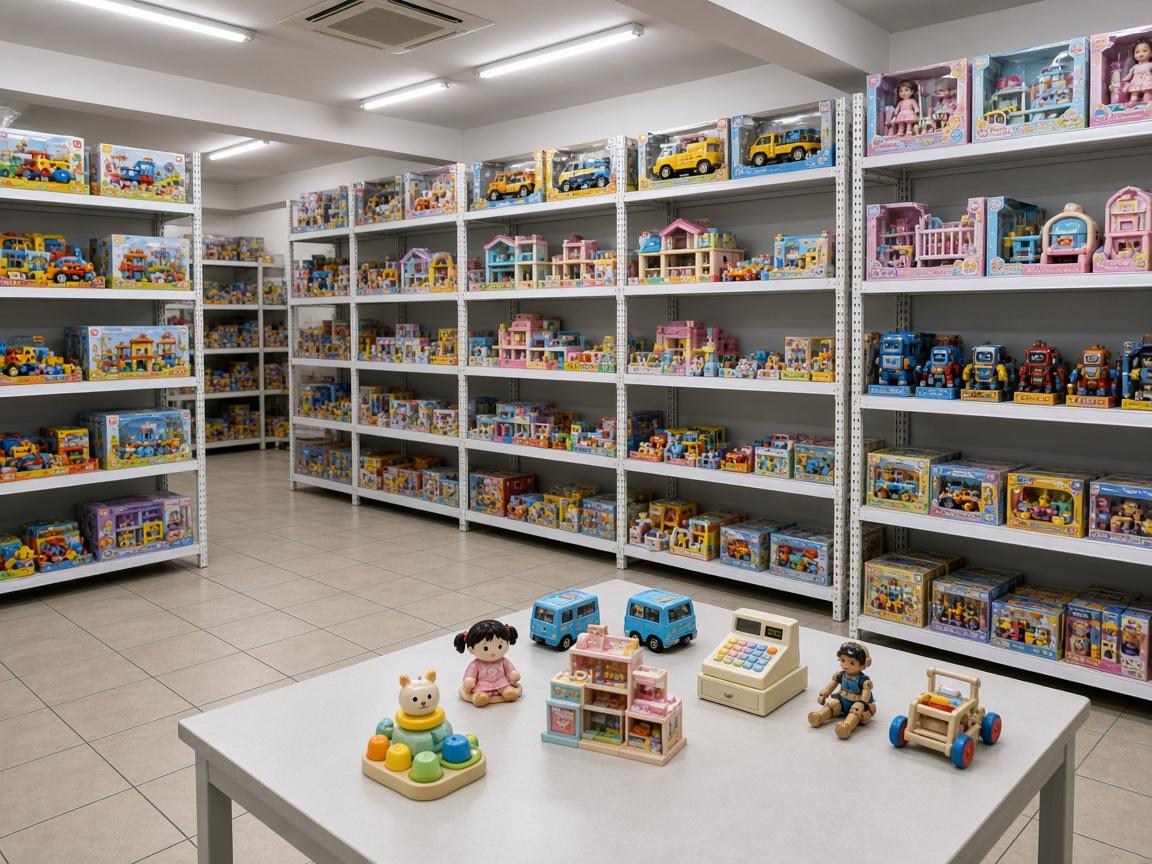
Buy the input type that matches the buyer's play pattern, not the one with the longest feature list. For interactive toys, sound, light, and movement are three separate input classes with different failure modes, different test files, and different cost structures — and the fastest way to kill a purchase order is to treat them as one interchangeable "feature". If you are sourcing RC stunt cars, sensory fidgets, or infant tummy-time toys, the first decision is which input class your retail channel can actually support after import, not which sample demoed best in the showroom.
This page gives you a comparison framework: what each input class demands, which material to ask about, which test file to request for your destination market, and where these goods are typically produced. Use it before you send an RFQ, so the questions you ask a factory are the ones that decide whether the lot clears customs and survives the first retail season.
What buyers should take away before sending an RFQ
- Movement is the hardest input to guarantee at scale. Gear trains, motors, and battery contacts are the parts that generate returns; a stunt car's 360-degree spin is a mechanical promise, so ask for the drop-test protocol and the spare-part ratio in writing rather than a video.
- Light and sound are electronics-plus-paperwork decisions. LED and speaker modules add a battery, a charging circuit, and a compliance file — and the file must match the lot, not just the factory door.
- Match the input class to the age band first. Infant and toddler SKUs face different small-parts, battery, and labeling expectations than a 6+ stunt car, and switching a SKU's age band after tooling is the expensive way to learn that.
- Material choice should follow the input, not the other way around. ABS and other rigid plastics carry switch and socket housings; wooden bodies change how light modules are mounted and how the toy survives a drop.
- The commercial decision (contact the supplier and start a PO) should come only after you can name the input class, the destination market, the test file covering that lot, and the packaging spec. If any of those four is still vague, you are not ready to commit volume.
Sound, light, and movement inputs compared for sourcing
| Input class: Movement (motors, gears, spin, flip, drift) | Primary sourcing risk: mechanical durability and battery life. Material to ask: Plastic (ABS housings, gear material, motor spec). Test to request: drop/impact protocol, charge-cycle and runtime data, spare-part ratio. Best for: RC stunt cars, drift trucks, construction vehicles, ride-ons. Rating: varies by spec |
|---|---|
| Input class: Light (LED modules, light-up housings) | Primary sourcing risk: battery, wiring, and compliance paperwork. Material to ask: Plastic or ABS for housings; confirm lens and diffuser materials. Test to request: battery/charger conformity file for the destination market, LED lifetime data. Best for: light-up fidgets, RC cars with LED kits, busy boards, infant toys. Rating: varies by spec |
| Input class: Sound (speakers, music modules, voice chips) | Primary sourcing risk: volume limits, content licensing, and battery draw. Material to ask: Plastic or ABS enclosures; confirm acoustic venting. Test to request: sound-pressure test where the destination market requires it, content/licensing confirmation. Best for: musical infant toys, RC cars with music, sensory game consoles. Rating: varies by spec |
| Input class: Combined light + sound + movement | Primary sourcing risk: cost stacking and failure stacking — three modules, three failure points. Material to ask: rigid plastic or metal chassis to hold modules; confirm mounting method. Test to request: full-function aging run, drop test, packaging transit test. Best for: premium RC stunt cars, gesture-sensing models, ride-ons with siren. Rating: varies by spec |
| Input class: No electronics (wooden, mechanical movement) | Primary sourcing risk: finish quality, wood moisture, and small-part security. Material to ask: Wooden body, confirm species and finish. Test to request: small-parts and finish tests per destination market, moisture content. Best for: wooden tumblers, Montessori-style boards, infant crawling toys. Rating: varies by spec |
Which input class should you spec first for an RC stunt car?
Spec movement first, then decide whether light and sound earn their cost. On an RC stunt car, the mechanical promise — 360-degree spin, double-sided driving, drift, gesture control — is what generates repeat purchase and what generates returns. Light and sound are merchandising: they sell the unit on the shelf and in the listing photo, but they also add a battery, a charging circuit, and a compliance file that has to match the lot you actually ship.
The practical split: if your channel is marketplace-led and price-sensitive, a movement-only or movement-plus-light SKU keeps the BOM and the paperwork simpler. If your channel is gift retail or licensed-character retail, sound and light are closer to table stakes, and you should budget the extra module cost and the extra test file from the start rather than adding them at the sample stage.
Who should stock what: importers selling into mass-market toy aisles usually want the combined-feature SKU because it competes on perceived value; specialist hobby or educational channels often do better with a movement-focused SKU where the spec sheet is honest about runtime and gear quality.
Where are interactive toys like these typically produced?
Match the production cluster to the dominant material, not to the product name. Injection-molded plastic RC cars and light-up electronics cluster around Chenghai in Shantou, Guangdong, where the plastic-mold and electronics supply chain sits in one place. Wooden toys — tumblers, Montessori-style boards, wooden-bodied infant toys — cluster in Yunhe, Zhejiang, which built around woodworking and finishing. Plush and soft-bodied interactive toys cluster in Yangzhou, Jiangsu. General merchandise and mixed-category light-up novelties often route through Yiwu, Zhejiang, where small-order aggregation is the specialty.
That mapping matters at the RFQ stage. A factory in the right cluster can quote a mold change, a gear swap, or a finish adjustment without subcontracting the core process. A factory outside the cluster may still quote, but you should ask who actually owns the tooling and which process steps are subcontracted. Supplier qualification should evaluate capability, material control, quality records, compliance evidence, capacity claims, and subcontracting rather than relying on a catalog page.
Use case, material to ask about, and test to request
| Use case: Stunt RC car, 6+ gift retail | Material to ask: Plastic chassis, confirm gear and motor spec. Test to request: drop/impact protocol, runtime and charge-cycle data, full-function aging run. |
|---|---|
| Use case: Light-up sensory fidget, marketplace | Material to ask: ABS housing, confirm switch and socket construction. Test to request: battery conformity file for destination market, switch-cycle life test. |
| Use case: Musical infant tummy-time toy | Material to ask: Wooden or plastic body, confirm finish and fastener security. Test to request: small-parts and finish tests per destination market, sound-pressure data if required. |
| Use case: RC drift or construction vehicle, hobby channel | Material to ask: Plastic or metal chassis, confirm 4WD drivetrain parts. Test to request: runtime under load, spare-part ratio, packaging transit test. |
| Use case: Montessori-style switch board, education channel | Material to ask: ABS panel, confirm analog circuit housing. Test to request: small-parts security, finish test, electrical safety file if powered. |
| Use case: Ride-on with LED siren, big-box retail | Material to ask: Plastic body, confirm 12V battery and charger spec. Test to request: battery/charger conformity file, load and brake test, transit test for the full carton. |
Which test files and packaging specs should ride with the lot?
The test file must match the lot, not just the product family. A certificate that covers the model but not the shipped batch is not coverage — it is a filing artifact. Before you release a PO, confirm which file covers which test, which market it was issued for, and whether it references the same material and electronics configuration you are actually buying. If the SKU changes a battery, a charger, or a sound module, treat the file as expired until it is re-confirmed.
Packaging is the second half of the same decision. Corner-sensitive goods — light-up housings, LED panels, ride-on bodies — fail in LCL when the booking instruction is a thank-you note. Write the carton spec explicitly: double-wall or better where the drop risk justifies it, corner boards, edge-crush target, and pallet height. The booking file is where claims are won or lost, not the sample photo.
Labeling is the third. For US children's lots, the tracking label content — manufacturer, date, and lot marked on the product or pack as required — has to be present, and the CPC has to be matched to the SKU you are shipping, not to the factory door. Tracking labels are not decoration; a pretty barcode with no tracking content is a customs and retail-compliance problem waiting for the first audit.
One caution from the field: buyers regularly try to reuse one certificate across a different product — a UKCA file and a VOC file on an electric bubble machine are different papers, for example. Map market, lot, and which file covers which test before the goods leave. Paperwork that does not match the lot is not paperwork.
How we picked: the criteria behind this framework
No ranking is used here, because the right input class depends on your channel, age band, and destination market — not on a universal winner. Instead, the framework is built on four criteria that any interactive toy SKU has to survive before it is worth a PO.
First, the input class has to match the buyer's play pattern and the retail shelf it will sit on. Second, the material has to be able to carry that input — a rigid plastic or metal housing for switch, socket, and motor loads, or a wood body with a mounting method that survives a drop. Third, the compliance file has to match the destination market and the actual lot, including battery and charger conformity where electronics are involved. Fourth, the packaging and labeling spec has to be written into the booking file, not left to the factory's default.
We deliberately did not rank factories or assign scores. No verified factory ranking or performance data was available for this topic, and inventing a league table would be worse than offering a checklist. Use the criteria to shortlist suppliers, then verify capability, material control, quality records, compliance evidence, capacity claims, and subcontracting directly.
FAQ for buyers comparing interactive toy inputs
Should I buy a combined sound + light + movement SKU or a movement-only SKU?
Choose combined inputs if your channel sells on perceived value (gift retail, licensed aisles) and you can absorb the extra module cost plus the extra compliance file. Choose movement-only or movement-plus-light if you are price-sensitive and want a shorter BOM and simpler paperwork. The deciding factor is whether your retail price can carry three modules and three failure points.
What MOQ should I expect for custom interactive toys?
MOQ varies by spec, material, and whether tooling changes. From the catalog data available for this category, MOQ bands range from very low trial quantities on some sensory and educational SKUs up to several hundred units on RC and ride-on products. Confirm the MOQ in writing against the exact configuration you are quoting, and ask whether it changes if you add a sound module or a custom color.
Which certification applies to interactive toys sold in the US?
US toy safety requirements for children's products are set out under the CPSIA, and CPSC publishes toy safety business guidance for manufacturers and importers. Confirm with your compliance team which test file covers your specific SKU, material, and electronics configuration for the lot you are shipping — a file that covers a different battery or module does not cover your lot.
Do LED and sound modules change the packaging spec?
Yes. Light-up and sound modules add housings and battery compartments that are more sensitive to impact and crush than a plain plastic body. Specify double-wall cartons, corner boards, an edge-crush target, and pallet height in the booking instruction, and run a transit test on the full carton, not just the unit.
How do I verify a factory's capacity claim before committing volume?
Treat a stated capacity as a planning input, not a verified fact. Check the product type, machine mix, shifts, tooling ownership, and recent production records, and confirm which process steps are subcontracted. Supplier qualification should evaluate capability, material control, quality records, and compliance evidence alongside the capacity number.
Which production cluster should I approach for a plastic RC stunt car?
Injection-molded plastic RC toys and light-up electronics typically come out of the Chenghai cluster in Shantou, Guangdong. Wooden interactive toys cluster in Yunhe, Zhejiang; plush in Yangzhou, Jiangsu; and mixed light-up novelties often route through Yiwu, Zhejiang. Pick the cluster that owns the dominant process so a mold or gear change does not get subcontracted.
What is the biggest risk when a lot ships with a certificate that does not match the goods?
The lot can be held or rejected at import, and the retail listing can be pulled after the fact. Certificates must be mapped to market, lot, and the specific test they cover. A UKCA file and a VOC file, for example, are different papers and cannot substitute for each other.
Sources
Related Products & Categories
Ready to move from framework to RFQ?
If you have already matched your input class to a use case, a material, and a test file, the next step is a written RFQ that names the configuration, the destination market, the packaging spec, and the labeling content. Send the brief with those four items filled in and ask the supplier to confirm MOQ, tooling ownership, and which compliance file covers the lot.
Next step