
TRADE DESK NOTE
Which Toy Attributes Matter Most Before Requesting Samples
A research-bounded checklist of toy attributes buyers should specify before requesting samples: age grade, materials, test scope, markings and traceability.
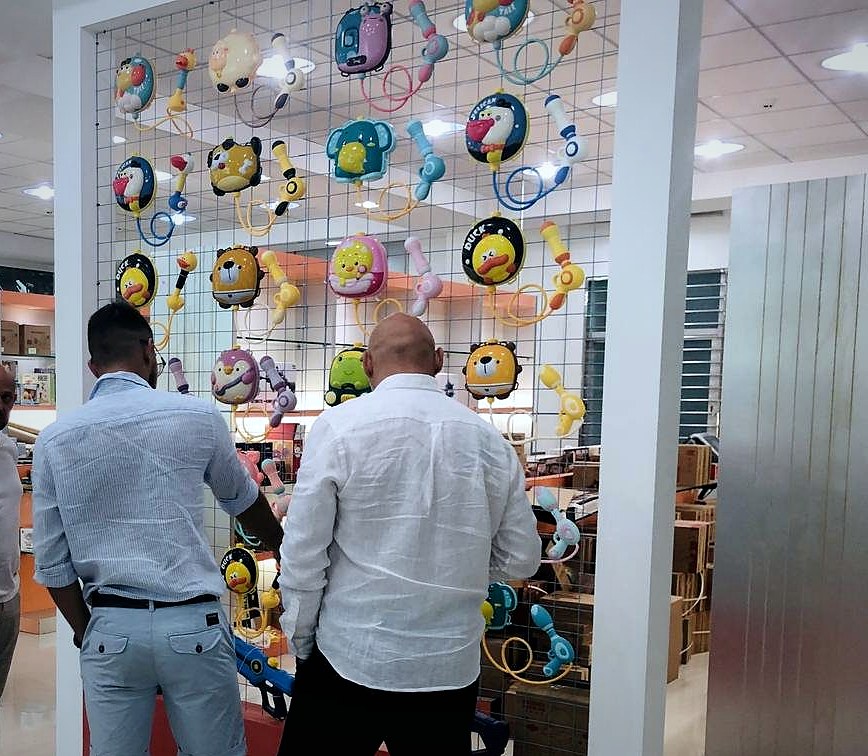
No supplied evidence ranks toy attributes by importance, so the defensible answer is a specification order, not a ranking: pin down destination market and age grade first, then materials and small-part configuration, then packaging and markings, then test and certificate scope, then production-consistency signals. A useful toy RFQ already names destination market, age grade, materials and colors, packaging language, requested tests, sample policy, tooling terms and the requested trade term — treat that list as the minimum, not the ceiling. Before you ask for a sample, every one of those fields should be tied to a specific SKU, because the compliance artifacts buyers rely on — test reports, declarations, certificates — are product-specific and are matched to a product configuration, an age grade and a standard edition, not to a factory as a whole.
Key Takeaways
- Specify age grade and product configuration before anything else: a test report must identify the product configuration, age grade and standard edition, and a Children's Product Certificate is product-specific rather than a blanket factory certificate.
- Treat compliance documents as SKU-bound. The CPC is based on testing results and identifies the applicable rules and responsible parties; it does not cover a supplier's whole catalogue.
- Separate design compliance from production consistency. Monitoring machine variables and part checks over time helps identify drift before cosmetic or dimensional defects reach a full shipment; in-process checks catch drift in dimensions, color, weight, flash, short shots and assembly before the entire lot is complete.
- Flag electronics and packaging early. WEEE relevance rises when electronics are present in toys or bundles, and the PPWR generally applies from 12 August 2026 — before the 2026-08-17 verification date used here.
- This is not a supplier ranking. No supplied evidence establishes which attribute most influences sample approval, and no market size, growth rate or defect rate is asserted here.
What does the evidence actually show?
The traceable observations cluster into five verification gates. First, market and age-grade fit: toys placed on the EU market must meet the applicable essential safety requirements under the Toy Safety Directive 2009/48/EC, and in the US children's toys generally require testing at a CPSC-accepted laboratory and a Children's Product Certificate. Second, material and small-part configuration: age grading and small-part risk are connected and must be assessed for the actual product configuration, including assemblies, detachable accessories and packaging components.
Third, packaging, markings and traceability: CE marking and an EU Declaration of Conformity belong to the conformity process and must be matched to the product scope, while tracking information should be permanent and support product identification where applicable. Fourth, test and certificate scope: the applicable edition of a standard should be read from the current regulation before a report is quoted, and the exact edition of ASTM F963 should be checked before quoting it. Fifth, production consistency: ongoing machine-variable and part checks help identify drift before defects reach a full shipment.
Two further observations bound the market dimension. The GPSR is a separate legal instrument from the Toy Safety Directive, so importer, manufacturer and product-identification information should be mapped to the relevant market role. And the WEEE framework aims to make illegal waste exports harder to disguise, which matters when electronics are present in toys or bundles.
What can be inferred — and what cannot?
What can be inferred: the supplied sources consistently attach compliance to a SKU, an age grade, a product configuration, a report edition, a responsible party and a current version. That pattern supports a descriptive pre-sample checklist built around those variables. It also supports treating production consistency as a distinct attribute from design compliance, because machine-variable and part checks address drift over time rather than the design of a single unit.
What cannot be inferred: this material does not rank attributes by decision impact, does not establish which attribute most influences sample approval or purchase decisions, and does not support any claim about market size, growth, forecast or supplier superiority. The current trend signals were supplied as titles and pointers without direction or magnitude, so no trend direction is asserted here. The injection-molding drift observation is general rather than category-specific, and its applicability to a given toy category is not established in the supplied material.
Correlation is not causation in the other direction either: a supplier that can produce a compliant document does not thereby become a compliant supplier for every SKU, and a report that exists does not by itself prove the sampled unit matches it. The evidence says documents must match the product; it does not say that any specific factory or SKU is certified.
What should OEM and buying teams do with this?
Bounded implications, not general rules. Write the RFQ so each attribute is a field, not a conversation: destination market, age grade, materials and colors, packaging language, requested tests, sample policy, tooling terms and trade term. Then require that the sample be described in the same terms the report will use — product configuration, age grade and standard edition — because a report must match the product, age grade, material and test edition.
For US-bound children's products, ask which applicable rules the certificate will cite and which CPSC-accepted laboratory will test, since certification must rest on third-party testing and the CPC identifies the applicable rules and responsible parties. For EU-bound toys, keep CE marking and the EU Declaration of Conformity tied to the product scope, and map importer, manufacturer and product-identification information to your market role under the GPSR.
Where the SKU contains electronics or ships in a bundle, flag WEEE and packaging scope early; where packaging is being redesigned, note that the PPWR generally applies from 12 August 2026. Treat packaging wording and product markings as controlled fields that change with the SKU, and review packaging, product markings and lot control together. Unknown, and therefore to be confirmed case by case: which attribute matters most for your specific category, and how any of these checks affect your sample approval rate — the supplied evidence does not answer either.
Evidence and limits
| A useful toy RFQ states destination market, age grade, materials and colors, packaging language, requested tests, sample policy, tooling terms and the requested trade term. | Approved fact (procurement) | Limitation: describes what a good RFQ contains, not what suppliers always provide. |
|---|---|
| Children's toys generally require testing at a CPSC-accepted laboratory and a Children's Product Certificate. | CPSC Toy Safety Business Guidance | Limitation: general requirement; exemptions, exceptions and determinations exist and are not resolved here. |
| A CPC is product-specific and should not be described as a blanket factory certificate. | CPSC Children's Product Certificate page | Limitation: does not by itself prove any specific SKU or factory is certified. |
| A test report should identify the product configuration, age grade and standard edition. | 16 CFR Part 1250 / ASTM F963 source page | Limitation: the applicable edition must be read from the current regulation before a report is quoted. |
| Age grading and small-part risk are connected and must be assessed for the actual product configuration. | CPSC small parts guidance | Limitation: assemblies, detachable accessories and packaging components need the same review discipline. |
| Tracking information should be permanent and support product identification where applicable. | CPSC tracking labels page | Limitation: packaging, product markings and lot control should be reviewed together. |
| The PPWR generally applies from 12 August 2026, before the current verification date 2026-08-17. | Approved fact (eu-packaging-2026) | Limitation: applicability depends on the SKU and its packaging scope. |
| The WEEE framework aims to make illegal waste exports harder to disguise, which matters when electronics are present in toys or bundles. | Approved fact (eu-rohs-weee-2026) | Limitation: relevant only where electronics are present in the product or bundle. |
| Monitoring machine variables and part checks over time helps identify drift before cosmetic or dimensional defects reach a full shipment. | Approved fact (injection machine monitoring) | Limitation: general to injection molding; applicability to a specific toy category is not established. |
FAQ
Which toy attribute should I lock first before requesting samples?
Destination market and age grade, because the compliance path follows from them: EU toys must meet the applicable essential safety requirements, and US children's toys generally require CPSC-accepted lab testing and a Children's Product Certificate. Locking these two first prevents a sample that cannot be certified for your market.
Can I accept a supplier's existing certificate as proof for my SKU?
No. A CPC is product-specific and should not be described as a blanket factory certificate, and CE marking and the EU Declaration of Conformity must be matched to the product scope. Ask for the document that names your product configuration, age grade and the applicable standard edition.
How do I phrase test and sample requirements in the RFQ?
State destination market, age grade, materials and colors, packaging language, requested tests, sample policy, tooling terms and the requested trade term. That field list is the minimum a useful toy RFQ contains, and it keeps the sample request aligned with the report you will later be quoted.
Do electronics or packaging change what I should verify?
Yes. WEEE relevance increases when electronics are present in toys or bundles, and the PPWR generally applies from 12 August 2026, which is before the 2026-08-17 verification date used here. Confirm both against the actual SKU and its packaging scope.
Is production consistency something I can check before sampling?
Partially. Monitoring machine variables and part checks over time helps identify drift before cosmetic or dimensional defects reach a full shipment, and in-process checks catch drift in dimensions, color, weight, flash, short shots and assembly before the lot is complete. Ask how those checks are recorded, but note the supplied evidence does not quantify defect rates.
Does this evidence tell me which attribute matters most?
No. No supplied evidence ranks attributes by buyer decision impact, and no trend direction or magnitude was supplied for the current signals. Use the specification order as a working framework and confirm category-specific priorities with your own sample testing.
Sources
Request a Quote
Send the specification, not just a product photo: destination market, age grade, materials and colors, packaging language, requested tests, sample policy, tooling terms and trade term. We will tell you which of those fields we can confirm from documentation and which remain unknown until the SKU is defined — and quote accordingly.
Next step